A Chinese university professor, Li Yuzhe, has shared the success of China's Science and Technology Backyard (STB) model in enhancing agricultural yields in Africa. The model, adapted in several African countries, links scientific communities with agricultural ones, providing technological innovation and application based on small-scale farmers' needs. This approach has enabled farmers to increase their yields and create a favorable environment for small-scale farmers' empowerment.
The STB model involves a multi-actor innovation platform that brings together scientists, farmers, and other stakeholders to address agricultural challenges. In China, the model has led to significant improvements in agricultural productivity, with students trained in STBs contributing to rural development. The model has also been transferred to Africa, with partnerships established between Chinese and African universities to train African students.
The transfer of the STB model to Africa involves a three-year program where students from African countries study for a master's degree in China. In the first year, they study on the campus of the China Agricultural University (CAU), then return to their home country for the second year to establish their own STB. After completing their degree, they work in their country's government or a private enterprise.
A notable example of the STB model's success is in Malawi, where it was adapted as the "1-3-5-1" method. This approach involves one student addressing one problem, helping 30 farmers, training five extension workers, and establishing one large demonstration plot. As a result, some Malawian farmers increased their maize yields from 2 to 8 tons per hectare and tripled their incomes.
Niger and other Sahelian countries are considering adopting the STB model to boost their agricultural productivity. The model's implementation in Niger could significantly contribute to the country's food sovereignty efforts. According to experts, the STB model could be applied to crops such as millet and rice, which are staples in the region.
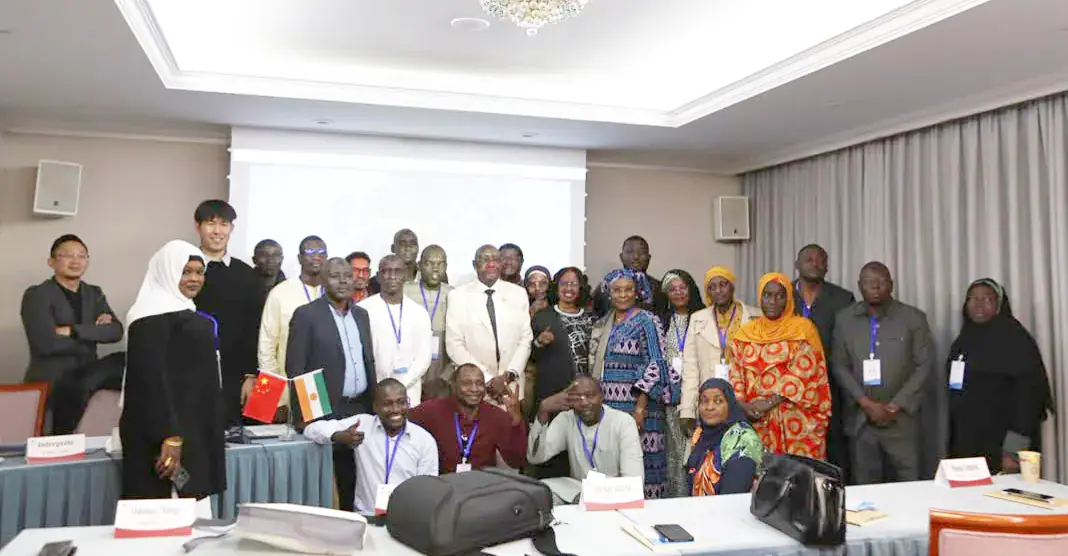
A seminar organized for Nigerien officials and journalists in China discussed the potential for implementing the STB model in Niger. Participants raised questions about the possibility of experimenting with the model in the country and the process of obtaining study bursaries. They also sought to learn from the experiences of other African countries that have adopted the model.
The Chinese government has shown particular attention to the STB model, with President Xi Jinping emphasizing its importance. The model has strengthened students' competencies in STBs, promoted technological innovation and transfer, and fostered young talent for green agriculture development. Niger's adoption of the STB model could provide a significant boost to its agricultural sector and contribute to regional food security.
Key points
- China's Science and Technology Backyard model has increased agricultural yields in Africa, with a notable example in Malawi where maize yields rose from 2 to 8 tons per hectare.
Reporting sources
- Agriculture : le transfert du modèle STB de la Chine vers l’Afrique, un exemple réussi de la coopération sud–sud · Agence Nigérienne de Presse