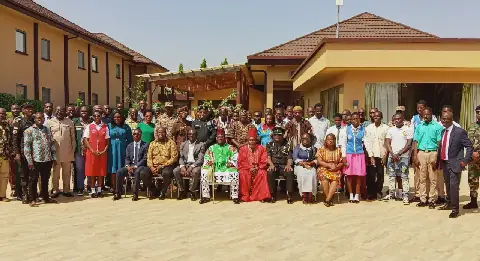
The Niger-LIRE project, funded by the IDA-World Bank and overseen by the Ministry of National Education, Literacy, and Language Promotion, has launched a training program for teachers in the Diffa region. This initiative aims to improve education for out-of-school children and early school leavers. As part of the project's Component 2, the training focuses on promoting second-chance programs for children aged 9-16 who are not enrolled in formal education. The program seeks to address critical learning deficits and provide alternative education pathways.
An assessment of existing non-formal education programs in Niger led to the development of the Harmonized Accelerated Education Device (DEAH). This innovative approach offers a second chance for children and adolescents outside the formal education system. The DEAH program is designed to help beneficiaries either reintegrate into formal education or pursue vocational training. With a goal of enrolling over 85,000 young people nationwide, the project has already begun mobilizing social actors to support its implementation.
The training program for teachers, which began on October 30, 2026, and will run for 12 days, aims to equip educators with the necessary skills to manage DEAH centers. A total of 133 teachers from the Diffa region will participate in the training, which covers 83 hours of instruction over 13 days. The program is being led by nine experienced trainers, five from non-formal education and four from formal education.
The launch of the training program was attended by regional education officials, including the Director of National Education, who emphasized the importance of this initiative. M. Noufou Assane Diori noted that the DEAH program offers a vital second chance for young people excluded from the education system. By providing intensive learning opportunities, beneficiaries can acquire skills that will enable them to reintegrate into formal education or pursue vocational training.
The Diffa region is expected to have 7,650 learners enrolled in 133 DEAH centers, including 56 new centers and 77 existing ones. The Niger-LIRE project has developed a comprehensive communication strategy to support the mobilization of social actors and recruitment of target beneficiaries. This effort aims to ensure the success of the program and maximize its impact on education in the region.
According to M. Ari Arimi, Coordinator of the LIRE project in Diffa, the program plans to enroll and train young people in the region for the 2026-2027 academic year. The project has garnered significant attention from authorities, who recognize the importance of addressing education deficits and providing alternative pathways for out-of-school children.
The Niger-LIRE project's efforts to enhance education in the Diffa region are part of a broader initiative to improve learning outcomes and address critical education challenges. By supporting the development of non-formal education programs and providing training for teachers, the project aims to make a lasting impact on education in Niger.
Key points
- The Niger-LIRE project aims to enroll over 85,000 young people nationwide in its second-chance education program.
- The DEAH program offers a vital second chance for young people excluded from the education system.
- The training program for teachers will equip educators with the necessary skills to manage DEAH centers.