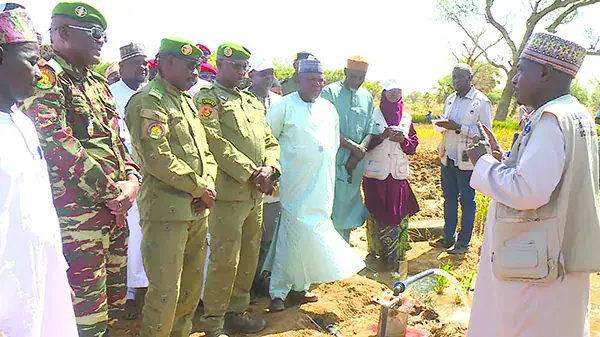
On November 19, 2026, Colonel Bilaly Gambobo, accompanied by the governor of the Dosso region, directors-general of ONAHA and Rural Engineering, and other officials, inspected several irrigated sites in Koygolo and Kiota communes. The initiative aims to support agricultural development in the region. The sites visited included Gardi Zarma, Goubé Zéno, and Kolbou villages.
At Gardi Zarma village in Koygolo commune, the minister saw a 5-hectare irrigated site with three boreholes, each producing 5m³ of water per hour. About 60 farmers cultivate the land, benefiting from the initiative. The site in Goubé Zéno, also in Koygolo, spans 10 hectares and has four boreholes producing 4.5m³ of water per hour, supporting 102 farmers, including 70 women.
In Kiota Harikanassou commune, the minister visited a 12-hectare site in Kolbou village, exclusively farmed by women. The site has two boreholes producing 4.5m³ of water per hour. The governor of Dosso region requested additional boreholes to support the site's growth. Local leaders expressed gratitude to President Abdourahamane Tiani for the investments in rural areas.
The director-general of ONAHA, Labaran Yahaya, praised the initiative, calling it unprecedented in Niger's agricultural sector. He commended President Tiani's vision for the project. Colonel Bilaly Gambobo stated that the initiative was born out of the president's awareness of the region's agricultural potential and the challenges faced by local farmers.
The minister emphasized that the initiative was entirely financed by the state, with no external partners involved. He expressed satisfaction with the project's progress and encouraged farmers to maximize the benefits of the irrigation systems. Colonel Bilaly Gambobo also called on stakeholders to support the initiative rather than criticize it.
The minister assured that any deficiencies in the boreholes would be addressed, and faulty equipment would be repaired or replaced. He invited farmers to take full advantage of the infrastructure to contribute to Niger's food sovereignty goals. Local communities have expressed joy and satisfaction with the project's impact.
The presidential initiative aims to build 1,000 solar-powered boreholes across the country, with the goal of enhancing agricultural productivity and supporting rural development. The project has already made a significant impact in the Dosso region, with several sites now operational and benefiting local farmers.
Key points
- The initiative is part of President Abdourahamane Tiani's efforts to support agricultural development in Niger.
- The project aims to build 1,000 solar-powered boreholes across the country.
- The initiative has already benefited several communities in the Dosso region.