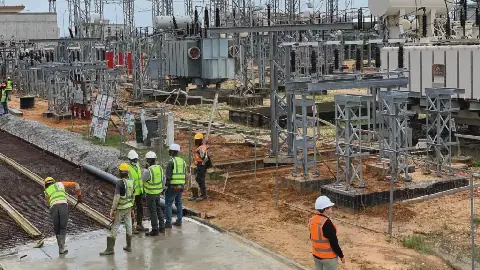
The Mayahi prison in Niger has implemented an agricultural site to facilitate the social reintegration of inmates. The 2-hectare site, established in 2023, allows inmates to cultivate various food products, promoting self-sufficiency and providing an opportunity for vocational training. Inmates work tirelessly to produce crops, which are then consumed within the prison or sold, generating revenue. This initiative aims to improve living conditions, provide a healthy environment, and stimulate economic growth.
The site is equipped with a modern irrigation system, two water towers built in 2023 and 2026, and 14 water basins, including two for fish farming. A composting facility is also available, enabling inmates to learn sustainable agricultural practices. The agricultural site is divided into sections, with different crops grown according to the season. During the rainy season, inmates cultivate crops such as peanuts, maize, and cassava, while in the dry season, they focus on tomatoes, peppers, and potatoes.
The prison's agricultural site is maintained by inmates, who are divided into four groups: supervisors, irrigation specialists, harvesters, and learners. Inmates receive protective gear, including boots, gloves, and overalls, to ensure their safety while working. The revenue generated from the site's produce is used to sustain the project and reward inmates for their participation. In 2026, the site generated 1,685,000 FCFA, with 1,023,000 FCFA distributed among inmates as incentives.
The agricultural site has numerous benefits for the prison, including reduced food expenses, increased autonomy, and decreased violence and tensions among inmates. By engaging in productive activities, inmates develop a sense of responsibility and acquire valuable skills, enhancing their chances of successful rehabilitation. The site also provides an opportunity for inmates to develop entrepreneurial skills, with the goal of facilitating their reintegration into society.
In addition to the agricultural site, the Mayahi prison has a women's workshop where female inmates learn skills such as sewing, knitting, and soap-making. The workshop enables women to acquire practical skills, promoting their economic empowerment and social reintegration. The prison's initiatives aim to address the specific needs of female inmates, providing them with opportunities for personal development and growth.
The Mayahi prison's agricultural site and women's workshop are part of a broader strategy to improve living conditions and promote rehabilitation within the prison system. The prison authorities aim to expand the agricultural site, with plans to acquire a 10-hectare plot for large-scale farming, poultry, fish farming, and dairy production. This expansion will provide inmates with additional opportunities for vocational training and economic empowerment.
The agricultural site has become a model for other prisons in Niger, demonstrating the potential for rehabilitation through vocational training and economic empowerment. The site's success is attributed to the collaboration between the prison authorities, international partners, and local organizations, such as Taimakon Manoma and the United Nations Development Programme. The initiative has improved the lives of inmates, providing them with hope and opportunities for a better future.
Key points
- The Mayahi prison's agricultural site has generated 1,685,000 FCFA in revenue in 2026.
- The site provides vocational training and economic empowerment opportunities for inmates.
- The prison authorities plan to expand the agricultural site to a 10-hectare plot.