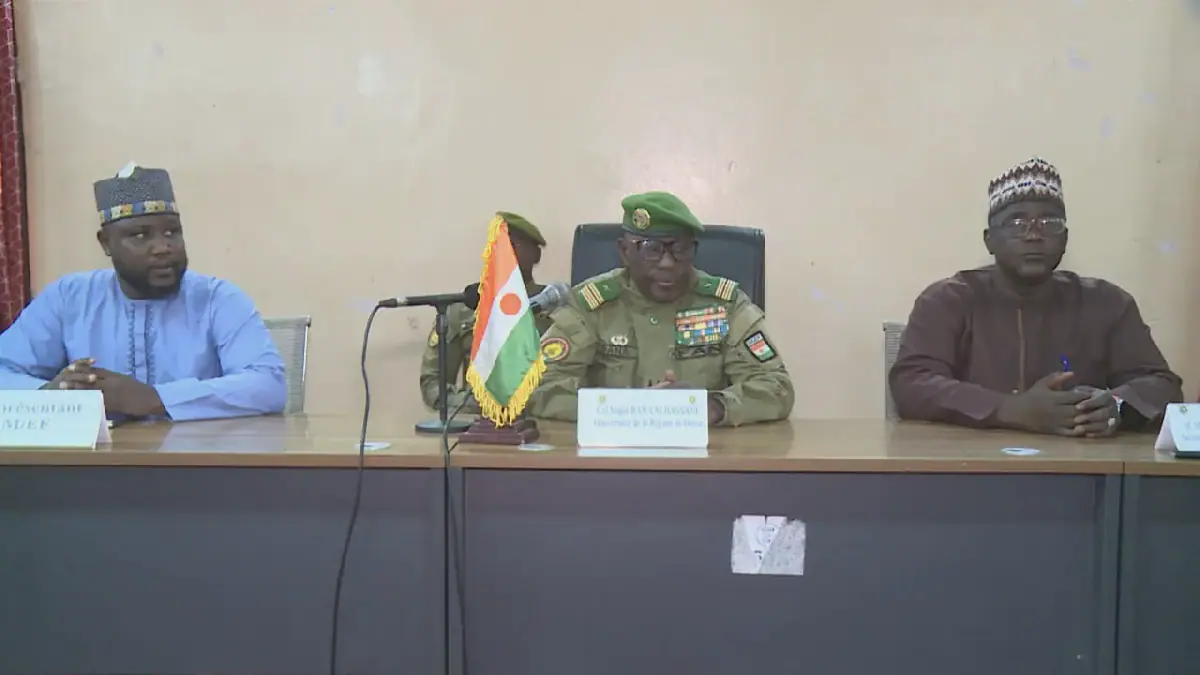
The Nigerien region of Dosso recently hosted a workshop aimed at popularizing the 2025-2029 Refoundation Program of the Republic. The event, presided over by Colonel-Major Bana Alhassane, the region's governor, brought together various stakeholders, including administrative and customary authorities, defense and security force officials, and representatives from local government, civil society, and NGOs. The workshop sought to facilitate a better understanding of the program among regional actors tasked with its implementation.
In his opening speech, Colonel-Major Bana Alhassane emphasized that the workshop aimed to enable local stakeholders to take ownership of the Refoundation Program. He recalled that the program, adopted by the Council of Ministers on October 11, 2025, reflects the vision of President of the Republic, General Abdourahamane Tiani. The program is the result of an inclusive process involving sectoral technical committees established in 2024, reviews of various projects and programs, and contributions from regions during the National Assemblies.
The Refoundation Program serves as the primary framework for Niger's public policies, focusing on four strategic axes: strengthening security and social cohesion, promoting good governance, developing production bases for economic sovereignty, and accelerating social reforms. According to the governor, the program's total cost exceeds 16,000 billion CFA francs, with 85% of the funding assured by the Nigerien state. He highlighted that one of the main challenges is ensuring the program's appropriation by all segments of society to guarantee effective execution and achievement of its objectives.
The workshop participants were encouraged to engage actively in the presentations, discussions, and implementation of planned actions to consolidate national sovereignty and promote the country's development. Prior to the governor's address, Adam Garba, Secretary General of the Dosso Urban Commune, noted that the workshop presented an opportunity to strengthen collective commitment to the ideals of refoundation and construction of a new Niger. Garba also praised the national authorities, particularly President Tiani and Prime Minister Ali Mahamane Lamine Zeine, for their efforts in favor of the Nigerien people.
The Refoundation Program's four strategic axes are designed to address key challenges facing Niger, including security, governance, economic development, and social reform. By focusing on these areas, the program aims to promote sustainable development, improve living standards, and enhance the country's sovereignty. The program's success will depend on the active engagement of local stakeholders, who must work together to ensure its effective implementation.
The workshop in Dosso is part of a broader effort to popularize the Refoundation Program across Niger. By engaging local stakeholders and promoting a shared understanding of the program, the government aims to build a strong foundation for its implementation. The program's adoption by the Council of Ministers in October 2025 marked a significant milestone in Niger's development trajectory, and its successful implementation will be closely watched by national and international observers.
The Refoundation Program workshop in Dosso concluded with a call to action for local stakeholders to work together to achieve its objectives. With a strong commitment to implementation and a focus on results, the program has the potential to drive positive change in Niger and improve the lives of its citizens. Key stakeholders will continue to engage with the program, ensuring its success and Niger's progress towards a brighter future.
Key points
- The Refoundation Program is a comprehensive framework for Niger's development, focusing on security, governance, economic development, and social reform.