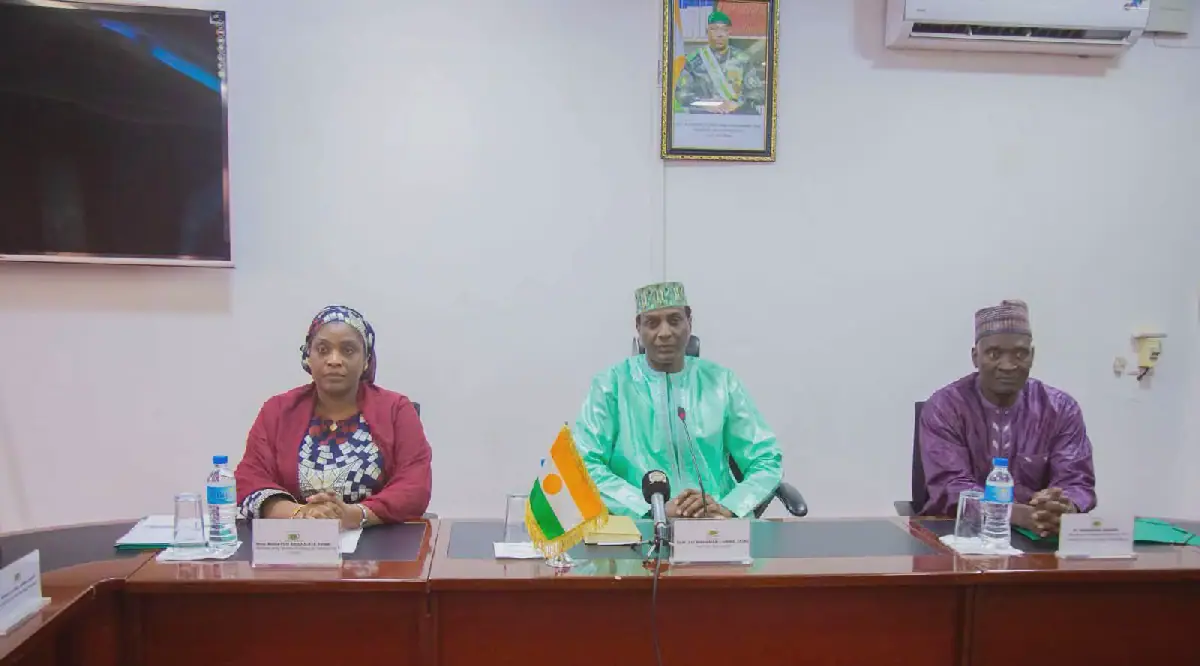
The Niger National Council of Labor (CNT) convened its first ordinary session of the year on November 18, 2026, in Niamey. The council discussed several key issues, including raising the retirement age to 62 in the private and parapublic sectors to align with that of state employees. The session was opened by Prime Minister Ali Mahaman Lamine Zeine, with representatives from the government, employers, and trade unions in attendance.
The Minister of Public Service, Labor, and Employment, Aissatou Abdoulaye Tondi, emphasized the importance of aligning the retirement age in the private sector with that of state employees, which is currently 62. The proposed change aims to ensure equity among different categories of workers. Currently, state employees are subject to a retirement age of 62, while those in the private and parapublic sectors have a different limit.
The proposed reform would result in workers in the private and parapublic sectors retiring later than previously. However, this change may also impact recruitment, as some young people have expressed concerns about limited job opportunities. The minister stressed that the council's discussions should consider the country's limited public resources and aim for realistic proposals.
In addition to the retirement age, the council discussed three other key issues. These included the functioning of social dialogue organs, the representativeness of trade unions, and the law on competition. The minister highlighted the need for effective social dialogue and proposed that the council formulate concrete suggestions to improve its functioning.
The representativeness of trade unions was also a topic of discussion, with the minister noting that the proliferation of unions raises questions about their ability to effectively represent workers. She advocated for an evaluation based on clear, transparent, and consensual criteria. The council also examined the law on competition, which aims to promote fair competition in the country.
Prime Minister Ali Mahaman Lamine Zeine called on council members to work in a spirit of serenity and to produce conclusions that support the country's development efforts while preserving national interests. The minister reaffirmed the government's commitment to maintaining a frank and constructive dialogue with social partners.
The National Council of Labor will provide recommendations on the discussed issues, but the final decision will rest with the government. The council's proposals will likely have a significant impact on thousands of workers in the private and parapublic sectors.
Key points
- The proposed reform aims to align the retirement age in the private sector with that of state employees, which is 62.
Reporting sources
- Niger : la retraite à 62 ans dans le privé soumise au Conseil national du travail · Nigerdiaspora - Niger