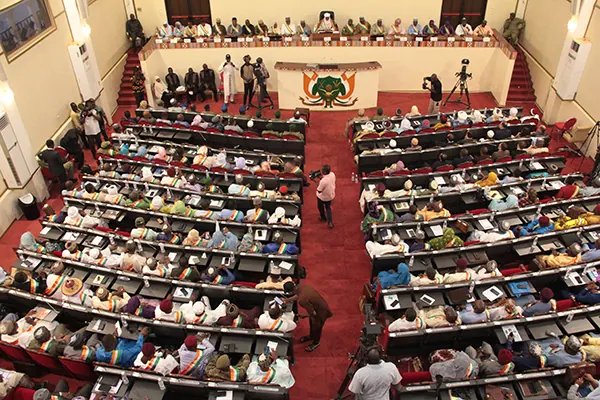
The first extraordinary session of Niger's Conseil Consultatif de la Refondation (CCR) concluded on October 6, 2026, in Niamey. The two-day session was attended by various stakeholders, including the Prime Minister, Ali Mahaman Lamine Zeine, and members of the government. The CCR President, Dr. Mamoudou Harouna Djingarey, presided over the closing ceremony. The council's recommendations aim to consolidate the gains of the Refondation process.
The CCR has made several recommendations to address the country's agricultural and hydrocarbon challenges. On the agricultural front, the council suggested evaluating and mapping the country's food and nutritional needs. They also recommended releasing funds to the Office des Produits Vivriers et de Nutrition (OPVN) and the Caisse Autonome d'Investissement et de Maintenance (CAIMA). These measures aim to mobilize emergency stocks, animal feed, and agricultural inputs.
To address the country's hydrocarbon challenges, the CCR recommended a reasonable increase in hydrocarbon prices. The council also suggested clarifying the governance of the sector and conducting an institutional audit of the Société Nigérienne de Développement et d'Exploitation des Pétroles (SONIDEP). Furthermore, they recommended auditing the flows and digitalizing the entire distribution chain.
The CCR also proposed that the government grant a subsidy to SONIDEP to overcome importation difficulties. Additionally, they suggested reducing the country's vulnerability to oil price fluctuations through refining, storage, and energy diversification. These recommendations aim to ensure a stable supply of petroleum products in the country.
In his closing remarks, Dr. Mamoudou Harouna Djingarey expressed confidence that the recommendations would help the government take preventive measures to avoid a potential food and economic crisis. He hoped that the recommendations would meet the aspirations of the government and the Nigerien people.
The CCR's recommendations were made in response to the country's current challenges, including the 2026 agricultural campaign. The council's proposals aim to address the country's food and nutritional needs, as well as its hydrocarbon challenges. The government is expected to consider these recommendations in its efforts to consolidate the gains of the Refondation process.
The conclusion of the CCR's extraordinary session marks a significant step in Niger's efforts to address its development challenges. The government's response to the council's recommendations will be closely watched by various stakeholders, including the diplomatic corps and the general public. The country's progress in implementing these recommendations will be crucial in determining its future prospects.
Key points
- The CCR recommended a reasonable increase in hydrocarbon prices to address the country's energy challenges.
- The council proposed measures to address the country's agricultural challenges, including evaluating and mapping food and nutritional needs.
- The government is expected to consider the CCR's recommendations in its efforts to consolidate the gains of the Refondation process.