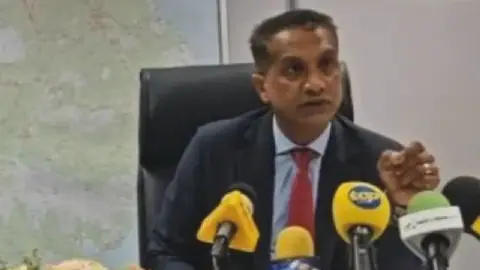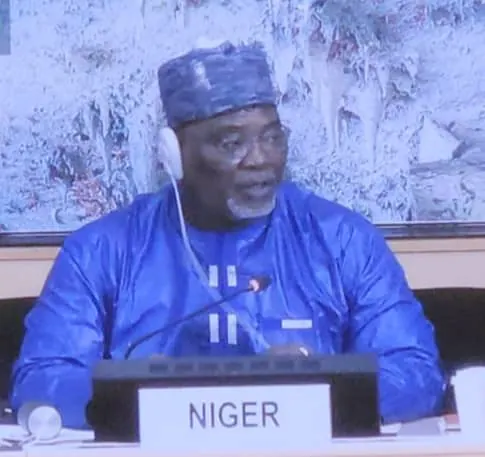
Niger's Minister of Justice and Human Rights, Alio Daouda, has reaffirmed the country's commitment to human rights and called for their universality at the 4th cycle of the Universal Periodic Review (UPR) in Geneva. The review took place from September 22-27, 2026, and was an opportunity for Niger to account for its human rights engagements before the international community. Despite facing security challenges, Niger aims to assume its responsibilities, prioritizing the well-being of its population.
The UPR is a mechanism where each UN member state reports on its human rights commitments. Minister Alio Daouda emphasized the link between peace, security, and human rights, citing recent events in Niamey as a destabilization attempt. He noted that conflict and insecurity directly affect civilian populations, resulting in loss of life, forced displacement, and exile. The minister stressed that without peace, discussing human rights would be unrealistic.
The minister highlighted Niger's cooperation with neighboring countries, Burkina Faso and Mali, within the Alliance of Sahel States (AES). This cooperation is based on sovereignty and self-determination of the people. Niger aims to choose its partners freely and define its policies according to its needs and population's interests. This stance is part of Niger's efforts to prioritize its own development and well-being.
As part of the UPR process, Niger presented its national report on May 4, 2026, during the 38th session of the UPR Working Group. The report led to 265 recommendations from 97 states. After examination, Niger accepted 254 recommendations and noted 11. The minister explained that some noted recommendations concern sensitive cultural and religious issues, requiring an inclusive approach and consultation with stakeholders to reach a consensus.
The minister emphasized that potential evolution of noted recommendations must align with Niger's cultural and religious values. The government will engage in consultations to find common ground on issues of national interest. This approach aims to ensure that any changes are in line with Niger's societal values and priorities.
Following the UPR process, Niger adopted its final document. In his concluding statement, Minister Alio Daouda expressed gratitude to the Human Rights Council, member states, and observer states for their contributions. He reaffirmed Niger's willingness to continue constructive cooperation with international human rights mechanisms. The country will submit a national plan to implement accepted recommendations.
The implementation of accepted recommendations will be a priority for the Nigerien government. Minister Alio Daouda announced that a national plan will be submitted to the government to ensure follow-up on the recommendations. This plan aims to translate Niger's commitment to human rights into concrete actions, further solidifying the country's dedication to promoting and protecting human rights.
Key points
- Niger reaffirms its commitment to human rights and calls for their universality at the 4th cycle of the Universal Periodic Review.
- The country accepts 254 out of 265 recommendations from the UN review, with 11 noted for further consideration.
- Niger prioritizes peace and security as essential components of human rights, emphasizing the need for an inclusive approach to address sensitive cultural and religious issues.