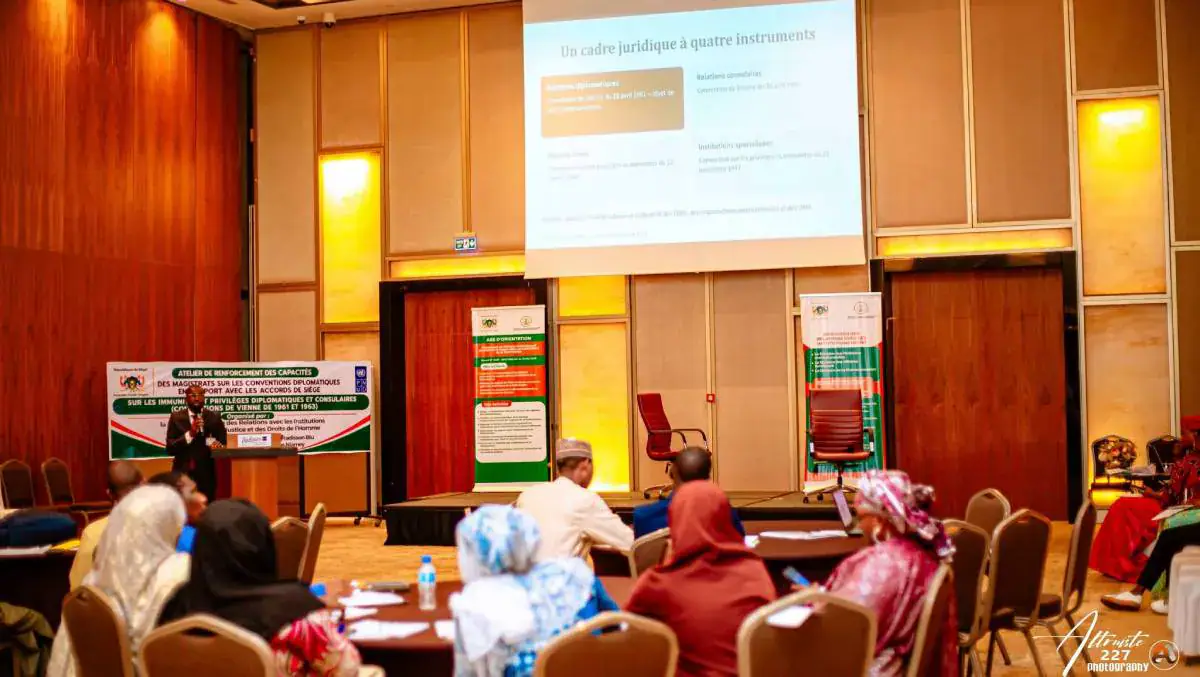
In a bid to enhance the handling of cases involving diplomats and international officials, magistrates in Niger have undergone a training workshop focused on the Conventions of Vienna of 1961 and 1963. The workshop aimed to equip the magistrates with clear guidelines on the extent of immunities, their limitations, and the conduct to be adopted by judges. This training is crucial in avoiding potential incidents with foreign states and ensuring that victims have access to justice.
The training, which was conducted by three specialists, covered key aspects of diplomatic and consular relations. Dr. Abdoul Kader Birgui Sékou, a lecturer-researcher at the Faculty of Legal and Political Sciences of the University of Abdou Moumouni in Niamey, presented on the historical, legal, and institutional foundations of diplomatic law. He discussed the organization of diplomatic and consular action in Niger and the principles governing it, highlighting the two reference texts: the Vienna Convention on Diplomatic Relations of 1961 and the Vienna Convention on Consular Relations of 1963.
Ousseini Ousmane Malam, a Foreign Affairs Counselor at the Ministry of Foreign Affairs, discussed the practical application of the 1961 Convention before the courts. He reviewed the categories of beneficiaries of immunities, the scope and limitations of these protections, and the precautions that magistrates must take when a procedure targets a person with diplomatic status. The inviolability of mission premises, freedom of communication, jurisdictional immunity, and fiscal and customs privileges were also addressed.
The level of protection varies among members of an embassy, depending on whether they are diplomatic agents, administrative and technical personnel, or service personnel. Therefore, identifying the precise status of the person in question is crucial for judges. This distinction is vital in determining the extent of immunities and the appropriate course of action.
Ambassador Amadou Tcheko concluded the first day of the workshop with a presentation on the 1963 Vienna Convention on Consular Relations. He emphasized the functional immunities of consuls and consular employees and how they differ from the regime of diplomatic agents. He also discussed the host agreements that establish the conditions for the installation of international organizations in a country and the legal status and immunities of their personnel.
At the end of the first day, participants had a clearer understanding of the scope of these texts and their impact on the work of judges. The objective is to enable Nigerien courts to handle these sensitive cases with rigor, while respecting Niger's international commitments. This training is a significant step towards ensuring that the country's judicial system can navigate complex diplomatic cases effectively.
The training workshop is a collaborative effort between the Nigerien judiciary and international partners to enhance the country's capacity to handle diplomatic cases. By providing magistrates with a deeper understanding of diplomatic law, the workshop aims to promote justice, accountability, and respect for international relations.
Key points
- The training workshop covered key aspects of the Conventions of Vienna of 1961 and 1963.
- The level of protection for diplomats and international officials varies depending on their status.
- The workshop aimed to enable Nigerien courts to handle diplomatic cases with rigor and respect for international commitments.
Reporting sources
- Niger : les magistrats formés au traitement des affaires impliquant des diplomates · Nigerdiaspora - Niger