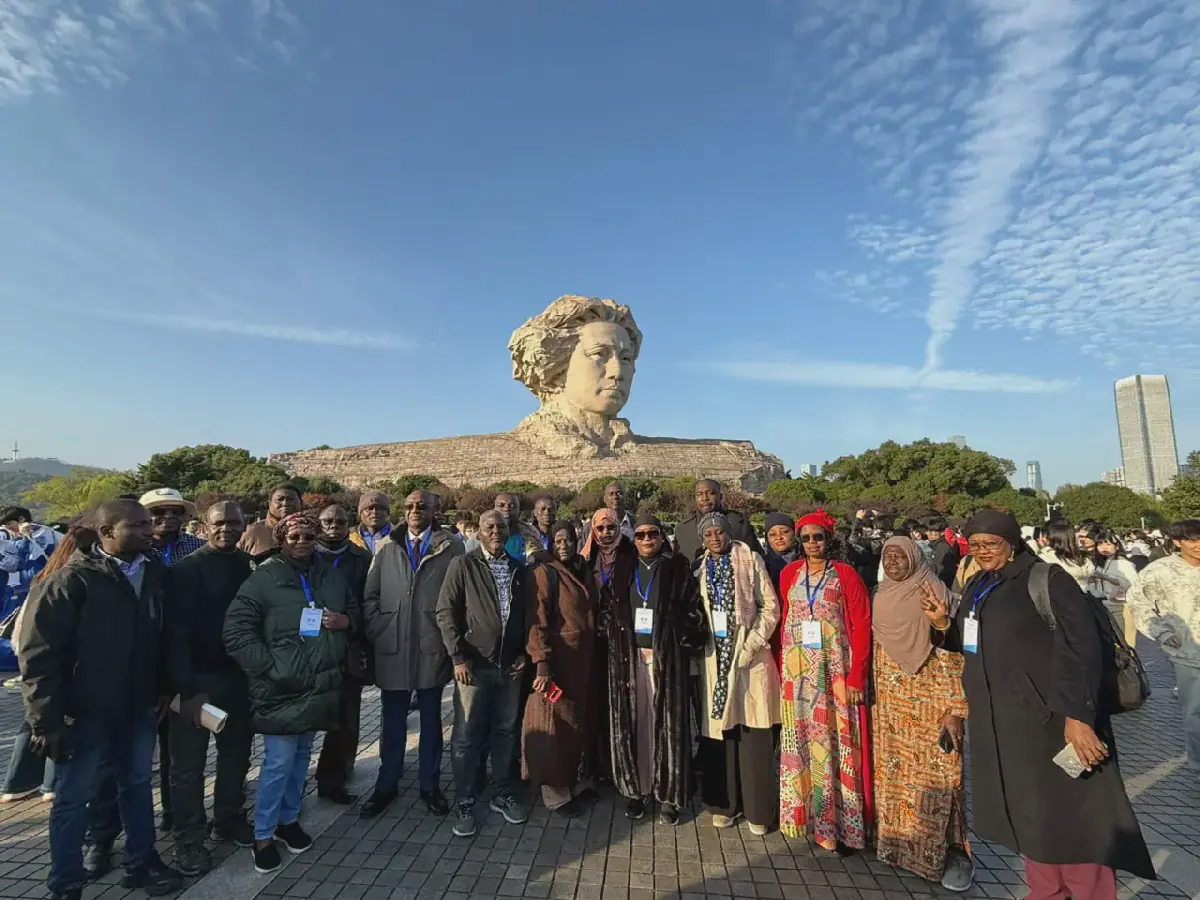
A delegation of Niger journalists and communication professionals, led by Abdoulaye Tiemogo, advisor to the President of Niger, visited several heritage sites in Changsha, China, on November 18, 2026. The sites included the Yuelu Mountain and Juzizhou Island tourist zone, the 1936 Changsha Oil and Fat Factory, and the Bixiang Chuxiang Quarter. These visits aimed to showcase how China has transformed its cultural and historical sites into thriving tourist attractions.
The Yuelu Mountain and Juzizhou Island tourist zone, a national 5A-level site, combines natural scenery with cultural heritage. The zone features Yuelu Mountain, covered in lush vegetation, and Juzizhou Island, which resembles a dragon floating on the Xiangjiang River. The island is home to a monumental sculpture of Mao Zedong in his youth, symbolizing his energy and ambition. The zone offers a range of attractions, including the over 1,000-year-old Yuelu Academy, which was a renowned center of learning in ancient China.
The Yuelu Academy, one of China's four great ancient academies, provides a glimpse into the country's rich cultural heritage. Visitors can explore the academy's historic buildings, including the Aiwan Pavilion, which was inspired by a poem by the famous poet Du Mu. The pavilion also holds significance as a site visited by several prominent Chinese revolutionary figures. In autumn, the academy's maple trees display vibrant colors, creating a stunning landscape.
Juzizhou Island, with its scenic beach and fine sand, offers a relaxing atmosphere for visitors. The island's monument to Mao Zedong's youth serves as a reminder of his influential poetry, which expressed his desire to shape China's destiny. The island is part of a larger tourist zone that has invested in modern infrastructure and services, including intelligent guidance systems, clean facilities, and welcoming centers.
The 1936 Changsha Oil and Fat Factory and the Bixiang Chuxiang Quarter provide a glimpse into China's industrial and cultural past. The factory has been preserved as a testament to the country's working-class heritage, while the quarter showcases the traditional lifestyle of Changsha's residents. These sites demonstrate China's efforts to conserve its cultural and historical legacy while promoting tourism and economic development.
According to Niger's delegation, the visits aimed to explore how China has successfully transformed its heritage sites into thriving tourist attractions. By studying China's approaches to preservation and tourism, Niger hopes to apply similar strategies to its own cultural and historical sites. The knowledge gained from these visits can contribute to Niger's efforts to develop its tourism industry and promote cultural exchange.
The Niger journalists' visit to China's heritage sites highlights the importance of cultural exchange and cooperation between countries. By sharing experiences and best practices, nations can work together to preserve their cultural heritage and promote mutual understanding. The visit also underscores China's commitment to protecting its cultural legacy while fostering economic growth through tourism.
Key points
- Niger journalists visit China's 5A-level tourist sites to learn preservation techniques.