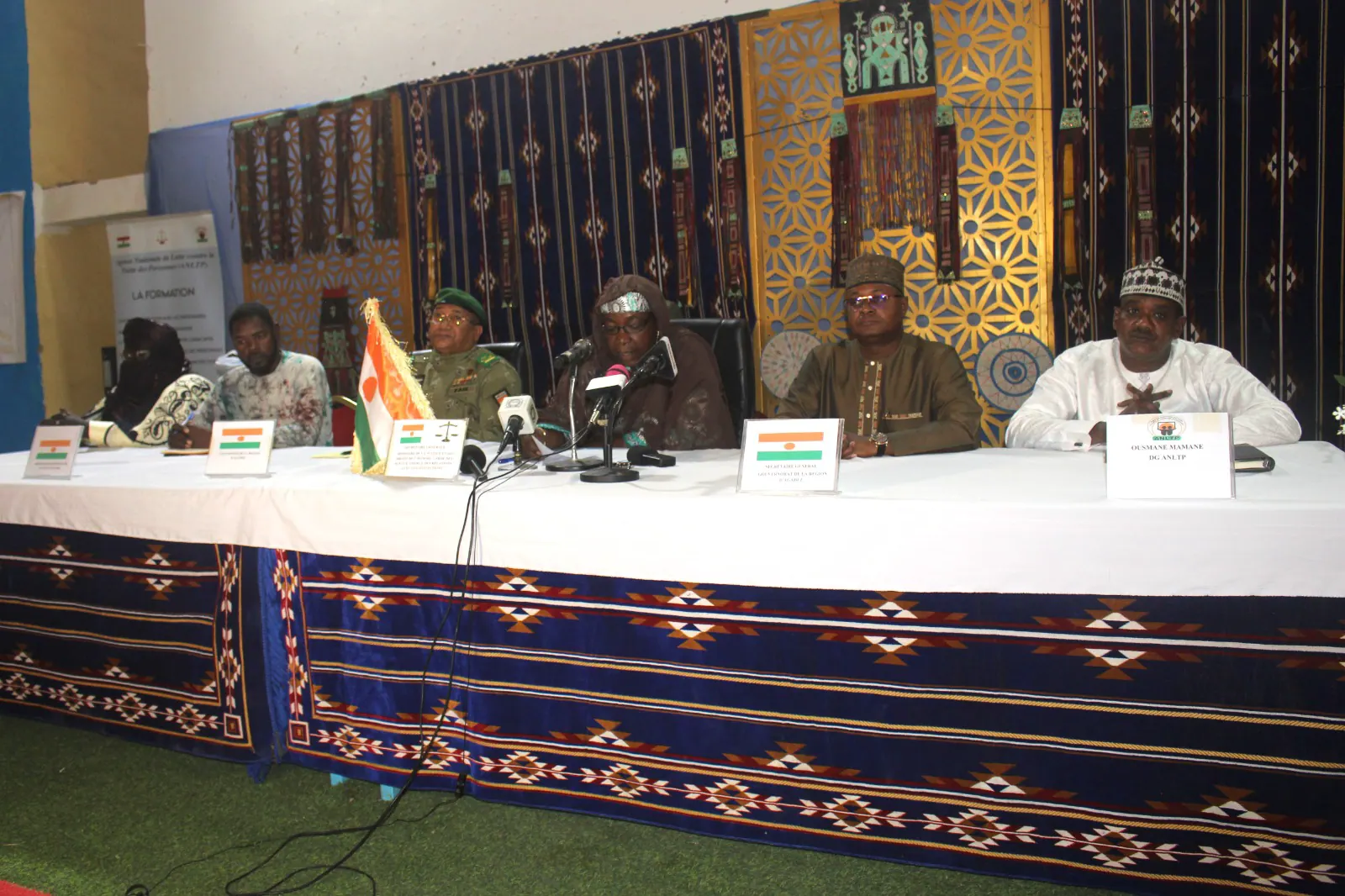
The Nigerien government commemorated the National Day of Mobilization Against Human Trafficking and Slavery on September 28, 2026, in Agadez. The event, presided over by Mme Abdourahmane Amina Moussa, Secretary General of the Ministry of Justice and Human Rights, brought together various stakeholders to discuss the theme "Migration, vulnerability, and human trafficking: what response for the Agadez region?" The ceremony highlighted the region's historical significance as a hub for encounters, exchanges, and mobility.
Mme Amina Moussa saluted the commitment of defense and security forces, state technical services, local authorities, and civil society organizations in the fight against human trafficking. She emphasized that Agadez, being at the heart of migratory and economic dynamics, is particularly vulnerable to exploitation. The Secretary General stressed that human trafficking is a grave violation of human dignity and fundamental freedoms, and a priority for the government under the leadership of President Abdourahamane Tiani and Prime Minister Ali Mahaman Lamine Zeine.
The government has established a robust legal and institutional framework to combat human trafficking, including the ratification of the Palermo Protocol and the creation of the National Agency to Fight Human Trafficking (ANLTP). Mme Amina Moussa highlighted that the state has taken significant steps to prevent and combat human trafficking, including the internalization of the protocol through Ordinance No. 2010-086. The ANLTP plays a crucial role in coordinating efforts to prevent, protect, and prosecute human trafficking cases.
The Centre d'accueil et de protection des victimes de la traite de Zinder has recorded and assisted 86 victims in the first half of 2026. Mme Amina Moussa emphasized that the fight against human trafficking requires a multi-faceted approach, focusing on prevention, protection, prosecution, and partnership. She stressed that the Ministry of Justice is committed to strengthening coordination and collaboration with stakeholders to prevent human trafficking, protect victims, and improve judicial responses.
The National Day of Mobilization Against Human Trafficking and Slavery serves as a reminder of the need for collective action to combat this phenomenon. Mme Amina Moussa invited stakeholders to remain vigilant, solidary, and mobilized to prevent human trafficking, protect vulnerable persons, and uphold human rights. The event provided a platform for stakeholders to share experiences, best practices, and challenges in addressing human trafficking in the Agadez region.
The Agadez region's unique cultural and historical context presents both opportunities and challenges in addressing human trafficking. Mme Amina Moussa noted that the region's position as a hub for migration and trade requires a tailored approach to prevent and combat human trafficking. The government, in collaboration with civil society organizations and international partners, is working to develop effective strategies to address the root causes of human trafficking.
The commemorative event in Agadez concluded with a renewed commitment to fighting human trafficking and slavery in Niger. The government's efforts to prevent, protect, and prosecute human trafficking cases are ongoing, with a focus on strengthening partnerships and coordination among stakeholders. As the country continues to address the complex issues surrounding human trafficking, the National Day of Mobilization serves as a reminder of the importance of collective action and solidarity in this endeavor.
Key points
- The Nigerien government has established a robust legal and institutional framework to combat human trafficking, including the creation of the National Agency to Fight Human Trafficking (ANLTP).
- The Centre d'accueil et de protection des victimes de la traite de Zinder has recorded and assisted 86 victims in the first half of 2026.
- The fight against human trafficking requires a multi-faceted approach, focusing on prevention, protection, prosecution, and partnership.