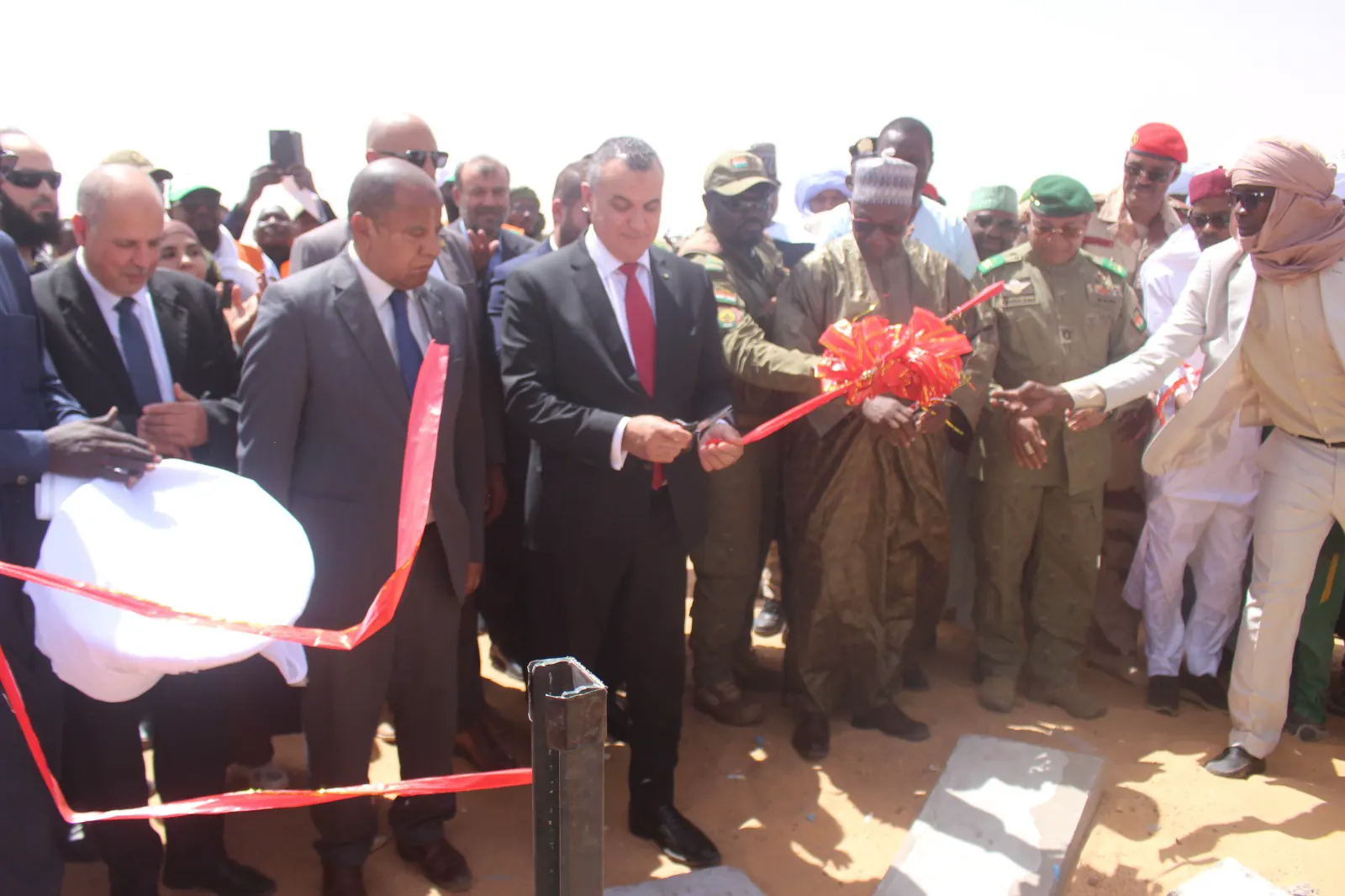
On October 6, 2026, Niger's Minister of Communication and New Information Technologies, Hamani Kargné, and his Algerian counterpart, Sidi-Ali Zerrouki, launched the Trans-Saharan fiber optic project at Assamaka, a border town between Niger and Algeria. The ceremony was attended by several dignitaries, including the Algerian ambassador to Niger, the secretary general of Niger's Ministry of Communication, and directors of Niger Telecom and Algeria Telecom. The project aims to connect Niger and Algeria through a fiber optic network, enhancing communication and economic cooperation between the two countries.
During the launch ceremony, Minister Kargné highlighted the strong historical ties between Niger and Algeria, emphasizing that they share a common vision for the development of the continent. He described the Trans-Saharan fiber optic project as a perfect example of successful South-South cooperation, benefiting both countries. The project seeks to provide reliable, quality, and affordable telecommunications services to populations, administrations, and businesses.
The Trans-Saharan fiber optic project involves the deployment of fiber optic cables along the Trans-Saharan Road, connecting Algeria to the north, Nigeria to the south, and Chad to the east. The project also includes the construction of a national data center and the reinforcement of the fiber optic network for connections with Burkina Faso and Benin. Minister Kargné expressed gratitude to the presidents of both countries, General Abdourahamane Tiani of Niger and Abdelmadjid Tebboune of Algeria, for their support and commitment to making the project a reality.
Algerian Minister of Posts and Technologies, Sidi Ali, emphasized the significance of the project, describing it as a crucial step in developing telecommunications infrastructure. He highlighted that the launched connection represents the first effective trans-border interconnection between two neighboring countries within the framework of the Trans-Saharan fiber optic project. Sidi Ali expressed hope that this model would be replicated in the remaining phases of the project.
The Trans-Saharan fiber optic project is expected to have a positive impact on the economic and social development of both Niger and Algeria. The project will provide improved telecommunications services, enabling businesses and administrations to communicate more effectively and access global networks. The enhanced connectivity is also expected to promote trade, investment, and economic cooperation between the two countries.
The launch of the Trans-Saharan fiber optic project marks a significant milestone in the cooperation between Niger and Algeria. The project demonstrates the commitment of both countries to developing their telecommunications infrastructure and promoting economic integration. The successful implementation of the project is expected to serve as a model for future cooperation between other countries in the region.
The Trans-Saharan fiber optic project is a key component of the broader efforts to develop the telecommunications sector in West Africa. The project is expected to contribute to the growth of the regional economy, promote digitalization, and improve the quality of life for citizens. As the project moves forward, it is expected to have a lasting impact on the development of the region.
Key points
- The Trans-Saharan fiber optic project aims to provide reliable, quality, and affordable telecommunications services to populations, administrations, and businesses in Niger and Algeria.
- The project involves the deployment of fiber optic cables along the Trans-Saharan Road, connecting Algeria to the north, Nigeria to the south, and Chad to the east.
- The launched connection represents the first effective trans-border interconnection between two neighboring countries within the framework of the Trans-Saharan fiber optic project.