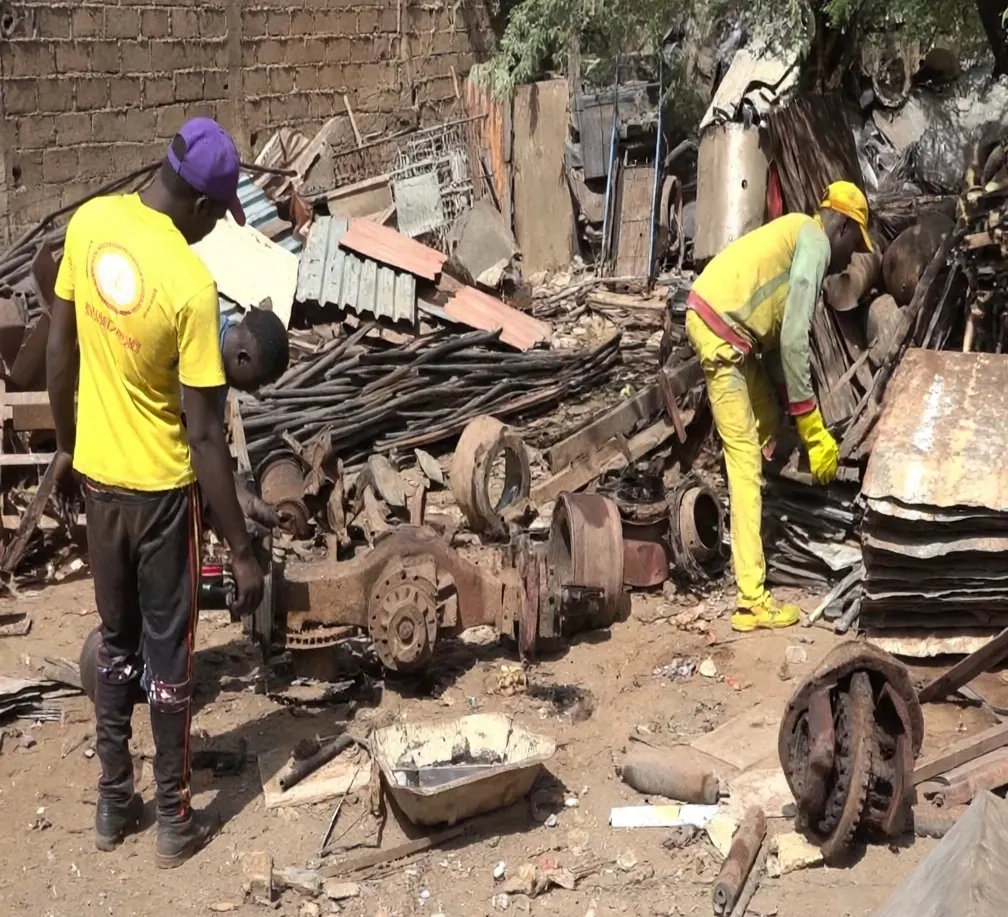
In Niamey, Niger's capital, young scrap metal collectors, known as ferrailleurs, scour the streets in search of discarded metal items and out-of-use pieces. This endeavor serves as a crucial source of income for many young individuals who rely on it for their daily sustenance. They collect debris, metal pieces, and other unusable items from households across various neighborhoods.
The collected scrap metal is then transported to designated gathering and commercialization points. There, the metal is weighed and sold, with prices ranging from 300 to 700 FCFA per kilogram, depending on the material's nature, quality, and value. In exchange for the scrap, collectors sometimes offer cash, soap, candies, or other small items to households.
Yajid, an ambulatory scrap metal collector, shared that his daily earnings can reach up to 3,000 FCFA. He explained that his work involves collecting used metal items, purchasing some, and offering goods or cash in return. This trade enables him to meet his daily needs. The scrap metal business has become an essential part of Niamey's economy.
Once gathered, the scrap metal is sorted according to its type and size. Larger pieces are demolished or cut into smaller parts to facilitate handling and storage. The daily activities at these sites are marked by the sound of hammers as workers manually handle heavy materials. Ali, a worker, stated that his job demands significant energy but allows him to earn a living, with daily earnings ranging from 2,000 to 2,500 FCFA.
After sorting and cutting, the materials are stacked and stored in the Lazaret scrap metal area, awaiting resale and transportation to transformation factories. M. Attahirou, a wholesaler, explained that he purchases scrap metal from collectors, sorts and demolishes it for storage, and then waits for clients to buy according to their needs.
The scrap metal trade in Niamey has been impacted by the November 21, 2024, decree from the Ministry of Commerce and Industry, which banned the export of scrap metal. As a result, the sector has shifted towards local valorization, with the establishment of several industrial units in Niger. This change is expected to boost the local economy and create more job opportunities.
The scrap metal trade has become a vital part of Niamey's economy, providing a source of income for many young people. With the local industry growing, it is likely that this trade will continue to play a significant role in sustaining the lives of many young individuals in Niamey.
Key points
- The scrap metal trade provides a vital source of income for many young people in Niamey.
- The trade has been impacted by the ban on scrap metal export, leading to a shift towards local valorization.
- The local industry is growing, with several industrial units established in Niger to process scrap metal.