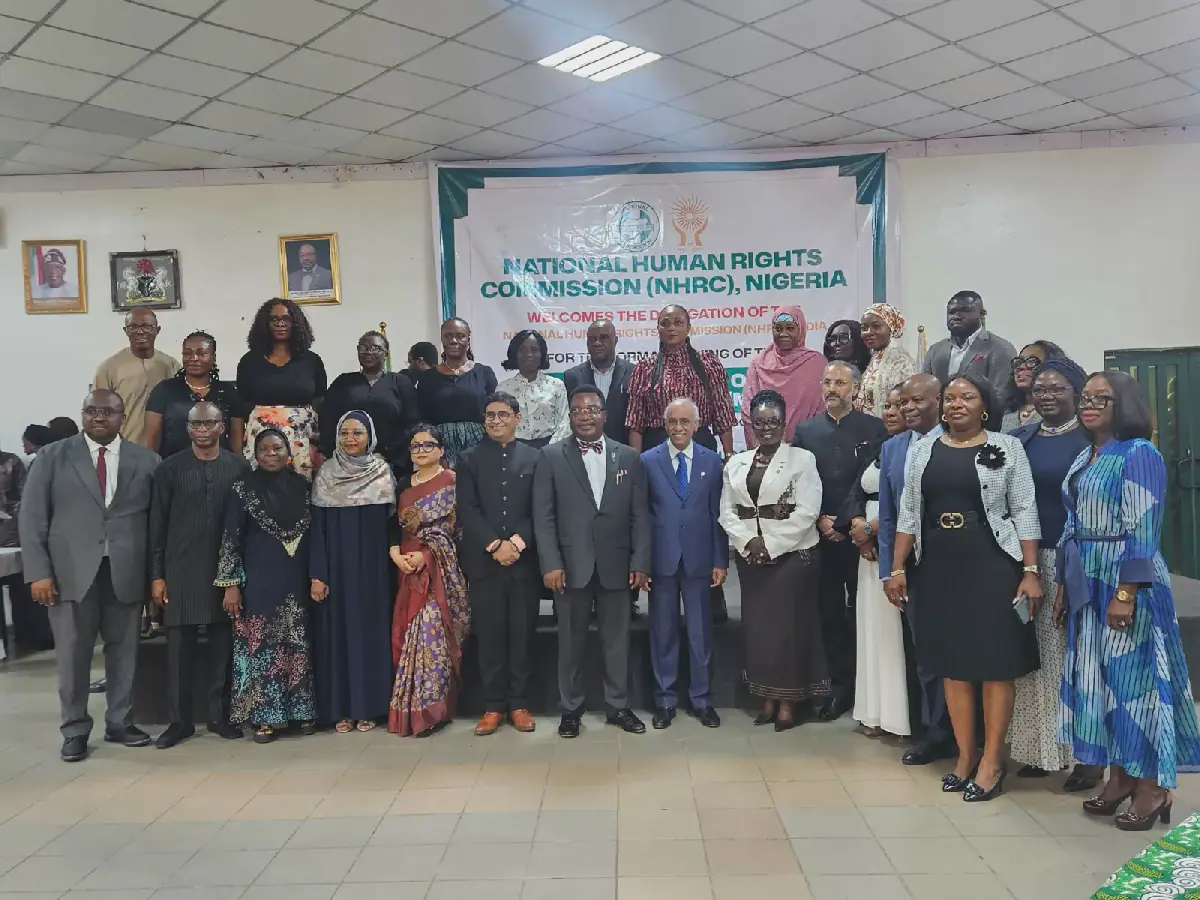
The National Human Rights Commission (NHRC) of Nigeria reported 384,196 cases of human rights violations in October, marking a 13.4% increase from the 338,810 cases recorded in September. This data was presented by the Executive Secretary of NHRC, Tony Ojukwu, at the commission's headquarters in Abuja. The NHRC highlighted that every complaint represents a person, family, or community whose rights and dignity require protection.
The majority of complaints in October, 217,243, were related to violations of the freedom from discrimination. Notably, 180,000 of these discrimination cases originated from Internally Displaced Persons (IDPs) camps. Ojukwu emphasized that displacement should not deprive individuals and families of their dignity, security, and access to basic rights. The NHRC's role extends beyond documenting complaints to ensuring that the information gathered leads to appropriate interventions and effective remedies.
The NHRC's Human Rights Observatory documented various incidents, including attacks on farming communities, travelers, women, traditional leaders, and security personnel. These incidents were particularly reported in Taraba, Borno, Zamfara, Niger, and Plateau State. Ojukwu stressed that these incidents are not merely security concerns but also have direct humanitarian implications, affecting the right to life, liberty, dignity, and security of the person.
Senior Human Rights Adviser to the NHRC, Hilary Ogbonna, noted that the human rights complaints recorded by the commission in 2026 have exceeded 2.5 million. The breakdown of complaints by region includes 116,739 from the North Central, 65,309 from the South West, and 63,120 from the North West. The top ten states with the highest violation complaints were identified as the FCT, Lagos, Benue, Kaduna, Borno, Plateau, Kano, Rivers, Imo, and Niger.
The NHRC also reported specific cases of women's rights violations, including 632 complaints of women denied access to children, 591 abandonment cases, and 339 trafficking cases. There was an observed upsurge in men abandoning their wives, with Ogbonna describing this trend as a human rights breach. Additionally, 6 rape cases, 18 sexual violence incidents, and 1,873 domestic violence incidents were recorded.
Child rights violations were also highlighted, with child abandonment increasing by over 250% to 2,479 cases in October. Furthermore, 2,093 children were forced into marriage, 2,141 cases of sexual abuse were reported, and 2,581 children were denied their rights to education. The NHRC resolved 1,455 cases out of the total recorded in October and visited 108 places of detention.
The NHRC's activities in October included visiting five military formations and summoning the police 45 times. The commission continues to emphasize the importance of protecting human rights, particularly in the context of the upcoming 2027 elections. The NHRC encourages political actors to exercise restraint and adhere to electoral laws and human rights standards.
Key points
- The NHRC recorded 384,196 human rights violation complaints in October, a 13.4% increase from September.
- The majority of complaints, 217,243, were related to violations of the freedom from discrimination, with 180,000 cases from IDPs camps.
- The NHRC resolved 1,455 cases out of the total recorded in October and visited 108 places of detention.