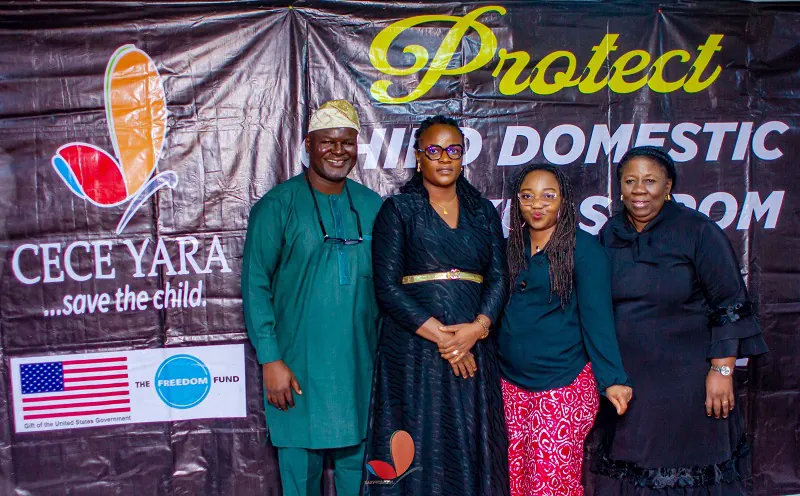
Stakeholders have raised concerns about the challenges in securing justice for victims of child labour violations in Lagos State. A workshop on exploitative child domestic work was held in Alausa, Ikeja, with the theme "From Report to Justice: Closing the Gaps in Accountability for Abuse and Exploitation of Child Domestic Workers." The event was organised by CeCe Yara Child Advocacy Centre. Experts highlighted poor case reporting, cultural factors, absence of support services, stigmatisation, and isolation of victims as major bottlenecks to justice.
Deputy Director, Legal, at the National Human Rights Commission (NHRC), Mrs. Yemisi Akhile, emphasised the need to protect the rights of child domestic workers. She listed lack of witnesses, prosecution delays, and unprofessional conduct by first responders as factors aiding abuse. Akhile noted that child domestic work is often overlooked, and the kind of violence and maltreatment that children endure in the course of offering work are under-reported.
Child protection expert and lawyer, Mrs. Ngozi Arinze, highlighted the consequences of delayed, withdrawn, or unresolved cases and stressed the need for credible convictions and lawful outcomes. She noted that effective reporting and proper documentation are key to preventing recurring abuse of children forced into inappropriate domestic chores. Arinze also mentioned that many cases suffer setbacks because families are unwilling to proceed, children are traumatised by repeated interviews, or case files are delayed between investigators and prosecutors.
The Convener and Chief Executive Officer of CeCe Yara Child Advocacy Centre, Mrs. Bisi Ajayi-Kayode, said studies by the International Labour Organization (ILO) and the US-based Freedom Fund show that a high proportion of child domestic work is exploitative and violates Nigerian labour and child rights laws. She emphasised that access to justice goes beyond the existence of laws and policies.
Ajayi-Kayode explained that her organisation provides 100 per cent support for children, including medical, psycho-social, and forensic interview services, to restore them to a normal state. She noted that the centre's guiding principle is to provide support from reporting to closure of the case.
Nigeria Programme Advisor for Freedom Fund, Mrs. Chika Nwabike, stressed that all hands must be on deck to ensure that child labour violations go through the full process from reporting to protection and justice for victims. She emphasised the need for collaboration and greater attention to violations involving underage labour.
The stakeholders' workshop aimed to address the gaps in accountability for abuse and exploitation of child domestic workers. The participants discussed ways to close the gap between reporting and justice, and how to bring justice to survivors through reporting, proper documentation, and effective prosecution.
Key points
- The stakeholders identified poor case reporting, cultural factors, and lack of support services as major bottlenecks to justice for victims of child labour violations in Lagos State.
- Effective reporting and proper documentation are key to preventing recurring abuse of children forced into inappropriate domestic chores.
- The centre provides 100 per cent support for children, including medical, psycho-social, and forensic interview services, to restore them to a normal state.