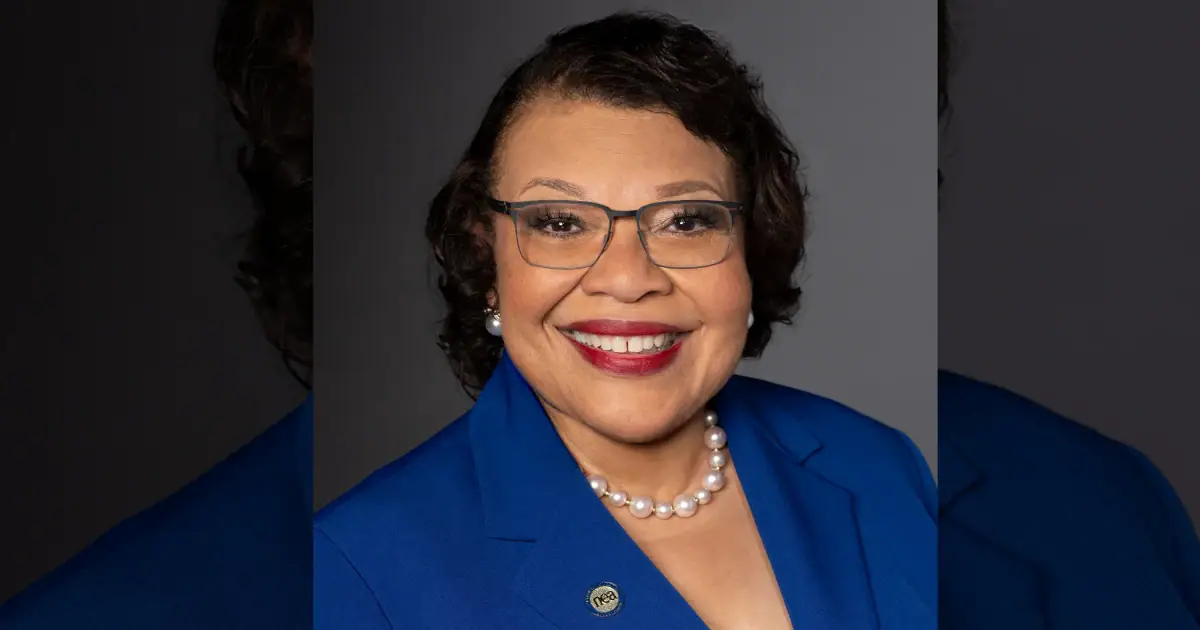
Princess Moss, the newly elected president of the National Education Association (NEA), has taken the helm of the nation's largest labor union with a vision to steer educators away from partisan politics. The NEA, which represents 3 million teachers and public workers from every state, has long been a stalwart supporter of the Democratic Party. Moss, who grew up in rural Virginia, was inspired by her second-grade teacher, Lucy T. Lewis, to pursue a career in education. As an elementary school music teacher for over 20 years, Moss rose through the ranks of state union leadership, eventually becoming president of the NEA.
Moss's vision for the NEA, which she calls "resistance to renaissance," prioritizes professional autonomy and community organizing. However, her leadership marks a significant departure from the union's past: she aims to make the NEA its own political authority, distancing itself from partisan politics. Moss believes that by focusing on the issues affecting students and public education, the union can build coalitions across party lines. Her approach is informed by her experience in Virginia, where she worked with a Democratic governor and a Republican-controlled general assembly to advance public education.
Moss's leadership style is shaped by her upbringing and teaching experience. As the daughter of two school bus drivers, she understands the importance of public education in her community. Her approach to union leadership emphasizes the need for educators to be at the decision-making table. Moss believes that by working together, educators can build a broad coalition of support for public schools that transcends party affiliations. Her goal is to ensure that public education remains a priority, regardless of the political climate.
The NEA's shift away from partisan politics has garnered mixed reactions from education experts. Michael Petrilli, president of the Fordham Institute, a right-leaning think tank, notes that the NEA's move would be a significant departure from its long-standing support for the Democratic Party. Petrilli has expressed reservations about teachers' unions, arguing that their positions often block meaningful changes to teaching. However, he is open to seeing how Moss's leadership will shape education policy, particularly in state-level races where Democrats are favored to win.
Moss's approach to union leadership emphasizes the importance of talking about students' needs, rather than framing issues as Democratic or Republican concerns. She encourages her members to focus on the issues affecting their students, rather than party affiliations. By doing so, Moss hopes to build a broad coalition of support for public education that includes educators, policymakers, and community members from across the political spectrum.
The NEA's endorsement of presidential candidates has been a significant aspect of its political influence. In 2020, the union recommended Joe Biden for the presidency, and in 2024, it issued a formal endorsement for Vice President Kamala Harris. Moss's leadership will likely shape the NEA's future endorsements and policy priorities. Her goal is to ensure that public education remains a priority, regardless of the political climate.
As Moss begins her three-year term as president, she faces a challenging political landscape. Inflation is affecting school budgets, and a new education tax credit will direct federal tax dollars into private schools. Despite these challenges, Moss remains committed to her vision for the NEA, which prioritizes public education and community organizing. Her leadership will likely have a significant impact on education policy and the future of the NEA.
Key points
- Princess Moss aims to make the NEA its own political authority, distancing itself from partisan politics.
- Moss's leadership prioritizes professional autonomy and community organizing, with a focus on building coalitions across party lines.
- The NEA's shift away from partisan politics has garnered mixed reactions from education experts, with some expressing skepticism about the union's ability to build a broad coalition of support.