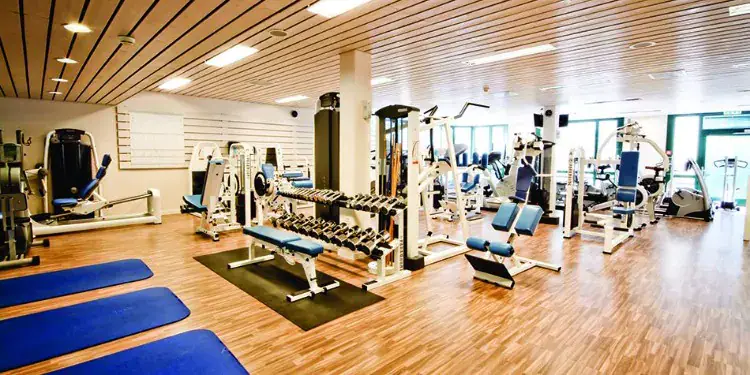
The Tunisian government is set to implement new regulations for private sports halls in the coming period. The new regulations have been in the final stages of development, according to Abd al-Mun'im al-Sha'afi, Director General of Shared Services. The new rules aim to modernize the sector and address the significant developments in the creation of private sports facilities. The regulations have been revised to include digital mechanisms and stricter oversight.
The new regulations will introduce a digital system for administrative procedures, allowing investors to submit and track their applications online. This will eliminate the need for in-person visits and paper documentation. The regulations also require hall owners to comply with anti-doping laws, display warning notices in prominent areas, and undergo regular inspections. The Tunisian Anti-Doping Agency will conduct these inspections.
The new regulations are part of a broader effort to organize the sports sector in Tunisia. The government has established a new corps of sports inspectors who will be responsible for monitoring and enforcing the regulations. These inspectors will undergo a two-year training program before being deployed to monitor sports facilities. The regulations are expected to improve the quality and safety of sports facilities in Tunisia.
The development of the new regulations involved a consultative process with various stakeholders, including relevant ministries, the Competition Council, and the Tunisian Union of Industry, Trade, and Traditional Industries. The regulations are expected to be presented to regional representatives for feedback before taking effect. The new rules are part of a package of regulations covering various aspects of the youth and sports sector.
The regulations aim to address the issue of unlicensed sports facilities and training centers. Khalid al-Khayati, head of the General Directorate of Physical Education, Training, and Research, stated that the government will launch an immediate study of the technical files of private training institutions to ensure they meet the required standards. The government will also restrict the certificates issued by these institutions to "participation only" certificates.
The government has also announced plans to prevent unlicensed institutions from issuing training or professional certification in physical or mental preparation. This move aims to address the proliferation of short courses that grant certificates after only a few days of training. The government considers these practices to be a "pedagogical, technical, and legal fraud" that undermines the quality and credibility of the sector.
The issue of private sports facilities and unlicensed training centers was a major topic of discussion at a recent conference of regional youth and sports representatives. The conference, which was attended by the Minister of Youth and Sports, Sadek Mourali, and the Governor of Manouba, Mahmoud Shuaib, highlighted the challenges of monitoring and regulating these facilities.
Key points
- The new regulations introduce digital monitoring and stricter oversight of private sports halls in Tunisia.
- The regulations require hall owners to comply with anti-doping laws and undergo regular inspections.
- The government aims to address the issue of unlicensed sports facilities and training centers through the new regulations.
Reporting sources
- Radio Jeunes · Radio Jeunes