A new health model is being piloted in Murang'a County, Kenya, to provide patients with multiple non-communicable diseases (NCDs) with one-stop treatment. The M-Care programme, funded by the European Commission, aims to facilitate access to treatment for different conditions under one roof. Patients will no longer be directed to different clinics for separate conditions. Instead, the current system will be integrated into a holistic care model, while healthcare workers will be trained and equipped to provide a wider range of services.
The five-year project will establish a one-stop clinic where patients suffering from conditions such as diabetes, hypertension, and other chronic illnesses will be screened and treated during the same visit. Annie Njogo, a resident of Mioro village in Mathioya, has lived with hypertension for more than 10 years and is among those expected to benefit from the programme. She often moves between clinics when seeking treatment at Murang'a Level Five Hospital.
The pilot project, implemented by the African Population and Health Research Centre (APHRC), the Ministry of Health, and Murang'a County Government, seeks to address gaps in the management of patients suffering from multiple conditions who are currently treated in separate clinics. Under the new model, healthcare workers will be trained to assess patients for both physical and mental health conditions during the same visit, reducing the need for patients to move from one clinic to another.
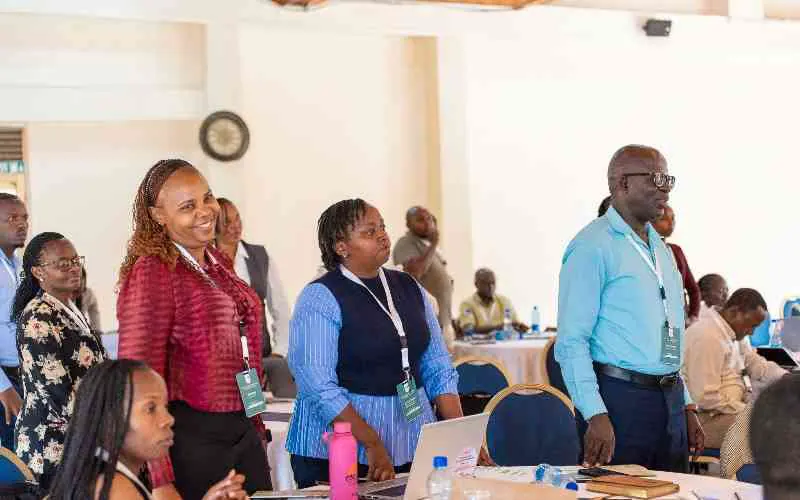
During the launch of the project, Dr. Gershim Asiki, a senior research scientist at APHRC and the Kenyan principal investigator, said the concept would benefit hundreds of patients who face numerous challenges while seeking treatment at different clinics. In Murang'a County, the project will be implemented in 100 of the county's 170 health facilities. The facilities will be monitored for a year to assess the effectiveness of the integrated care model.
Dr. Asiki said some conditions remain undetected under the current system, particularly mental health conditions among patients attending chronic disease clinics. Most often, people present for care with more than two conditions, either hypertension and depression or anxiety and diabetes, but when they are assessed, one condition is missed. He said NCDs were on the rise, particularly in Kenya, Ghana, and South Africa, creating a need for better ways of treating and managing them.
Prof. Charles Agyemang of Amsterdam University Medical Centre said the programme would make it easier for patients with multiple conditions to access comprehensive care at a single facility, reducing the challenges they face. He said that the model would be particularly beneficial to patients in rural and low-income communities because it would reduce transport expenses. Healthcare workers in participating facilities will receive training on integrated NCD and mental health care, while electronic medical records will be used to provide clinical decision support.
The project will also strengthen diagnostic capacity by providing equipment for monitoring blood pressure, blood sugar, height, and weight, among other services. Dr. Mercy Karanja, Head of the Division of Mental Health at the Ministry of Health, said integrating mental health screening into NCD services would help identify patients who might otherwise go untreated. Dr. James Mburu, Murang'a County Director for Health, said the county was ready to support the initiative as it sought to improve the management of the growing burden of NCDs.
Key points
- The M-Care programme aims to provide one-stop treatment for patients with multiple non-communicable diseases (NCDs) in Murang'a County, Kenya.
- The programme will be implemented in 100 health facilities in Murang'a County and will be monitored for a year to assess its effectiveness.
- The project also aims to strengthen diagnostic capacity and provide training for healthcare workers on integrated NCD and mental health care.