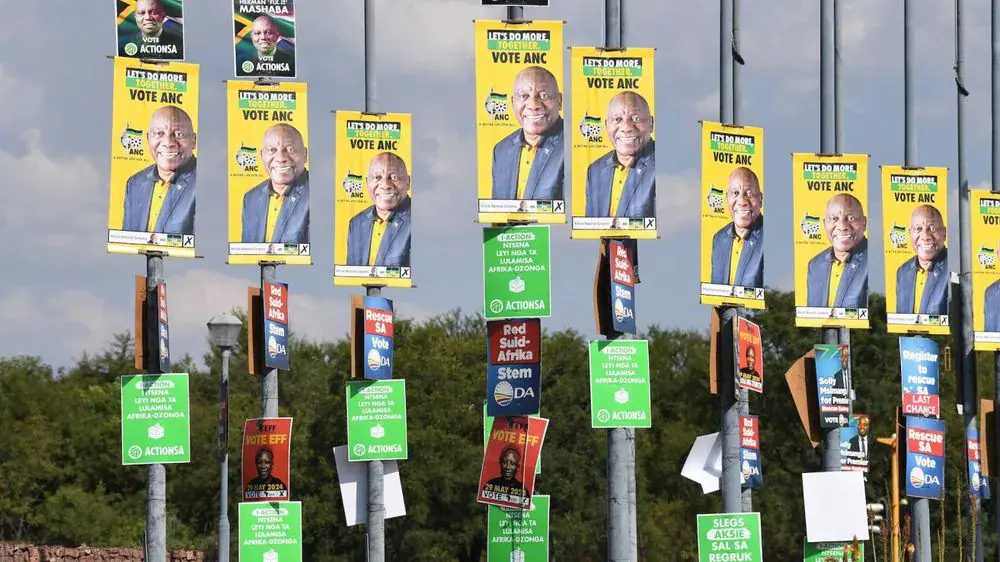
As newly elected municipal councils prepare to take office following the November 4 local government elections, they face an urgent test of governance, financial stability, and service delivery as public trust in local government continues to erode. The transition involves more than electing mayors and speakers, with a joint circular issued by the Department of Cooperative Governance and Traditional Affairs, National Treasury, and the South African Local Government Association calling for detailed political and administrative handover reports. These reports must outline municipal finances, service delivery programmes, infrastructure projects, audit outcomes, outstanding debt, and maintenance backlogs.
The reports are intended to give incoming councillors a clear picture of the challenges they are inheriting and the work requiring urgent attention. Cooperative Governance and Traditional Affairs Minister Velenkosini Hlabisa said the government would continue supporting municipalities after their councils had been constituted. He has also issued guidelines for stable coalitions, emphasising that political arrangements must not undermine municipal administration or interrupt service delivery. The guidelines aim to promote stability, accountability, effective oversight, and continuity in service delivery.
For older residents, municipal failures can have particularly serious consequences, including disruptions to essential services such as water, electricity, and medical equipment. Barry Kaganson, chief executive of Auria Senior Living, said reliable services were essential to older people’s ability to live independently. He urged municipalities to consider older residents in their Integrated Development Plans, communicate planned interruptions, and provide realistic repair timeframes. Kaganson emphasised that municipal performance should be judged not only on budgets and infrastructure spending but also on how the ward’s oldest residents fare when a service fails.
Dr Uduak Johnson, academic programme leader at the MANCOSA School of Public Administration, cautioned residents against assuming every service interruption during the transition signalled a collapse in delivery. He advised residents to use the first month of the new councils to assess whether meetings had been lawfully convened, decision-making structures were functioning, and urgent repairs and service continuity plans were in place. Johnson urged communities to strengthen ward-level oversight by engaging ward committees and ratepayer associations, attending council meetings, and monitoring spending.
President Cyril Ramaphosa has challenged newly elected councillors to prove they deserve voters’ confidence. He called for local government to become “an engine room of service delivery, a driver of development and a creator of opportunity”. The South African Local Government Association has similarly urged parties to shift their focus from elections to building stable, capable, and accountable councils. Coalition negotiations remain critical in hung municipalities where no party secured enough support to govern alone.
The ANC, the largest party nationally, is negotiating with potential partners to secure governing arrangements in several councils. On November 18, the ANC, ActionSA, the EFF, and the MK Party agreed to establish teams to consolidate proposals and work towards a common coalition framework for Johannesburg, Tshwane, Ekurhuleni, and eThekwini. However, no final agreement had been reached by November 19. The talks underscore the contrasting dynamics between national and local politics, with the ANC and DA sharing power in the national government of national unity while pursuing competing coalition strategies in municipalities.
Political analyst Kenneth Kgwadi said the experience had exposed deeper weaknesses in local government, citing Johannesburg’s challenges and questioning how councils could pass budgets when coalition partners disagreed on priorities. He emphasised that infighting within coalitions results in poor service delivery. The Department of Cooperative Governance and Traditional Affairs’ coalition guidelines call for political arrangements that promote stability and accountability without interfering with municipal administration. The immediate priority is ensuring councils are properly constituted and ready to govern, with the names of elected councillors published in the Government Gazette on November 13.
Key points
- New municipal councils in South Africa must prioritise restoring public trust and improving services.
- The government has issued guidelines for stable coalitions and urged parties to focus on building capable and accountable councils.
- Residents are advised to engage in ward-level oversight and monitor municipal spending to ensure effective governance.