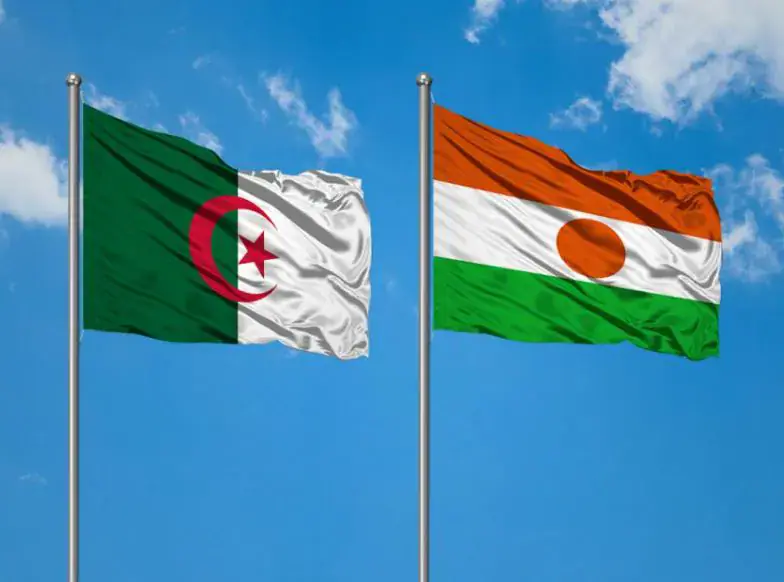
Professor Bana Ibrahim, head of the Geopolitics and Environment Committee at Niger's Advisory Council for Reconstruction, believes that Algeria's move to dispatch military units to Niger will have positive economic repercussions. This decision is a response to a request from Niger's authorities and demonstrates a commitment to translating the long-standing relations between the two countries into practical actions. Ibrahim emphasizes that this cooperation can lead to regular coordination between defense and security institutions.
Ibrahim highlights that the cooperation can be extended to customs departments, anti-smuggling agencies, and local authorities. He stresses that military presence alone is not enough to address security challenges, but it can create an environment conducive to implementing major economic projects. The professor also notes that the historical ties between Algeria and Niger go beyond their current borders, with social, economic, and security aspects that require a comprehensive approach.
The decision by Algeria's parliament on October 25-26, 2026, to send military forces to Niger has significant constitutional implications. According to Ibrahim, this move marks a shift from Algeria's traditional restraint in deploying its military outside its borders. The Algerian constitution, amended in 2020, allows for the deployment of troops abroad under certain conditions. From Niger's perspective, the cooperation is a response to a sovereign request.
Ibrahim cautions that trust between nations is not solely measured by the presence of military forces but by respect for commitments, mutual interests, and sustainable sovereignty. He emphasizes that the success of this cooperation should be evaluated based on tangible results, such as reduced attacks, improved security, and enhanced economic opportunities. The professor also notes that the Sahel region faces complex security challenges that require a comprehensive approach.
Ibrahim outlines several key areas where cooperation can be strengthened, including intelligence sharing, border monitoring, and customs cooperation. He stresses that a sustainable security arrangement must be built on mutual trust, clear communication, and defined roles and responsibilities. The professor also highlights the importance of involving local communities, economic stakeholders, and traditional authorities in the cooperation efforts.
The professor is optimistic that enhanced security cooperation can accelerate the implementation of major economic projects, such as the trans-Saharan gas pipeline. He notes that this project has the potential to create a significant energy corridor between sub-Saharan Africa and international markets. Ibrahim emphasizes that Niger should benefit from the project through fair revenues, job creation, and technical capacity building.
Ibrahim concludes that parliamentary diplomacy can play a crucial role in promoting cooperation between Algeria and Niger. He suggests that regular exchanges and dialogue between the two countries' parliamentary committees can help foster greater understanding and cooperation on regional issues. The professor also emphasizes the importance of engaging with local communities, economic stakeholders, and traditional authorities to ensure that the benefits of cooperation are shared equitably.
Key points
- Algeria's military cooperation with Niger aims to protect energy and economic installations, reflecting a strong political will to enhance cooperation between the two nations.
- The cooperation can be extended to customs departments, anti-smuggling agencies, and local authorities to address security challenges comprehensively.
- The success of the cooperation should be evaluated based on tangible results, such as reduced attacks, improved security, and enhanced economic opportunities.