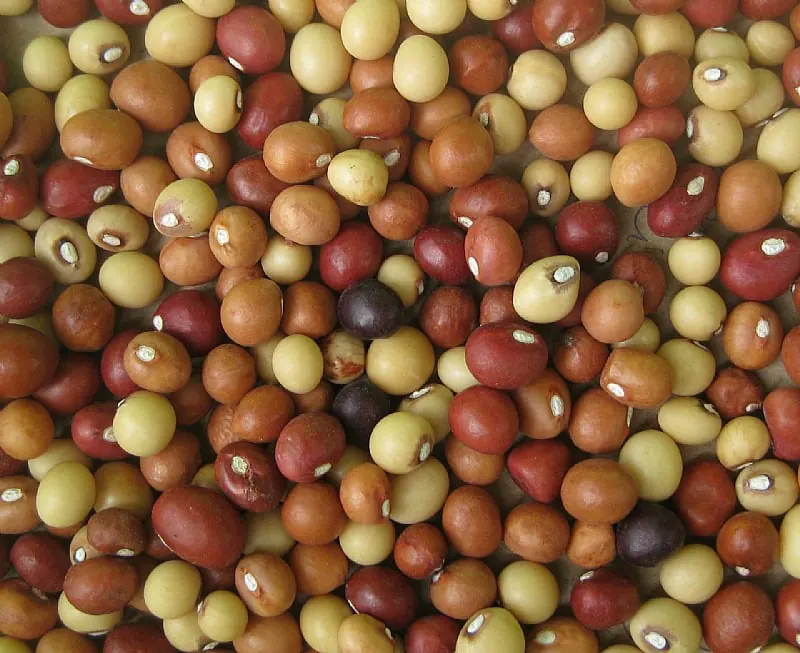
A team of researchers, including Richard Kunz and Tafadzwanashe Mabhaudhi, has developed new maps to identify suitable growing areas for bambara groundnut in southern Africa. The crop, a legume indigenous to Africa, is drought-tolerant and can provide essential nutrients like protein, fibre, and minerals. Bambara groundnut was widely cultivated in Africa during the 1800s and early 1900s but has yet to be widely adopted by commercial agriculture. The researchers used computer simulations to determine the best planting times and land suitability for bambara groundnut in South Africa and Eswatini.
The study used AquaCrop, a crop-growth model developed by the United Nations' Food and Agriculture Organisation, to simulate bambara groundnut growth over 49 growing seasons. The model accounted for daily changes in weather across the six-month growing season, providing a more accurate assessment of land suitability than traditional climate averages. The researchers simulated bambara groundnut production across 5,838 regions in South Africa and Eswatini, using daily weather data from up to 50 consecutive growing seasons. This allowed them to identify areas where the crop could potentially grow and how its performance could vary from one season to another.
The study found that October was generally the most favourable planting month for rainfed bambara groundnut in southern Africa. However, later planting dates often resulted in fewer crops surviving due to the increasing risk of frost towards the end of the growing season. When frost risk was incorporated into the assessment, the regions considered suitable for bambara groundnut planted in October were reduced by 28%. The researchers also found that some land was unsuitable for bambara groundnut due to existing land use, such as mining, urban development, and commercial forestry, reducing the available land by another 20%.
The new maps can help farmers avoid planting bambara groundnut in areas where conditions are unsuitable and the crop is more likely to fail. By accounting for frost risk and existing land use, the maps provide a more accurate assessment of land suitability. The researchers emphasize that a simple map showing "bambara groundnut can grow here" can be misleading, as it does not necessarily mean the crop will reliably produce a useful harvest. The study highlights the importance of providing farmers and agricultural planners with practical information to translate the potential of indigenous crops into production decisions.
To expand the production of indigenous crops like bambara groundnut, farmers and agricultural planners need access to information on where and when to plant these crops. This includes access to seed, markets, labour, equipment, agricultural extension services, processing facilities, and consumer demand. The South African government has formally declared indigenous crops agricultural products under the Marketing of Agricultural Products Act, which could lead to greater commercialisation and market opportunities for small-scale farmers and rural communities.
Supporting the growth of indigenous crops like bambara groundnut can help create a more diverse and resilient food system in southern Africa. These crops are better adapted to harsh growing conditions than many conventional staple crops and can provide essential nutrients to humans. The researchers hope that their study will contribute to the wider adoption of bambara groundnut and other indigenous crops, helping to transform South Africa's westernised food system.
The study's findings have important implications for southern Africa, which is likely to face increased risks of drought in 2026 due to the super El Niño. Wider cultivation of bambara groundnut in South Africa urgently requires government and agricultural extension services to support farmers, as well as the private sector to develop reliable markets and value chains. The researchers' work provides a valuable contribution to the development of sustainable agriculture in southern Africa.
Key points
- The study used computer simulations to create detailed maps of suitable growing areas for bambara groundnut in South Africa and Eswatini.
- The maps can help farmers avoid planting bambara groundnut in areas where conditions are unsuitable and the crop is more likely to fail.
- Wider cultivation of bambara groundnut in South Africa requires government and agricultural extension services to support farmers, as well as the private sector to develop reliable markets and value chains.