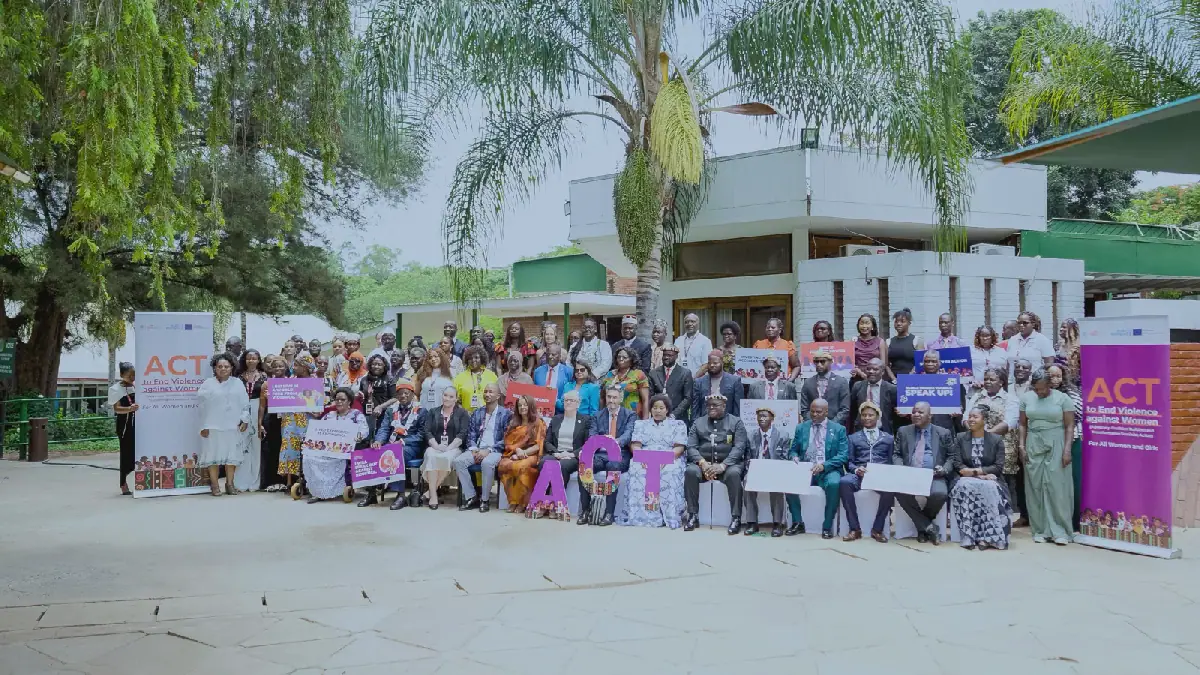
In Eastern and Southern Africa, women and girls experiencing violence often turn to religious and traditional leaders for help before seeking assistance from law enforcement. To address this, new guidelines have been developed to engage these leaders in ending violence against women and girls. The guidelines, created by Equality Now and Solidarity for African Women's Rights (SOAWR) with support from UN Women and the European Union, provide practical recommendations for working with leaders to prevent and respond to violence.
The guidelines advise leaders against mediating cases of rape and child marriage, instead urging them to refer survivors to police, courts, health, and child protection services. A Red Line Protocol has been proposed to identify cases that must be referred to formal services rather than handled through community mediation. This protocol sets a boundary, not a blanket ban, allowing leaders to still help families resolve other disputes where mediation is suitable. The guidelines were developed based on consultations in several African countries, including South Sudan.
According to Mwikali Kasyoka, a Legal Advisor with Equality Now, leaders need clear boundaries and referral systems that work to ensure survivor safety. The guidelines propose mapping referral pathways, clarifying the roles of health services, police, and other service providers, and providing funding for transport and support. Police, judges, and health workers also require trauma-informed training to handle these cases effectively.
The guidelines also address the issue of civil society engagement with religious and traditional leaders, which has often been top-down and short-term. To improve engagement, organisations are recommended to co-design programmes, budget for honoraria, and sign written agreements that set out conduct standards and consequences. This approach aims to build trust and ensure that leaders are involved as partners from the start.
A Women's Caucus has been proposed to give women leaders decision-making power in community responses. This caucus would allow women leaders to agree on priorities first, then join the wider discussion. The guidelines also call for prevention work to involve respected community champions and draw on shared values such as dignity, justice, and respect for life.
The issue of technology-facilitated gender-based violence (TFGBV) is also addressed in the guidelines. With 28% of women experiencing online violence in some African countries, awareness and education are crucial at the grassroots level. The guidelines recommend including TFGBV in training for leaders, community education, and referral systems to combat this growing concern.
The publication of the guidelines coincides with the first International Day for the Elimination of Child, Early and Forced Marriage. Equality Now, with support from UN Women and the European Union, recommends piloting the guidance in rural and traditional communities and refining it in response to feedback. By working together, leaders, governments, and civil society can transform harmful norms and promote cultures of dignity, equality, and non-violence.
Key points
- Religious and traditional leaders are urged to refer cases of rape and child marriage to formal services rather than mediating them.
- The guidelines propose a Red Line Protocol to identify cases that must be referred to formal services.
- A Women's Caucus has been proposed to give women leaders decision-making power in community responses.