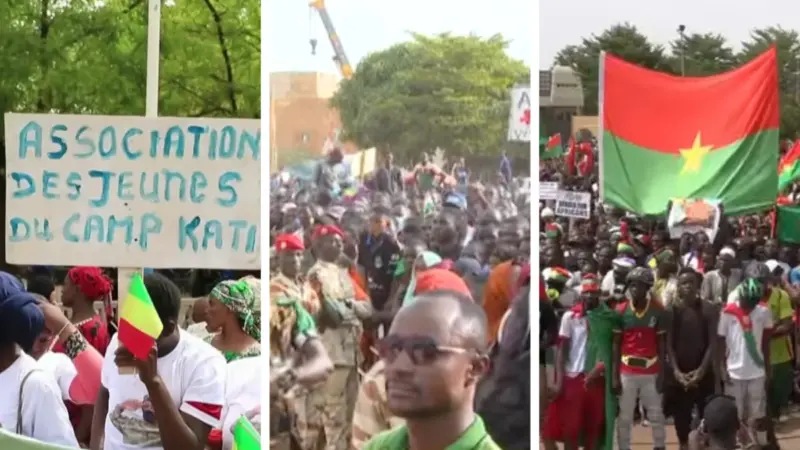
The relationship between protest and democracy is complex, and the Sahel region is a prime example. In Mali, Burkina Faso, and Niger, military juntas have taken power, claiming to restore popular sovereignty. However, their regimes have been marked by the suppression of dissent and the restriction of civic space. The juntas have dissolved political parties, suspended civil society organizations, and attacked labor unions. This has raised questions about the future of democracy in the region.
The situation in Niger is a case in point. On August 28-29, 2026, an attempted military mutiny targeting the presidency, airport, and national television was repelled by General Abdourahamane Tiani's regime, with the support of Russian forces. The incident highlighted the fragility of military regimes in the Sahel and the ease with which they use upheavals to justify cracking down on civic space. The regime's actions have been widely criticized, with many calling for a return to democratic governance.
The international community has expressed concern about the situation in the Sahel. On June 30, 2026, the Office of the United Nations High Commissioner for Human Rights announced the permanent closure of its office in Burkina Faso, after authorities suspended its activities in February. This move was seen as a blow to human rights monitoring in the region. CIVICUS, a global alliance of civil society organizations, has also documented the suspension or dissolution of at least 1,174 civil society organizations in Burkina Faso since the beginning of 2026.
The military takeovers in Mali, Burkina Faso, and Niger were preceded by widespread protests against poor governance, insecurity, and corruption. In Mali, the 2020 protests contributed to the overthrow of President Ibrahim Boubacar Keïta. In Burkina Faso, the two coups of 2022 occurred amid frustration over insecurity. In Niger, the ouster of elected President Mohamed Bazoum in July 2023 was followed by a military statement emphasizing national sovereignty. However, the juntas have since dismantled the pluralism they promised to revitalize.
In Mali, a national consultation recommended the dissolution of political parties and the installation of General Assimi Goïta as president for a five-year term. The decree dissolving the parties was signed on May 13, 2025, despite protests organized by political parties and civil society organizations. These were the first opposition demonstrations in Bamako since 2020, and they highlighted the ongoing tensions between the junta and the civilian population.
The situation in the Sahel has significant implications for democracy and human rights in the region. The military juntas' claims to represent the people have been widely criticized, and their actions have restricted the right to protest and disagree. The international community has called for a return to democratic governance, but the juntas have shown little sign of relenting. As the situation continues to unfold, one thing is clear: the future of democracy in the Sahel hangs in the balance.
The protests in the Sahel are a reminder that democracy requires more than just elections - it requires the right to disagree and to hold those in power accountable. The juntas' attempts to restrict civic space and suppress dissent have been widely condemned, and many are calling for a renewed focus on democratic governance in the region. As the situation continues to evolve, it will be important to watch how the international community responds and what role civil society plays in promoting democracy and human rights.
Key points
- Military juntas in Mali, Burkina Faso, and Niger have restricted the right to protest and disagree, despite claiming to represent the people.
- The international community has expressed concern about the situation in the Sahel, with many calling for a return to democratic governance.
- The protests in the Sahel highlight the complex relationship between protest and democracy, and the need for democratic governance that respects human rights.