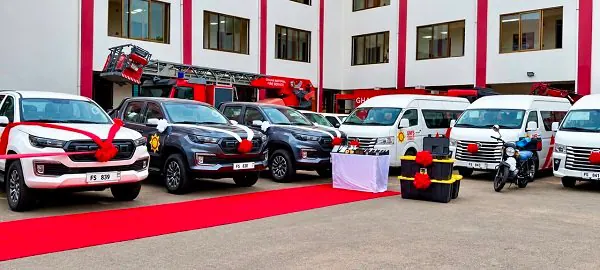
The Ghana National Fire Service (GNFS) is set to receive a boost in its operational capacity with the arrival of new fire tenders within the next four months. This was announced by the Minister for the Interior, Muntaka Mohammed Mubarak, during the commissioning of 26 Automated Fire Safety Compliance System (AFCAS) vehicles and motorcycles in Accra. The procurement process for the fire tenders has been completed by the Central Tender Committee, and the government will proceed to sign the contract to facilitate their delivery.
The new fire tenders are expected to enhance the GNFS's operational readiness, particularly in the face of rapid urbanization, increased industrial activity, growing vehicular traffic, commercial activities, and emerging technologies that are creating increasingly complex risks. Mr. Mubarak emphasized that the government's investment in emergency response institutions is not merely an expenditure but an investment in public safety, national resilience, and sustainable development. He assured that the government remains committed to ensuring that emergency services are adequately equipped, professionally trained, and strategically positioned to respond rapidly and effectively to emergencies.
The commissioned vehicles, which include five 15-seater vans, five saloon cars, six pick-ups, and 10 motorbikes, are part of efforts to support the operations of the GNFS and strengthen its emergency response capacity. The Minister commended AFCAS for its contribution and encouraged the private sector, development partners, civil society organizations, and philanthropic institutions to support initiatives aimed at improving the capacity of emergency response agencies. He also charged the GNFS to maintain and deploy the new vehicles and equipment responsibly.
The Chief Fire Officer, Daniella Mawusi Ntow Sarpong, welcomed the commissioning, stating that it represents more than an addition to the GNFS fleet. She noted that the new resources will enhance the Service's operational capabilities, improve mobility, and response time. Ms. Sarpong emphasized that the vehicles and equipment will provide personnel with the appropriate tools to perform their duties more effectively and strengthen the Service's ability to save lives, protect property, and minimize the impact of disasters on communities.
However, Ms. Sarpong also stressed that equipment alone cannot make a professional fire service, emphasizing that its effectiveness depends on the competence, discipline, maintenance culture, and commitment of the officers operating the assets. She charged personnel entrusted with the vehicles and equipment to handle them with the highest level of professionalism and responsibility. The Chief Fire Officer expressed appreciation to the Minister, AFCAS, and other stakeholders for their support.
The Interior Minister's announcement and the commissioning of the AFCAS vehicles and motorcycles demonstrate the importance of collaboration between the government and the private sector in strengthening public safety and improving the operational capacity of emergency response institutions. The Minister's call for responsible maintenance and deployment of the new resources highlights the need for accountability and operational discipline in the use of these assets.
The GNFS is expected to benefit significantly from the new fire tenders and equipment, which will enhance its ability to respond to emergencies and save lives. The government's commitment to investing in emergency response institutions is a positive step towards ensuring public safety and national resilience. Key stakeholders, including the Minister, AFCAS, and the GNFS, have emphasized the importance of collaboration, professionalism, and responsible maintenance in the use of these resources.
Key points
- The first batch of newly procured fire tenders for the Ghana National Fire Service will arrive within four months.
- The new fire tenders will boost the operational readiness of the GNFS.
- The government has committed to investing in emergency response institutions to ensure public safety and national resilience.