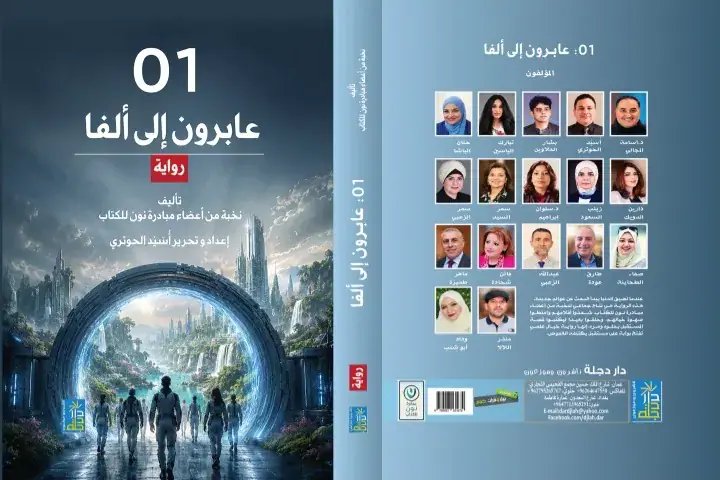
The novel, published by the Noun Book Initiative in 2026, is a thought-provoking exploration of humanity's relationship with technology and its potential impact on our future. Through a series of interconnected stories, the authors examine the intersection of science, technology, and humanity, inviting readers to consider the implications of emerging technologies on our understanding of identity, memory, and existence. By delving into themes such as artificial intelligence, virtual reality, and the digital storage of memories, the novel encourages readers to reflect on the consequences of human innovation.
At the heart of the novel is the story of Najeeb Al-Shatri, who embarks on a scientific journey to recover the memories of the late writer, Hafeez Manguib. Using a device that can capture and convert memories into text, Najeeb's quest raises fundamental questions about the nature of humanity and whether it is possible to restore a person's identity through their memories. This narrative thread is woven together with other stories, including that of Adnan and Qahtan, two characters who seek to escape the devastation of war and find solace in a new world.
The novel's use of science fiction as a literary device allows the authors to explore complex themes and ideas in an engaging and accessible way. By creating a futuristic world with its own set of rules and technologies, the authors are able to comment on contemporary issues and challenge readers to think critically about the consequences of human actions. Through its exploration of virtual worlds, artificial intelligence, and the intersection of human and machine, the novel offers a nuanced and thought-provoking examination of what it means to be human.
One of the novel's greatest strengths is its ability to balance scientific and technological concepts with philosophical and emotional depth. The authors' use of language is clear and concise, making the novel accessible to a wide range of readers. While some sections may feel more like informative expositions than narrative storytelling, the novel's collaborative nature and ambitious scope make it a remarkable achievement.
The novel's exploration of identity, memory, and human existence is both timely and timeless. As we continue to develop and rely on emerging technologies, it is essential to consider the implications of these innovations on our understanding of ourselves and our place in the world. Through its thought-provoking themes and engaging narrative, the novel offers a valuable contribution to the science fiction genre and encourages readers to think critically about the future.
The collaborative nature of the novel is both a strength and a weakness. While the multiple authors bring diverse perspectives and ideas to the text, the narrative voice and style can feel inconsistent at times. Nevertheless, the novel's editors have done an admirable job of weaving the different storylines and themes together to create a cohesive and engaging narrative.
As the novel concludes, it is clear that the authors have created a work that is both a reflection of our current world and a commentary on the potential futures that lie ahead. Through its exploration of technology, humanity, and existence, the novel offers a powerful reminder of the importance of considering the consequences of our actions and the need for responsible innovation.
Key points
- The novel explores the intersection of science, technology, and humanity, inviting readers to consider the implications of emerging technologies on our understanding of identity, memory, and existence.
Reporting sources
- رواية “صفر واحد: العابرون إلى ألفا” رحلة سبعة عشر كاتبا أردنيا · Libya Al Jadida