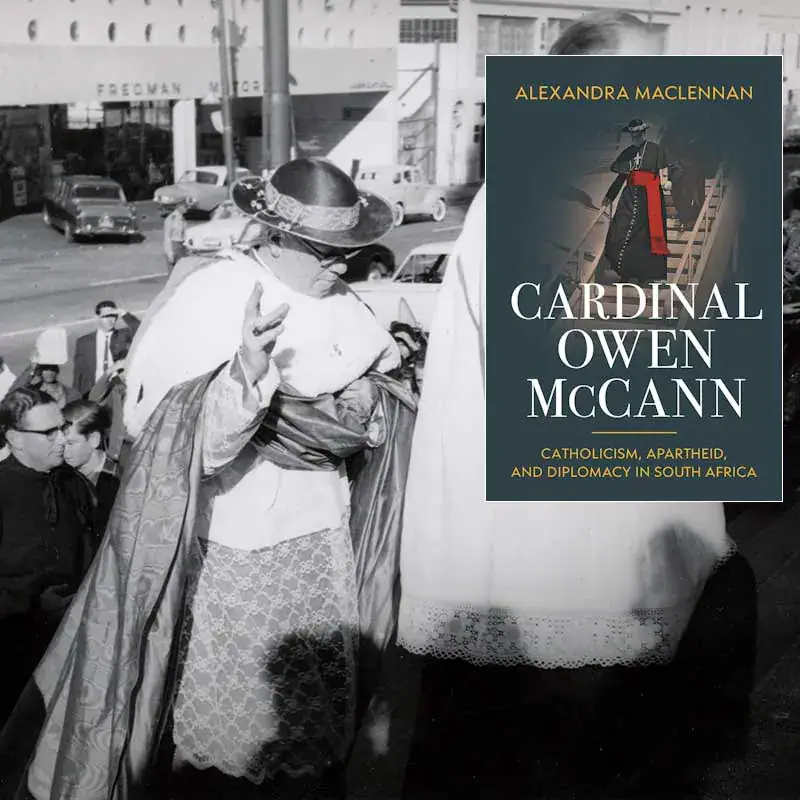
A new biography of Cardinal Owen McCann, former Archbishop of Cape Town, is shedding light on the complex role he played in South Africa during the apartheid era. Authored by Alexandra Maclennan, the book draws on McCann's personal papers and recently released Vatican Archives to present a nuanced picture of the cardinal's life and legacy. McCann, who served as archbishop from 1951 to 1984, was a key figure in the South African Catholic Church during a time of great turmoil.
McCann's early life and education are revealed in the biography, which shows how his Irish ancestry and Catholic upbringing shaped his perspective. Born in 1907 in Cape Town's Woodstock suburb, McCann attended Catholic schools and later studied commerce at the University of Cape Town. He entered the seminary and completed his studies at Rome's Urbaniana University, before being ordained in 1935. Maclennan's research highlights McCann's deep affinity with his Irish episcopal "ancestors" and his commitment to Catholic Social Teaching.
The biography also explores McCann's role in the South African bishops' conference, where he served as president from 1961 to 1974. During this time, the Church shifted from caution to more outspoken opposition to apartheid. McCann attended the Second Vatican Council, where he made several interventions, and was created cardinal in 1965, becoming the first cardinal in South Africa's history. Maclennan's book reveals McCann's diplomatic approach to politics, which was shaped by his concern for the Church's wellbeing and his perception of the need for gradual social change.
Maclennan's research highlights the complex politics of church and state during McCann's tenure, including his relations with the Vatican and the South African government. The biography shows how McCann navigated these complex relationships, often walking a fine line between caution and bold action. While some may have seen him as too cautious, Maclennan's book reveals a more nuanced picture of a leader who was deeply committed to social justice and the Catholic faith.
One of the most significant contributions of Maclennan's biography is its exploration of Vatican diplomacy with South Africa during the apartheid era. The book reveals that some Vatican delegates shared McCann's concerns about communism and its potential influence on African nationalism. This nuanced understanding of the Church's role during this period challenges simplistic narratives and offers a more complex picture of the times.
The biography also sheds light on McCann's later life, including his return to The Southern Cross after his retirement as archbishop in 1984. McCann died in 1994, just before South Africa's first democratic election. Through her book, Maclennan offers a rich description of Cardinal McCann, highlighting his warmth, diplomacy, liberal convictions, and dedication to the Church he served.
Maclennan's biography is a major contribution to South African Church history and modern South African history. By avoiding judgment and focusing on understanding, the author provides a nuanced and balanced account of McCann's life and legacy. The book challenges readers to rethink their assumptions about the cardinal and the Catholic Church's role during the apartheid era, offering a fresh perspective on a complex and tumultuous period in South African history.
Key points
- The biography draws on McCann's personal papers and recently released Vatican Archives to present a nuanced picture of the cardinal's life and legacy.
Reporting sources
- Rediscovering Cardinal Owen McCann · The Southern Cross