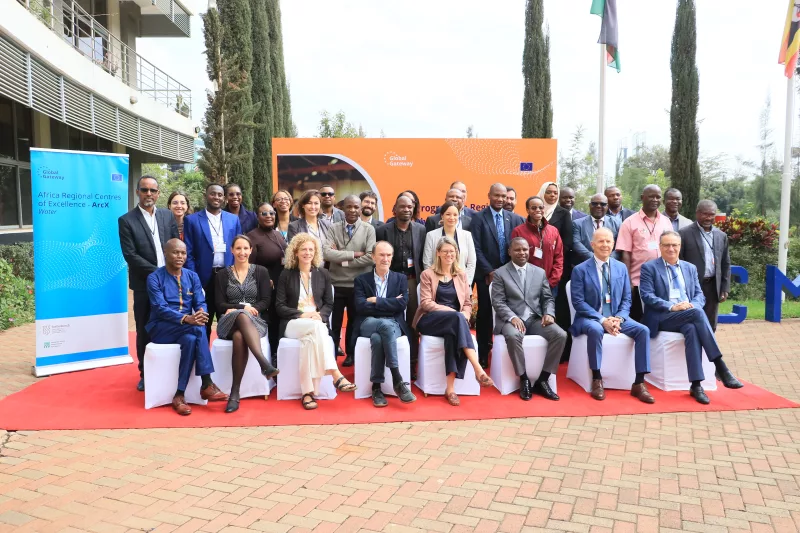
The Regional Centre for Mapping of Resources for Development (RCMRD) has launched the Biodiversity Outlook for Eastern and Southern Africa (BOESA), a regional resource aimed at improving access to biodiversity information and supporting evidence-based conservation and policy action. BOESA covers 24 countries in Eastern and Southern Africa and brings together biodiversity data, regional perspectives, and practical conservation experiences. The publication was launched on September 22, 2026, during the Regional Workshop on Integrated Landscape-Seascape Modelling for Climate Resilience Development in East Africa in Nairobi.
BOESA was developed by RCMRD in collaboration with the European Union. According to RCMRD, the publication aims to improve understanding of the region's biodiversity and the measures needed to conserve it. It also highlights the importance of accessible, credible, and locally relevant information in conservation planning and decision-making. The publication compiles biodiversity data, information, case studies, and insights from 24 countries across the region.
Sanne Willems, Regional Partnerships at the Delegation of the European Union to Kenya, noted that research gathered through various programs often fails to translate into policy and action. Willems said BOESA was intended to help bridge that gap by making biodiversity information more accessible while strengthening countries' capacity to act on available data. She emphasized that collecting data is not enough and that this program is translating that data into very accessible information for young people as well as decision-makers.
RCMRD Director General Dr. Emmanuel Nkurunziza said the publication brings together data, knowledge, and regional experiences to support biodiversity conservation decisions. Nkurunziza stated that BOESA reflects the importance of bringing together data, knowledge, and regional experiences to support informed decisions for biodiversity conservation. He added that making biodiversity information more accessible would support a range of stakeholders involved in conservation and development.
The launch of BOESA comes as countries work towards the 2030 targets of the Kunming-Montreal Global Biodiversity Framework. The publication also comes ahead of the 17th Conference of the Parties to the Convention on Biological Diversity (COP17), scheduled for October 19 to 30, 2026, in Yerevan, Armenia. COP17 will feature the first global review of collective progress in implementing the framework.
RCMRD said BOESA will provide a reference for understanding progress, identifying gaps, and strengthening action for nature. Developed under the RCoE-ESA initiative, the publication also supports RCMRD's work in applying geospatial information, Earth observation, and knowledge-sharing to environmental challenges and sustainable development. The centre said BOESA will provide a platform for shared learning, regional visibility, and stronger collaboration as countries work towards a nature-positive future.
The Regional Centre for Mapping of Resources for Development (RCMRD) is working to apply geospatial information, Earth observation, and knowledge-sharing to environmental challenges and sustainable development. BOESA is part of this effort, aiming to support policymakers, conservation practitioners, researchers, development partners, and communities in advancing nature-positive action across the region.
Key points
- The Regional Centre for Mapping of Resources for Development (RCMRD) launches the Biodiversity Outlook for Eastern and Southern Africa (BOESA) to improve access to biodiversity information.
- BOESA covers 24 countries in Eastern and Southern Africa and brings together biodiversity data, regional perspectives, and practical conservation experiences.
- The publication aims to support evidence-based conservation and policy action, as well as inform progress towards the 2030 targets of the Kunming-Montreal Global Biodiversity Framework.