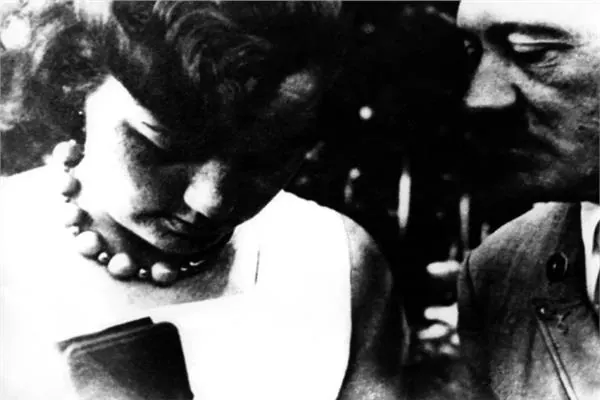
Nearly 95 years after her death, the mysterious circumstances surrounding the demise of Angela "Geli" Raubal, Adolf Hitler's niece, have been re-examined. According to recently discovered archival documents, the official timeline of events may have been fabricated. The documents reveal discrepancies in the recorded time and date of Raubal's death, sparking new questions about Hitler's potential involvement and the Nazi regime's possible cover-up.
For decades, the prevailing narrative stated that Raubal's body was found on September 19, 1931, with a gunshot wound from Hitler's pistol. However, the newly discovered documents suggest that the actual discovery occurred on September 18, 1931, at 10:15 am. This new information implies that Hitler may have been present in Munich at the time of the incident, contradicting his alibi. The documents were uncovered by German historian Harald Sandner.
The archival records, including death certificates and official announcements, indicate that Raubal's death occurred 24 hours earlier than initially thought. This revelation raises suspicions about the potential involvement of Nazi officials in a cover-up. Historians speculate that the regime may have sought to conceal the truth to protect Hitler's reputation and maintain a positive public image.
The relationship between Hitler and Raubal has been described as complex and controlling. Raubal, 23, lived with her uncle in Munich, and reports suggest that Hitler was intensely possessive and jealous of her. Witnesses and investigations indicate that the two had a heated argument shortly before her death, reportedly over Raubal's desire to pursue her musical studies in Vienna.
While the new documents do not provide conclusive evidence of Hitler's involvement in Raubal's death, they do challenge the established timeline and warrant a re-examination of the case. Historians believe that the Nazi regime had a vested interest in downplaying the incident, as it could have damaged Hitler's reputation and jeopardized his chances of gaining moderate right-wing support.
The case has sparked intense debate among historians, with some suggesting that the discrepancies in the official records may be attributed to the involvement of sympathetic Nazi officials. Others argue that the regime's efforts to conceal the truth may have been driven by electoral considerations, as Hitler sought to present himself as a symbol of virtue and moderation.
The mystery surrounding Raubal's death remains unsolved, but the newly discovered documents have rekindled interest in the case. As researchers continue to analyze the archival records, they hope to uncover further insights into the circumstances surrounding Raubal's tragic demise and the potential involvement of one of history's most infamous figures.
Key points
- The newly discovered documents reveal discrepancies in the official timeline of Angela "Geli" Raubal's death, suggesting that Adolf Hitler may have been present in Munich at the time of the incident.
- The archival records indicate that Raubal's death occurred 24 hours earlier than initially thought, sparking suspicions about a potential cover-up by Nazi officials.
- The case has sparked intense debate among historians, with some suggesting that the discrepancies in the official records may be attributed to the involvement of sympathetic Nazi officials.