Djibouti's push to become a major logistics hub in the region has received a boost from the Netherlands. The two countries have discussed investments in key infrastructure projects, including a 60-megawatt wind farm and a floating dock for ship repairs. The wind farm, which began operations in 2023, was built with a total investment of $122 million. The project was financed by Climate Fund Managers, the Dutch development bank FMO, Africa Finance Corporation, and Great Horn Investment Holding.
The Netherlands has invested $94 million in the floating dock project at Djibouti's ship repair yard, the largest in East Africa and the Red Sea. The yard is expected to improve the country's ship repair capabilities and support the growth of its maritime industry. The project is part of a broader effort to enhance Djibouti's connectivity and infrastructure. The country's strategic location, adjacent to the Bab el-Mandeb Strait, makes it an important hub for trade and commerce in the region.
The Netherlands is also investing in Djibouti's cold chain sector, which is critical for the export of perishable goods. A study conducted by Dutch company Boskalis in 2017 identified opportunities for improving the cold chain in Djibouti. The project aims to create a "cross-docking" platform at the port terminal to speed up handling and reduce transit times. A trial shipment of cut flowers has already been successfully transported through Djibouti, demonstrating the potential for more sustainable supply chains.
The discussions between Djibouti and the Netherlands also covered the future of the Ethiopia-Djibouti railway, a standard-gauge line that connects the two countries. The two parties have developed an economic model that would allow private operators to use the rail network, while keeping the infrastructure and signaling under public control. This model aims to make the rail network more competitive with road transport and increase its efficiency.
The integration of South Sudan into the Djibouti-Ethiopia-South Sudan corridor was also discussed. The two countries explored concessions for river ports and a fleet of barges, in partnership with Dutch shipbuilder Damen. The Netherlands is also interested in supporting Djibouti's implementation of the African Continental Free Trade Area, particularly with regards to the free movement of goods.
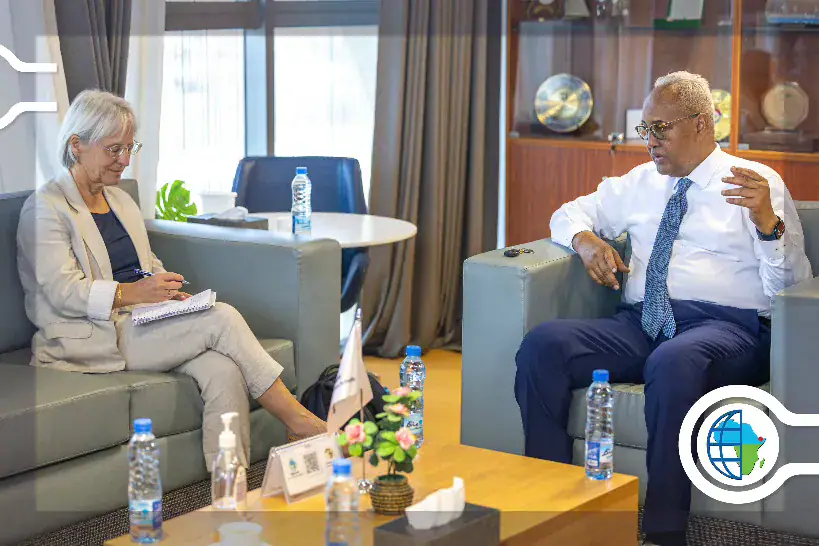
The Ambassador of the Netherlands to Djibouti, Marie-Christine Pirenne, met with the President of the Djibouti Ports and Free Zones Authority, Aboubaker Omar Hadi, to discuss the progress of these projects. The two officials reviewed the investments made by the Netherlands in Djibouti's infrastructure and discussed opportunities for further cooperation. The Netherlands has become a key partner for Djibouti in its efforts to develop its logistics and transportation sector.
The growth of Djibouti's logistics sector is critical for the country's economic development. The Netherlands' investments in wind energy, ship repair, and cold chain projects will help Djibouti achieve its goal of becoming a major logistics hub in the region. The two countries will continue to work together to implement these projects and explore new opportunities for cooperation.
Key points
- The Netherlands has invested $122 million in a 60-megawatt wind farm in Djibouti, which began operations in 2023.
- The Netherlands has invested $94 million in a floating dock project at Djibouti's ship repair yard.
- The two countries are working together to develop Djibouti's cold chain sector and improve the country's logistics and transportation infrastructure.
Reporting sources
- Les Pays-Bas confortent leur place dans l'essor logistique de Djibouti · agence djiboutienne d'information