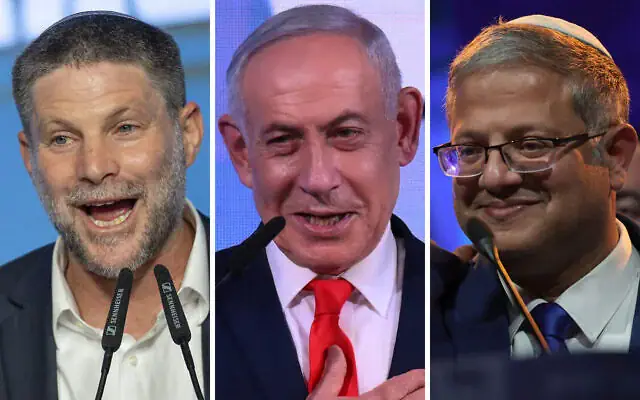
The final results of the Israeli general election have been officially announced, with Prime Minister Benjamin Netanyahu's party and its allies securing 53 seats in the Knesset, the country's parliament. This number falls short of the majority required to form a government. According to the Central Election Committee, the opposition parties have secured 48 seats, while Arab parties have obtained a total of 19 seats.
The Likud party, led by Netanyahu, emerged as the largest party with 27 seats, followed by Yashar with 21 seats and B'Yachad with 12 seats. Other parties that secured seats in the Knesset include Joint List and Ra'am with 11 and 8 seats respectively, The Democrats with 8 seats, Yisrael Beytenu with 7 seats, United Torah Judaism with 7 seats, Otzma Yehudit with 7 seats, Shas with 6 seats, and Religious Zionism with 6 seats.
The voter turnout in the election was 77.9%, the highest in decades, with a total of 5,716,665 votes cast. One of the notable outcomes of the election was the success of Arab-led parties, which collectively secured 19 seats, nearly double the 10 seats they had in the previous parliament. However, their potential cooperation with some opposition groups is uncertain due to the reluctance of some Zionist party leaders to collaborate with them.
Two parties that participated in the election, Reservists-Economic led by Yoaz Hendel and People of Israel led by Ofer Winter, failed to cross the 3.25% threshold required to secure parliamentary representation. With the results, no side has achieved the 61 seats needed to form a government, setting the stage for challenging political negotiations in the coming period.
Israeli President Isaac Herzog is expected to receive the official results on Wednesday after the Election Committee completes its review of complaints and alleged irregularities. He will then meet with party leaders to hear their recommendations on who should be tasked with forming a government. The new Israeli parliament is set to be sworn in on November 10, 2026.
The negotiations to form a government are expected to be prolonged due to the absence of a party with sufficient seats to secure a majority. President Herzog has urged party leaders to engage in talks with the intention of reaching an agreement and avoiding another election. The focus is now on the political negotiations that will determine Netanyahu's fate and the structure of Israel's next government.
The outcome of the election has significant implications for Netanyahu's future as Prime Minister and the composition of the next Israeli government. The country is likely to experience a period of political uncertainty as parties engage in negotiations to form a coalition government. The success of Arab-led parties and the reluctance of some Zionist party leaders to collaborate with them add complexity to the negotiations.
Key points
- Netanyahu's party secured 53 seats, short of the majority required to form a government.
- Arab-led parties achieved significant gains, securing 19 seats in the Knesset.
- The new Israeli parliament is set to be sworn in on November 10, 2026.