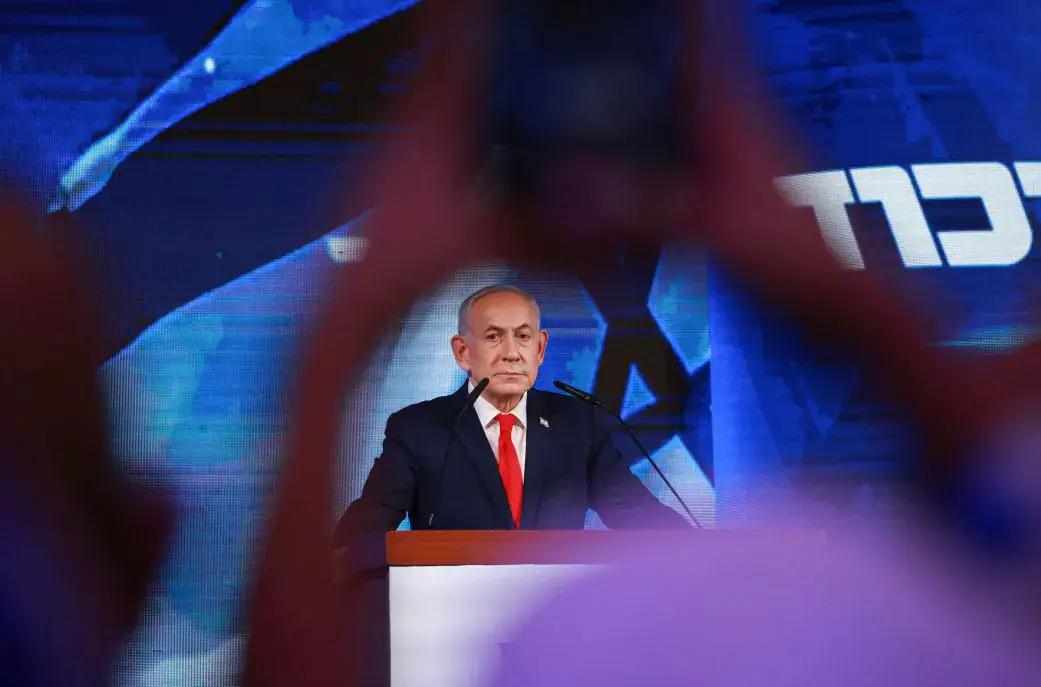
The recent Israeli legislative elections have concluded with Prime Minister Benyamin Netanyahu's Likud party emerging as the leading force, securing 27 seats in the 120-member Knesset. However, his coalition of right-wing and far-right parties only managed to secure a total of 53 seats, falling short of the 61-seat majority required to form a government. This development sets the stage for potential negotiations with other parties, including those representing Israel's Arab population.
The opposition bloc, led by centrist Gadi Eisenkot, secured 48 seats, according to the final results published by the Israeli Electoral Commission on October 30. The elections were closely watched, with Netanyahu's camp seeking to maintain control of the Knesset. Despite the outcome, Netanyahu's Likud party remains the largest party in the parliament, but will need to engage in coalition talks to form a government.
A significant development in the election results is the surge in support for Arab parties, which could play a crucial role in shaping the next government. The two main Arab lists, Raam and the Unified List, secured a total of 19 seats, making them a key player in coalition negotiations. This increase in representation for Arab parties has been seen as a significant shift in Israeli politics.
The election campaign was not without controversy, with Netanyahu's camp accusing the Arab parties of electoral fraud. Allegations of Qatari funding for the Arab parties were made, but these were swiftly rejected by the parties concerned and the Qatari government. In response, Eisenkot accused Netanyahu of attempting to "delegitimize the election results."
The outcome of the elections has left both main blocs without a clear majority, with the 61-seat threshold for a majority government still out of reach. As a result, the Arab parties may hold significant influence over the formation of the next government. Their role in any potential coalition will be closely watched, both domestically and internationally.
The implications of the election results are far-reaching, with the possibility of a protracted period of coalition negotiations. Netanyahu's ability to form a government will depend on his capacity to build alliances with other parties, potentially including the Arab lists. The next few weeks will be critical in determining the course of Israeli politics.
The international community is closely monitoring the developments in Israel, with many countries eager to see a stable government emerge. The US, in particular, has been closely following the elections, given the significant strategic relationship between the two countries. As Israel navigates this complex period, the global community will be watching closely.
Key points
- The Likud party, led by Benyamin Netanyahu, has emerged as the largest party in the Knesset, but will need to form alliances to secure a majority.
- The Arab parties, Raam and the Unified List, have secured 19 seats, giving them potential influence over the formation of the next government.
- The election results have sparked controversy, with allegations of electoral fraud and attempts to delegitimize the outcome.