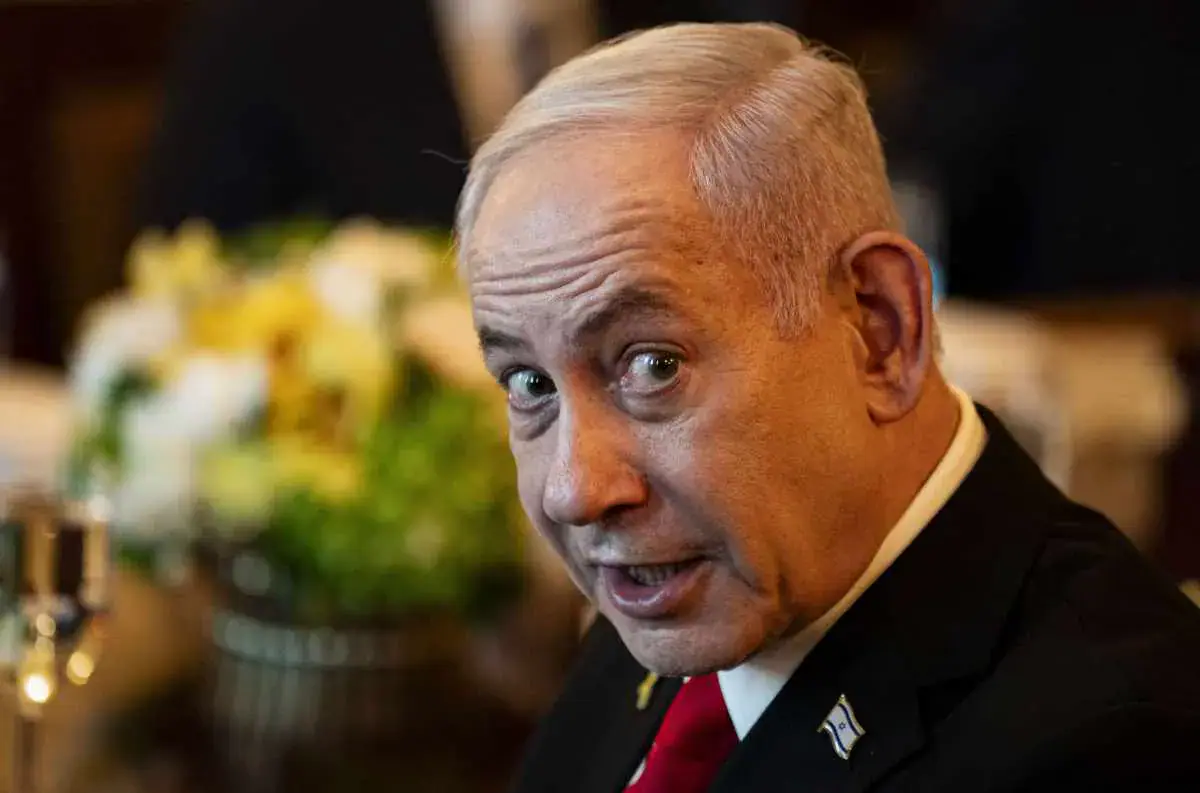
Israeli Prime Minister Benjamin Netanyahu's nearly 18-year tenure appears to be coming to an end after the October 27 legislative elections. His rival, Gadi Eisenkot, has garnered support from 67 lawmakers out of 120 in the Israeli Parliament. This development has put Netanyahu in a precarious position, with his future as Prime Minister uncertain. Eisenkot, a former army chief of staff, has been designated by President Isaac Herzog to attempt to form the next government.
The election results have dealt a significant blow to Netanyahu, who has been a dominant figure in Israeli politics for decades. His bloc secured only 53 seats, making it challenging for him to maintain power. In contrast, Eisenkot's supporters include 19 lawmakers from Arab parties, although this alliance is fragile, with some potential partners hesitant to participate in a future coalition. The two camps do not have a majority on their own, as 61 seats are required to form a government.
Eisenkot has 28 days, with the possibility of an extension, to negotiate a viable coalition. If he fails, Netanyahu may have another opportunity to form a government. However, if no agreement is reached, the country may be headed for new elections, prolonging the period of political uncertainty. Netanyahu, 77, has been a central figure in Israeli politics since first taking office in 1996. He has navigated multiple wars, political crises, and tumultuous election cycles.
Despite his long tenure, Netanyahu's future now hangs in the balance. His record-breaking time as Prime Minister may be coming to an end. However, until Eisenkot successfully forms a coalition, the battle for power remains open. The outcome will depend on the ability of Eisenkot to secure the necessary support from lawmakers. Netanyahu's supporters are still hopeful that he can maintain power.
The shift in the balance of power in the Israeli Parliament has significant implications for the country's future. Netanyahu's policies have been a subject of controversy, and his potential departure may lead to changes in Israel's governance. Eisenkot's rise to prominence could signal a new era in Israeli politics. His ability to form a stable coalition will be crucial in determining the country's direction.
The international community is closely watching the developments in Israel, as the country's stability has significant implications for regional and global security. The Israeli-Palestinian conflict remains a pressing issue, and the outcome of the current political crisis may impact efforts to resolve it. As the situation unfolds, the international community will be monitoring the situation closely.
The coming days and weeks will be crucial in determining the future of Israel's government. Eisenkot's efforts to form a coalition will be closely watched, as will Netanyahu's attempts to maintain power. The outcome will have far-reaching consequences for Israel and the region, and the world will be watching with great interest.
Key points
- Netanyahu's 18-year rule is in jeopardy after the October 27 legislative elections.