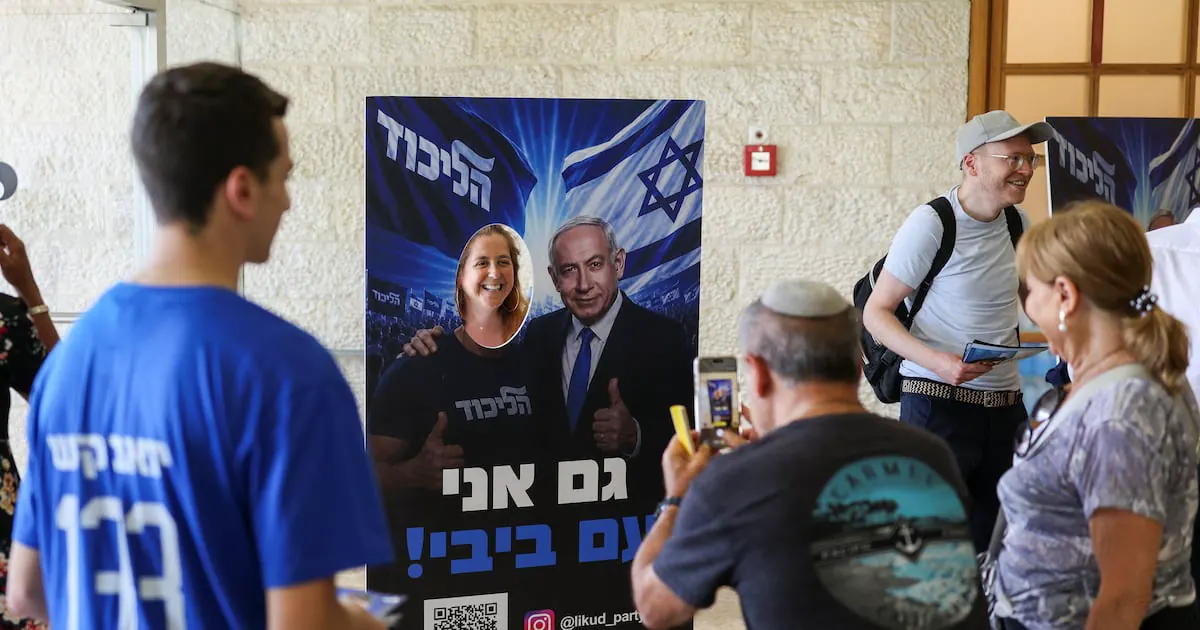
Israeli Prime Minister Benjamin Netanyahu is employing familiar campaign tactics as he seeks to retain power in the upcoming election on October 27. Despite facing criticism over a recent Hamas attack, Netanyahu is presenting himself as the only leader capable of keeping Israelis safe in a hostile region. His campaign slogan, "Netanyahu does not surrender," reflects his long-standing approach to politics. However, opinion polls suggest that his Likud party may lose about a third of its parliamentary seats.
The October 7 Hamas attack, which resulted in one of Israel's worst security breaches, has significantly damaged Netanyahu's security credentials. The attack, masterminded by a Palestinian militant group, caught Israel's military off guard and has led to a multifront war with limited strategic gains. Netanyahu has been forced to deny media reports that his Middle East partners warned him of a potential Hamas attack, allegations seized on by his political rivals. This has raised questions about his ability to navigate Israel's national security and diplomacy.
Netanyahu's campaign strategy involves portraying his political rivals as weak leftists who lack the resolve to wage war on Israel's enemies. In a recent video shot at a military airbase, he warned potential attackers, saying, "Don't mess with us, not now and not ever." He also emphasized that there were signs of planned attacks before the election. However, Yohanan Plesner, president of the Israel Democracy Institute, notes that this election is, in many ways, a referendum on Netanyahu's responsibility for the security failure and the government's response.
Netanyahu's main rival, Gadi Eisenkot, a hawkish former military chief, heads a new centrist party, Yashar. Netanyahu has used familiar tactics against Eisenkot, stoking fear among parties representing Israel's Arab minority by warning that his rivals will form a government with Arab factions that will compromise security. However, Amotz Asa-El, a political analyst, suggests that Netanyahu's approach might be a long shot, given Eisenkot's security background and centre-right party candidates.
Despite facing challenges, Netanyahu's team appears focused, with no signs of panic or disarray. A source close to Netanyahu said that he approaches all elections as though he is going to lose, which has often helped him win. Netanyahu's address at the UN, in which he defended Israel's actions in the region, featured heavily on his Telegram channel. He posted several teasers before the address, showcasing his continued efforts to promote his agenda.
The Israeli election takes place against a backdrop of deeper diplomatic isolation, with tens of thousands of Palestinians killed and much of Gaza in ruins. Support for Israel has fallen, even in its most important ally, the US. Netanyahu's last campaign in 2019 featured Donald Trump's image on election billboards, but this time, the US president's image is absent from Likud's campaign videos. Nevertheless, Netanyahu remains Israel's longest-serving leader, first elected prime minister in 1996.
The outcome of the election remains uncertain, with polls suggesting that Netanyahu may not command a parliamentary majority. Analysts suggest that his strategy may be to win enough seats to prevent the emergence of an alternative government, leading to a stalemate and potentially another election. As Netanyahu turns 77 days before the election, his ability to present himself as the best-equipped leader to navigate Israel's national security and diplomacy remains a significant question.
Key points
- Netanyahu struggles to salvage security credentials amid criticism over Hamas attack
- Election outcome uncertain, with polls suggesting Netanyahu may not command a parliamentary majority
- Netanyahu employs familiar campaign tactics, portraying rivals as weak leftists who lack resolve to wage war on Israel's enemies