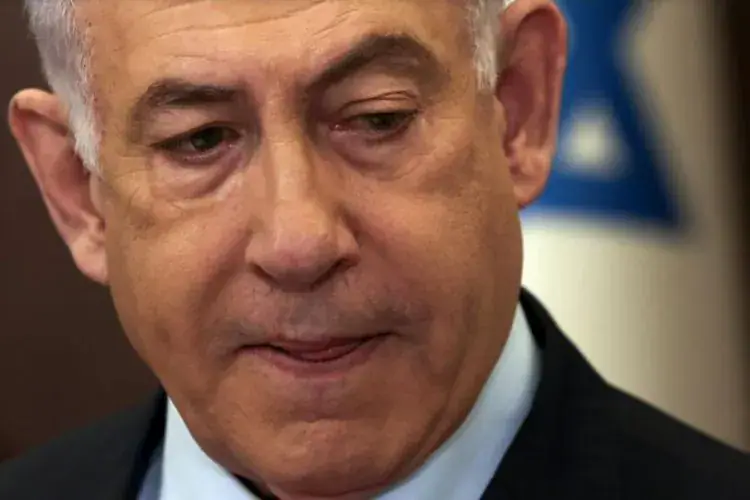
Benjamin Netanyahu, the former Prime Minister of Israel, is facing significant challenges in his bid to regain the top position. Despite his party emerging as the largest in the recent election, Netanyahu has only secured 46 supporters, while his rival Gadi Eisenkot has garnered 67 endorsements out of 120. The significant role of Arab parties in the negotiations to form a new government has contributed to Netanyahu's difficulties.
The recent election did not yield a clear majority for either side, prompting President Isaac Herzog to begin consultations with political parties on November 4. Herzog aims to identify a candidate who can form a government. Netanyahu's party suffered a blow when a key ally, a religious Jewish party, withdrew its support. This development reduced his expected backing and created an opportunity for Eisenkot to gain traction.
Eisenkot's surge in support is largely attributed to the unexpectedly high turnout of Palestinian citizens of Israel in the election. This increased participation gave Arab parties significant influence in the negotiations to form a new government. While Eisenkot has more supporters than Netanyahu, his path to becoming Prime Minister is not straightforward. His supporting parties disagree on the role Arab parties will play in the government and the issue of drafting ultra-Orthodox Jews into the military.
President Herzog emphasized that although the number of supporting deputies suggests Eisenkot has a stronger chance of being tasked with forming a government, he must still determine who can successfully form a government. Herzog will announce who will be given the task of forming a government on November 8. If Eisenkot is chosen, he will have 42 days to form a government, but disagreements among his supporting parties may hinder this process.
Netanyahu's reduced influence is a significant development in Israeli politics. His party's victory in the election was not enough to secure his position as Prime Minister. The complex negotiations and the role of Arab parties have created uncertainty in the formation of a new government. As the deadline for forming a government approaches, Israeli politicians and citizens are eagerly awaiting the outcome.
The Israeli President's consultations with political parties aim to find a candidate who can form a stable government. With the election results not providing a clear majority, Herzog's task is crucial in determining the next steps for the country. The involvement of Arab parties in the negotiations has added complexity to the process, but it also highlights the importance of their role in Israeli politics.
As the situation unfolds, it remains to be seen whether Netanyahu or Eisenkot will succeed in forming a government. The next few days will be crucial in determining the future of Israeli politics and the leadership of the country. The challenges facing Netanyahu and Eisenkot underscore the complexities of Israeli politics and the difficulties of forming a stable government.
Key points
- Netanyahu faces significant challenges in forming a government despite his party winning the most seats in the recent election.
- Eisenkot has garnered more support than Netanyahu, but his path to becoming Prime Minister is complicated by disagreements among his supporting parties.
- The role of Arab parties in the negotiations has added complexity to the process of forming a new government in Israel.
Reporting sources
- Netanyahu mu ihurizo ryo kongera kuba Minisitiri w’intebe wa... · Isango star Radio