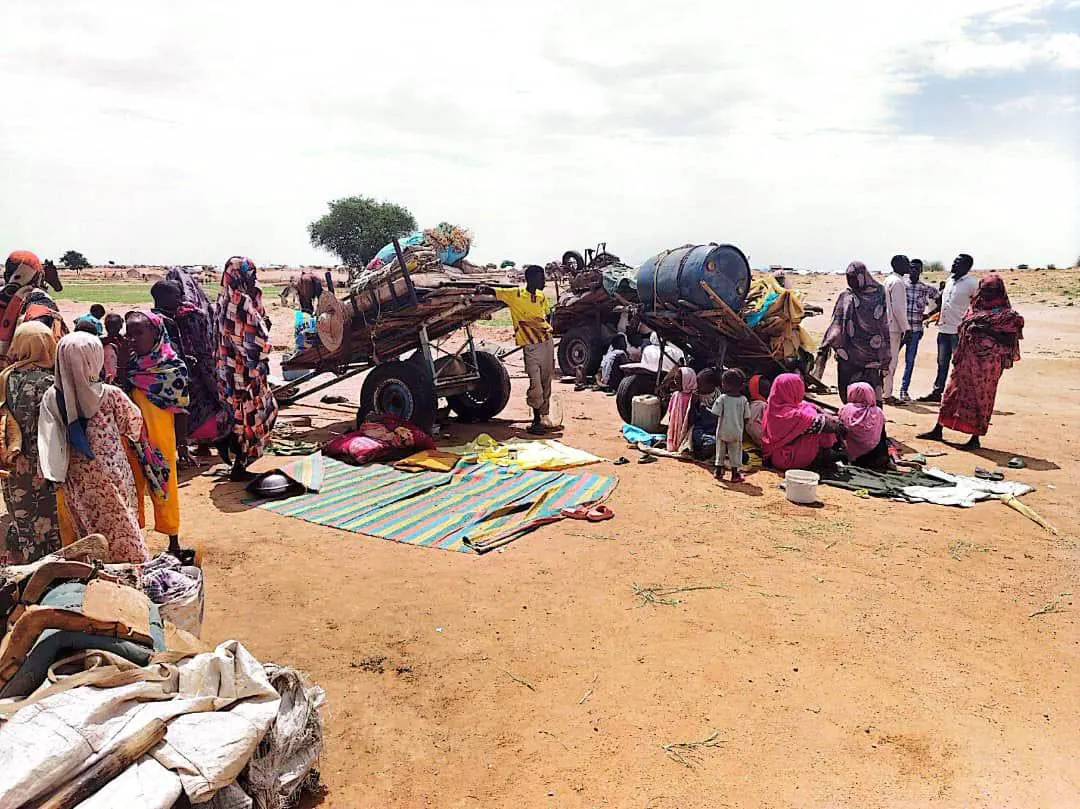
The General Coordination for Refugee and IDP Camps in Darfur reported that Tulila has received a significant influx of displaced persons. From October 4 to 12, 557 families, comprising 2,199 individuals, arrived in the area. They came from various parts of North Darfur, including Dar Salam, Turra, and Dar Al-Samayat. This recent wave of displacement adds to the growing number of people seeking refuge in Tulila.
According to the General Coordination's spokesperson, Adam Rajal, the total number of new arrivals in Tulila since September 1, 2026, has reached 1,726 families, consisting of 8,390 people. This surge in displacement highlights the escalating humanitarian crisis and ongoing forced migration in the region. The situation is dire, with thousands of civilians, particularly women, children, and the elderly, facing significant challenges.
The living conditions in Tulila are becoming increasingly difficult, with overcrowding and a shortage of basic services. The health and nutritional situation, especially among children, is a major concern. Reports indicate that many children are suffering from malnutrition, with cases of stunting and weight loss on the rise due to inadequate food and limited humanitarian assistance.
The risk of waterborne diseases is also high, with reports of dengue fever, malaria, typhoid, and acute diarrhea. The overcrowding and strain on healthcare services, water, and sanitation facilities have created an environment conducive to the spread of diseases. Urgent health interventions are necessary to prevent further suffering, particularly among vulnerable populations.
The General Coordination for Refugee and IDP Camps in Darfur emphasized that the situation in Tulila requires immediate attention and support. The ongoing displacement and dire humanitarian conditions underscore the need for a comprehensive response to address the needs of the affected populations.
The crisis in North Darfur has led to a significant increase in displacement, with many people forced to flee their homes due to conflict and insecurity. The situation is likely to continue deteriorating unless a peaceful resolution is found, and humanitarian assistance is scaled up to meet the needs of those affected.
The international community and humanitarian organizations are urged to provide urgent support to address the humanitarian crisis in Tulila and other affected areas in North Darfur. This includes providing emergency healthcare, food, shelter, and other essential services to alleviate the suffering of the displaced populations.
Key points
- Over 2,100 people have arrived in Tulila, North Darfur, in a week, exacerbating the humanitarian crisis.
- The situation in Tulila requires immediate attention and support to address the needs of the affected populations.
- Urgent health interventions are necessary to prevent further suffering, particularly among vulnerable populations.