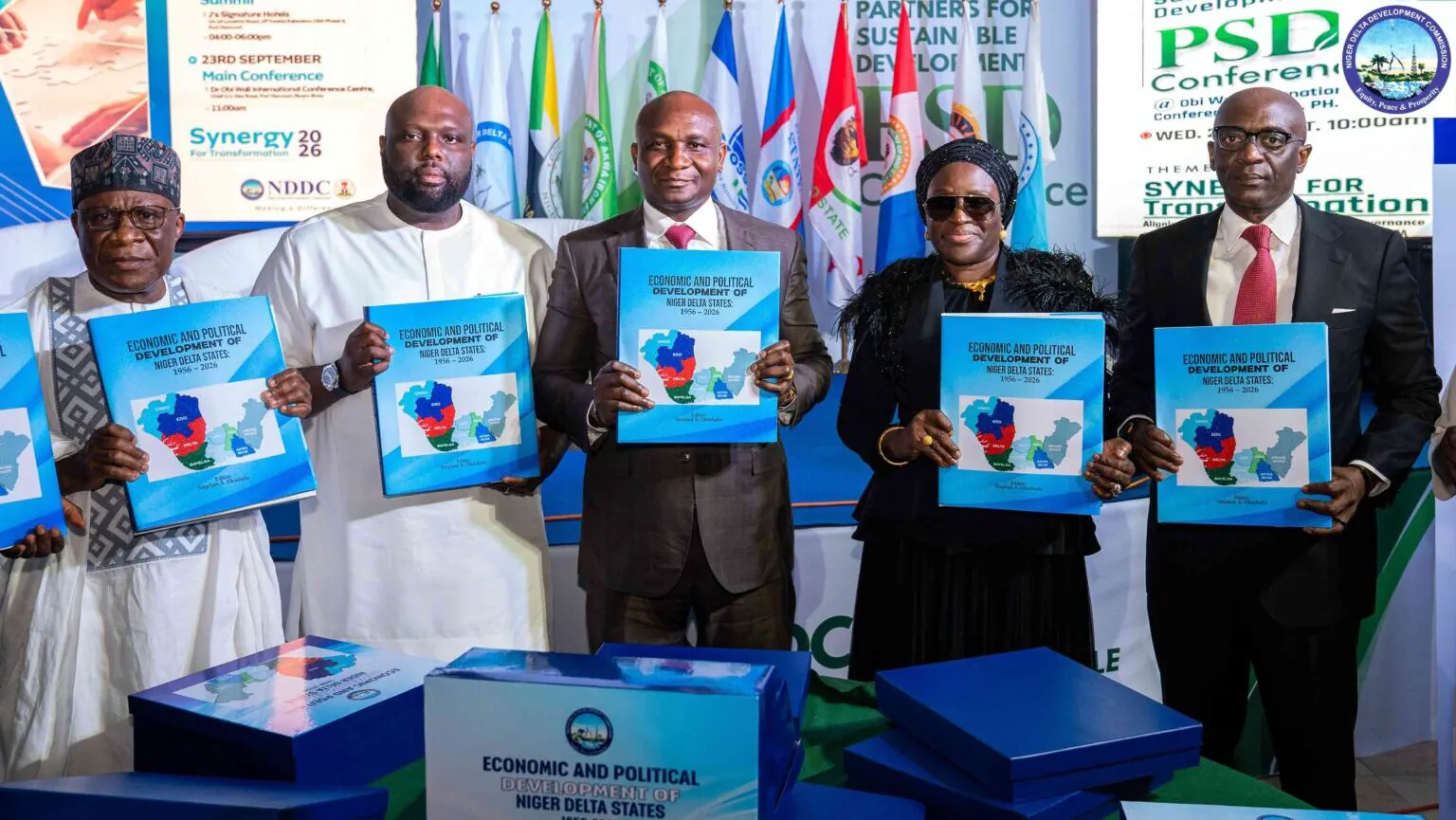
The Niger Delta Development Commission (NDDC) has introduced a governance framework and regional master plan aimed at strengthening accountability and coordinating development across the Niger Delta region. This was announced by Samuel Ogbuku, NDDC managing director, at the 2026 Partners for Sustainable Development Conference in Port Harcourt. The conference, themed "Synergy for Transformation: Aligning Regional Development, Local Governance and Sustainable Partnership in the Niger Delta," brought together stakeholders to discuss governance reforms and regional priorities.
The governance framework was developed by KPMG following a directive from President Bola Tinubu to enhance governance at the NDDC and improve institutional effectiveness, transparency, and operational discipline. According to Mr. Ogbuku, the framework establishes clear rules governing the commission's operations, responsibilities, procedures, and institutional accountability. The document outlines standard operating procedures against which the actions of the board, management, and staff can be assessed.
The new framework is designed to address weaknesses in the commission's administration and establish clearer responsibilities and accountability. Mr. Ogbuku emphasized that the framework should become a stakeholders' document, enabling the people to hold the commission accountable based on provisions collectively agreed upon and formally adopted for implementation. The document has been presented to Niger Delta stakeholders for additions, submissions, and deductions to ensure it reflects regional expectations and institutional realities.
In addition to the governance framework, the NDDC has also presented its regional master plan to stakeholders for contributions and adoption. Described as a shared development blueprint for the entire region, the plan aims to resolve conflicts between the NDDC and state governments by providing a common development framework and clearer priorities for coordinated regional infrastructure projects. Mr. Ogbuku urged stakeholders to use the master plan to assess whether the NDDC and state governments are implementing projects within agreed regional priorities.
The 2026 conference focuses more strongly on accountability, institutional reform, and building a durable foundation for the region's development. According to Mr. Ogbuku, the commission manages the collective patrimony of the Niger Delta and must remain accountable to stakeholders through regular consultations, transparent processes, and inclusive decision-making across communities. The conference provided an opportunity for the commission to present its reforms, programs, and activities to stakeholders for evaluation, input, and constructive recommendations on the region's development priorities.
Minister of Regional Development, Abubakar Momoh, noted that the federal government has continued to support infrastructure projects across the Niger Delta region over the past two years. These interventions include road, electricity, and water projects aimed at improving living conditions, expanding infrastructure, and supporting economic activity across communities in the Niger Delta region. He cited the 1.2-kilometre Kaa-Ataba Bridge in Rivers, now renamed President Bola Tinubu Bridge, as one of the major infrastructure projects being delivered in the region.
Other stakeholders, including Asuquo Ekpenyong, chairman of the Senate Committee on NDDC, and Godknows Igali, chairman of the Pan Niger Delta Forum, emphasized the need for the region to move from resource extraction towards production, processing, and value addition, creating greater opportunities for sustainable economic growth. They urged sustained cooperation and collaboration among stakeholders to transform the Niger Delta and achieve inclusive, sustainable development across its communities.
Key points
- The NDDC has introduced a governance framework and regional master plan to enhance accountability and coordinate development in the Niger Delta region.
- The framework establishes clear rules governing the commission's operations, responsibilities, procedures, and institutional accountability.
- The regional master plan aims to resolve conflicts between the NDDC and state governments by providing a common development framework and clearer priorities for coordinated regional infrastructure projects.