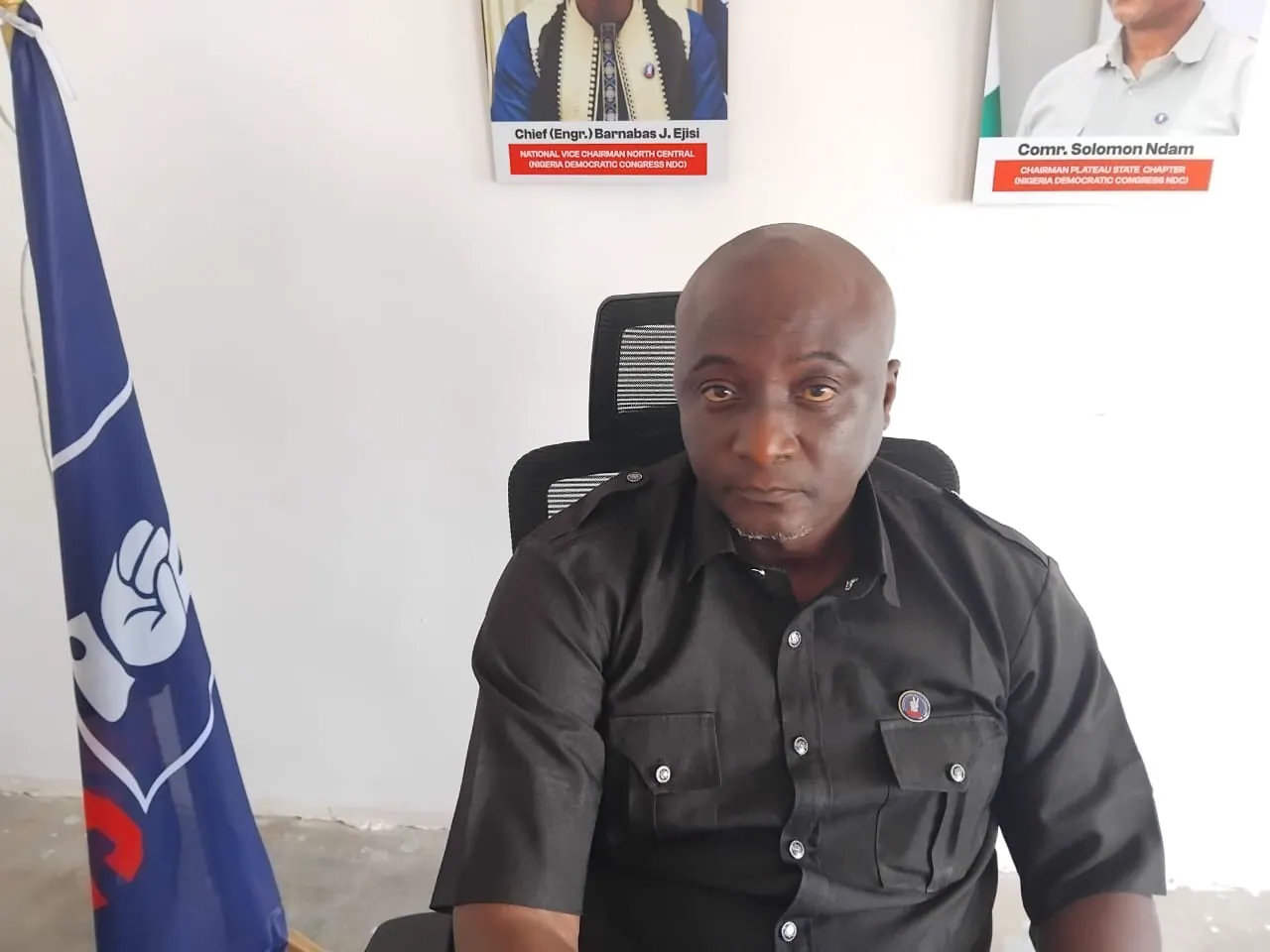
The National Democratic Congress (NDC) in Plateau State, Nigeria, has expressed its readiness to take over power in 2027, promising citizens a credible alternative to restore peace, security, and economic stability. The party's state chairman, Comrade Solomon Ndam, stated that the NDC will leverage technology to address the state's persistent security crises. He cited the failure of the incumbent administration, led by Governor Caleb Mutfwang, in handling security issues in communities such as Bassa, Riyom, Barkin Ladi, and Mangu.
Ndam criticized the current administration's handling of the security situation, particularly in Mangu, the governor's hometown, which has become host to the highest number of Internally Displaced Persons (IDPs) in the state. He contrasted Plateau's security situation with that of Enugu State, where Governor Peter Mbah has implemented technological security setups, and the impact of Amotekun in the Southwest. The NDC chairman pledged to deploy technology-driven command centers and collaborate with successful state models to address the security crisis.
The NDC-led government, according to Ndam, will recruit and empower local youth through Operation Rainbow to gather vital community intelligence. This move aims to enhance community participation in security efforts and provide a sustainable solution to the state's security challenges. Ndam also faulted the state government for sacking over 4,000 tertiary institution lecturers, arguing that this has severely undermined state development.
In addition to security and education, Ndam questioned the administration's agricultural accountability, highlighting unpaid allowances for agricultural workers and an unaccounted case involving 200 trucks of fertilizer procured outside the state. The presence of a local fertilizer blending plant in Bokkos makes this issue even more concerning. The NDC chairman's comments suggest that the party is prepared to tackle the state's multifaceted challenges.
Ndam touched on intra-party dynamics, stating that support coalitions like the "OK Movement," "Obidient Movement," and "Kwankwasiyya Movement" are natural given the strong integrity of leaders like Peter Obi and Rabiu Musa Kwankwaso. However, he stressed that all support structures must recognize that elections are ultimately won through a legally recognized party platform.
The NDC chairman urged all support groups to remain united behind the NDC structure to achieve a decisive victory in 2027. This approach aims to ensure that the party presents a united front and maximizes its chances of success in the upcoming election. By doing so, the NDC hopes to provide a viable alternative to the current administration.
The NDC's declaration comes as the party seeks to capitalize on the perceived weaknesses of the incumbent administration. With a focus on technology-driven solutions, community participation, and sustainable development, the NDC aims to present a compelling vision for Plateau State's future. The party's success in 2027 will depend on its ability to effectively communicate its vision and implement its promises.
Key points
- The NDC plans to deploy technology-driven command centers to address Plateau State's security crisis.
- The party will recruit and empower local youth through Operation Rainbow to gather vital community intelligence.
- The NDC criticizes the current administration's handling of education and agriculture, citing the sacking of lecturers and unpaid allowances for agricultural workers.