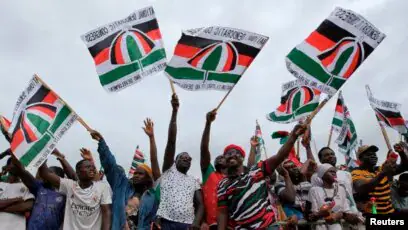
The National Democratic Congress (NDC) of Ghana is holding regional elections to choose leaders who will consolidate the party's 2024 electoral victory and position itself for a stronger performance in 2028. The elections, taking place across all 16 regions, will see delegates vote for regional executives responsible for shaping party strategies, strengthening political structures, and safeguarding electoral fortunes. This process is critical to the party's "Reset Agenda," which aims to sustain its electoral success through integrity, unity, internal cohesion, and effective leadership.
The regional elections represent a crucial opportunity for the NDC to address growing concerns about grassroots dissatisfaction following its 2024 electoral victory. The party must pay close attention to the concerns and expectations of its grassroots supporters, whose commitment and hard work remain central to its electoral success. Delegates will be looking for individuals seeking regional leadership positions who are prepared to embrace and advance the vision of continuity under the Reset Agenda, while aligning themselves with the broader national policy direction of the government.
The Ashanti and Eastern Regions stand out as key battlegrounds in today's elections, with outcomes that could have significant implications for the party's organisational strength and its ability to expand its electoral fortunes in 2028. The central question is whether delegates will vote for continuity or embrace a change in leadership. More importantly, will their choices produce the kind of leadership capable of winning additional parliamentary seats and increasing the party's presidential votes in the next general elections?
The NDC must recognise that winning internal elections is only one part of the political process; preserving party unity after the elections is equally important. The leadership emerging from the Ashanti and Eastern Regions must demonstrate the capacity to unite competing interests, rebuild trust, and strengthen internal cohesion. The party cannot afford to allow internal divisions, personal ambitions, and factional interests to undermine the political machinery that contributed to its 2024 electoral victory.
Ultimately, sustaining the NDC's "The Reset Agenda" requires more than political slogans; it demands integrity, hard work, inclusive leadership, unity, internal cohesion, and an unwavering commitment to the party's collective interests. The regional elections must serve as a foundation for renewal, reconciliation, and strategic repositioning, rather than a source of division. As the NDC looks towards 2028, the message must be clear: the party's strength lies not only in the leadership it elects but also in its ability to remain united, connected to the grassroots, and committed to delivering on the expectations of Ghanaians.
The real test of the regional elections is not simply who wins, but whether the party emerges stronger, more united, and better prepared for the political battles ahead. The NDC's ability to navigate its internal electoral process successfully will be crucial in determining its prospects in the 2028 general elections. With the stakes high, delegates across the 16 regions will be making critical choices that will shape the party's future.
As the NDC moves forward, it must balance the need for new leadership with the imperative of preserving party unity. The choices made in the regional elections will have far-reaching consequences for the party's organisational strength, its ability to connect with grassroots supporters, and its ultimate success in the 2028 general elections. With these considerations in mind, the NDC's regional elections represent a pivotal moment in the party's journey towards 2028.
Key points
- The NDC's regional elections will determine the party's leadership and strategy ahead of the 2028 general elections.
- The Ashanti and Eastern Regions are key battlegrounds in the elections, with significant implications for the party's organisational strength.
- The party's ability to preserve unity and connect with grassroots supporters will be crucial in determining its success in the 2028 general elections.