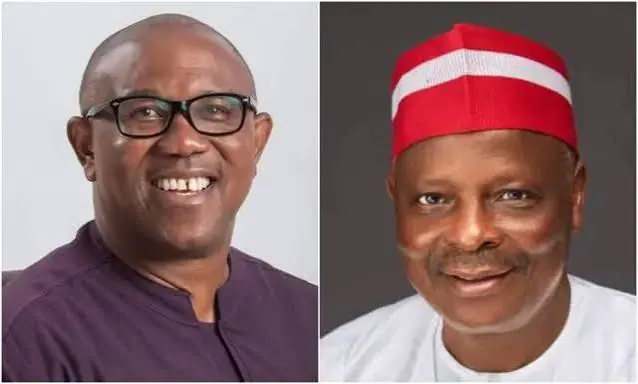
A dispute between Nigeria's Nigerian Democratic Congress (NDC) and the Obi/Kwankwaso (OK) Movement has exposed deeper tensions over organisational authority. The NDC's presidential candidate, Mr Peter Obi, has backed the party's leadership, while the OK Movement insists on retaining its independence and grassroots machinery. The disagreement began over a 59-member Presidential Campaign Council and has evolved into a potentially consequential organisational dispute.
The OK Movement unveiled a 59-member campaign council on September 17, which included zonal and state coordinators and directors responsible for various areas. John Ozyl Ughulu, the movement's Director-General, was named Director-General of the campaign council, while Saadatu Sani, its National Secretary, was named secretary. The NDC responded by publicly dissociating itself from the structure, declaring that the list did not emanate from the party and should be disregarded.
Mr Peter Obi publicly backed the NDC's leadership position, rejecting the campaign council constituted by the OK Movement. During an interview on Arise Television's Prime Time, Obi stated that the NDC remained the political party to which he and his supporters belonged, while the OK Movement and other platforms should function as support organisations. He emphasised that these groups must play their role as supporting groups, supporting the party, and not play the role of the party.
Obi's intervention has significantly altered the dynamics of the dispute, as the party's presidential candidate is now directly at the centre of the controversy. The OK Movement had argued that its organisational independence was separate from its support for the NDC candidates. Obi indicated that activities undertaken in the name of the joint Obi-Kwankwaso ticket would require the express approval of the two candidates.
The NDC's leadership insists on the supremacy of its formal structures, while the OK Movement refuses to surrender its independent political machinery. The party's position is that the official Presidential Campaign Council of the NDC can only be constituted through the appropriate organs of the political party. This has created tension between the two groups, with the OK Movement seeking to maintain its autonomy.
The dispute has significant implications for the NDC and the OK Movement, as they seek to work together to support their joint ticket. The disagreement has raised questions about the role of the OK Movement and other support groups in the campaign. Obi's backing of the NDC's leadership position has underscored the party's authority, but the OK Movement's independence remains a contentious issue.
The situation remains uncertain, with both sides yet to resolve their differences. The NDC and the OK Movement will need to find a way to work together to achieve their goals, but for now, the dispute continues to expose deeper tensions over organisational authority. The outcome will likely have significant implications for the success of their joint ticket in the upcoming election.
Key points
- NDC and OK Movement disagree over control of campaign structures
- Peter Obi backs NDC's leadership position, rejecting OK Movement's campaign council
- Dispute exposes deeper tensions over organisational authority within NDC and OK Movement