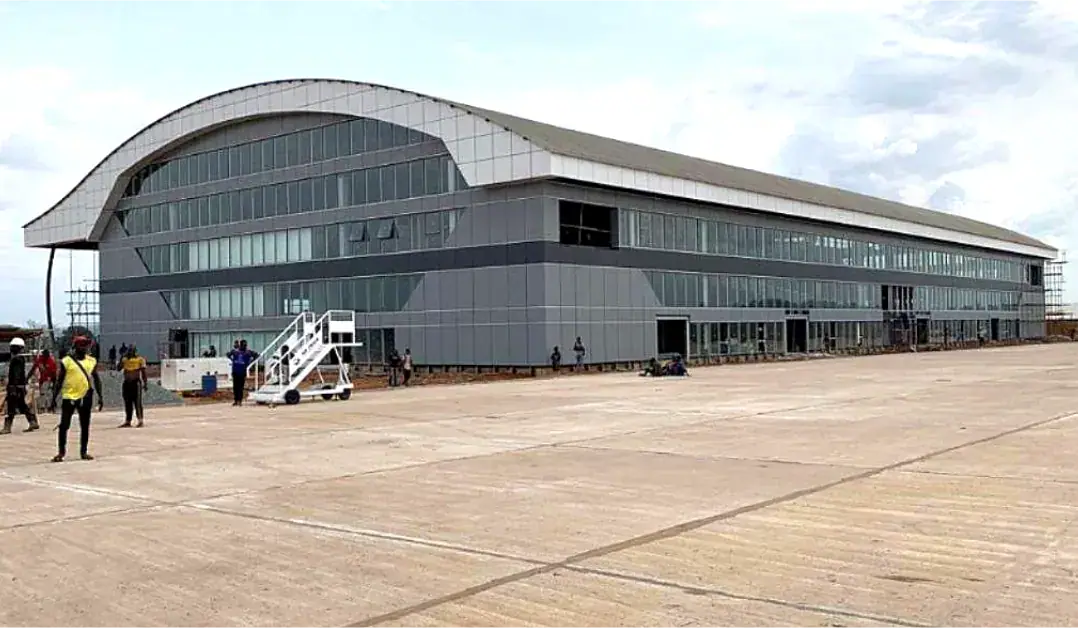
The Nigerian Civil Aviation Authority (NCAA) has upgraded the fire-fighting facility at Chinua Achebe International Airport (CAICA) in Anambra State from Category Six (CAT-6) to Category Seven (CAT-7). This upgrade was made possible by improvements in fire-fighting equipment and personnel training, which enabled the airport to meet the NCAA's minimum safety requirements for Category Seven Aerodrome Rescue and Fire Fighting Services.
The managing director of CAICA, Martins Nwafor, disclosed this development in an interview with journalists at Umueri, near Onitsha. According to him, the upgrade would enable the airport to handle aircraft requiring a higher level of fire-fighting and emergency response capability. This development is part of efforts to position the airport as a major aviation hub and a preferred destination and departure point for air travelers.
With the upgrade, the airport can now accommodate bigger airplanes, according to Mr. Nwafor. The airport recently conducted a two-week recency training for most staff on wildlife management, airside management, airside driving, as well as administrative and human resources management. This training is a significant step towards ensuring the safety and efficiency of airport operations.
United Nigeria Airlines has introduced Embraer 190 and CRJ 900 aircraft on its Abuja-Anambra route, effective November 5. The deployment of these aircraft provides passengers with greater comfort and convenience while strengthening air connectivity between Anambra and major Nigerian cities, including Abuja and Lagos.
Despite the growing demand for air travel, Mr. Nwafor noted that the airport remained underserved, operating below its installed capacity due to the limited number of flights and operators. He commended Air Peace and United Nigeria Airlines for servicing the airport and expressed the need for more operators to bring their flights to the airport and service other routes outside Lagos and Abuja.
The Airport Collaborative Decision-Making (A-CDM) system, which promotes coordination and information-sharing between airport management and airlines, is functional and effective at the airport. Mr. Nwafor described air transport as one of the safest and fastest means of transportation, despite its relatively high cost, and emphasized that safety remained the industry's foremost priority.
The airport is still in the process of route development, with efforts underway to develop other routes, such as Kano, Bauchi, or Gombe, possibly on specific days of the week. Mr. Nwafor urged more operators to service these routes and expressed optimism about the airport's potential to become a major hub in the region.
Key points
- The NCAA upgraded the Anambra airport's fire-fighting facility from CAT-6 to CAT-7 due to improvements in equipment and personnel training.
- The upgraded facility will enable the airport to handle larger aircraft and improve emergency response capabilities.
- The airport is still underserved, with limited flights and operators, despite growing demand for air travel.
Reporting sources
- NCAA upgrades Anambra airport’s fire-fighting facility · Peoples Gazette