The Hoanib Valley in northern Namibia, a region known for its harsh desert landscape, has become increasingly difficult to access due to seasonal floods linked to climate change. A recent surge of water dumped tons of sand across the floodplain, blocking the usual route. This has forced travelers to take a longer, more arduous path, climbing over rocky plateaus and navigating deep gorges. The challenging terrain demands a four-wheel drive vehicle, and even then, navigation can be treacherous.
The journey to the Hoanib Valley is a testament to the dedication of conservationists like Garth Owen-Smith, who passed away in 2020. He was a prominent figure in Namibian conservation, working closely with communities to protect the country's unique wildlife and ecosystems. A previous trip to the valley with Owen-Smith and his partner, Margaret Jacobsohn, had taken a more direct route, but that path was now impassable. The new route, though challenging, offered breathtaking views of the desert landscape.
The Hoanib Valley itself is a striking landscape, with a sandy riverbed lined with towering trees that provide shade from the scorching sun. Beyond the valley, barren hills and dunes stretch to the horizon in shades of orange, beige, and blue. The isolation of the valley creates a sense of ease, a feeling that the outside world is distant and unreachable. This unique environment is home to a variety of wildlife, including giraffes, lions, and numerous species of plants.
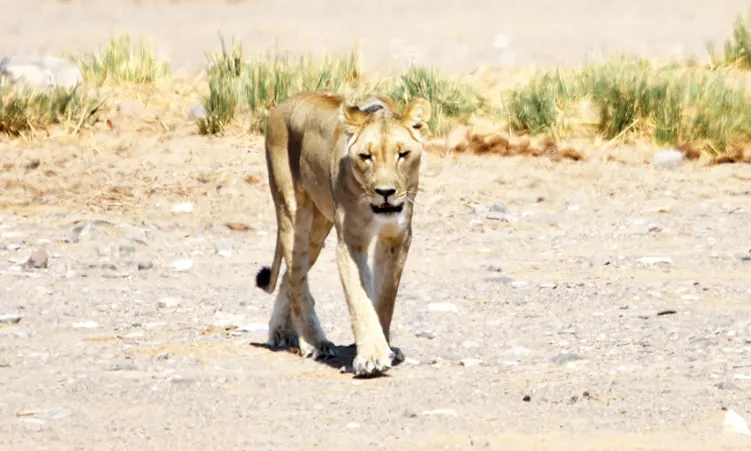
During a previous trip to the region, Owen-Smith and his companions encountered several challenges, including lions attacking livestock due to prolonged drought. In one instance, a pride of lions killed over 100 goats in a single attack, devastating a local woman's livelihood. The incident highlighted the need for conservation efforts that balance the needs of local communities with the protection of wildlife.
The experience of being in close proximity to lions in the wild can be unsettling. On one occasion, a lion's sawing, rasping call echoed off the rocks, causing concern for those nearby. Owen-Smith, however, remained calm, noting that it was not the lions that could be heard that posed a threat, but rather those that remained silent. This insight into the behavior of lions underscores the complexities of conservation in the region.
The impact of climate change on Namibia's conservation efforts cannot be overstated. Seasonal floods, like the one that blocked the access route to the Hoanib Valley, are becoming increasingly destructive. The water may vanish quickly, but the effects on the landscape and local wildlife can be long-lasting. As conservationists and communities work together to address these challenges, the Hoanib Valley remains an important area of focus.
As travelers venture into the Hoanib Valley, they are rewarded with unique experiences and encounters with wildlife. A visit to an island of ana trees revealed a giraffe and her calf browsing on seed pods, while a male giraffe watched warily from a distance. These moments of connection with nature serve as a reminder of the importance of preserving Namibia's natural heritage for future generations.
Key points
- Climate change is exacerbating seasonal floods in northern Namibia, posing challenges to conservation and access in the Hoanib Valley.
- Conservationists like Garth Owen-Smith have played a crucial role in protecting Namibia's unique wildlife and ecosystems.
- The Hoanib Valley remains an important area for conservation efforts, with a focus on balancing the needs of local communities with the protection of wildlife.