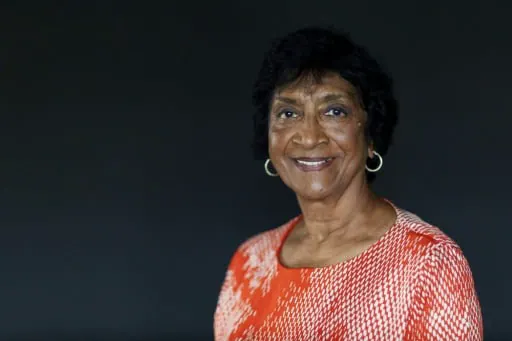
The awarding of the 2026 Nobel Peace Prize to Navanethem "Navi" Pillay is a significant recognition of her exceptional contributions to the global fight for justice. It also speaks to a bigger context, affirming the conviction that international law remains indispensable to a peaceful world. Pillay's recognition comes at a time when the international legal order is under pressure and being questioned. Her prize is a vote of confidence in the importance of international law.
Pillay makes history as the fifth South African to receive the Nobel Peace Prize, following Chief Albert Luthuli, Archbishop Desmond Tutu, and former presidents Nelson Mandela and FW de Klerk. She is the first South African woman to receive the peace award. Her prize is a further break with the historical tendency of the Nobel Peace Prize to mostly honour highly educated white men from Europe and the US.
Pillay's contribution to the global quest for accountability is marked by her pioneering work in international institutions. She was one of the first international judges responsible for forging into being institutions intended to ensure that those responsible for the gravest human rights violations are held accountable. She served on the first bench of judges of both the International Criminal Tribunal for Rwanda and the International Criminal Court.
As a scholar of international human rights law, those who know Pillay describe her as remarkably approachable, humble, unassuming, and generous with her time. She is also often described as courageous, principled, and unwavering. Her personality and drive endowed the fledgling international institutions with gravitas and legitimacy.
Pillay's story is held together by a central belief that law can restrain abusive power, protect victims, and hold the powerful to account. Born in 1941 in Durban, to a family of Indian Tamil origin, Pillay experienced racial and gender discrimination first-hand. Despite this, she built a legal career, becoming the first woman of colour to establish a legal practice in her province in 1967.
Pillay's most enduring global contribution came in the Rwanda tribunal's landmark 1998 judgement, which recognised rape as a crime against humanity. The judgement established that rape and sexual violence could also constitute acts of genocide. This decision opened the way for greater accountability for crimes committed disproportionately against women and girls.
From 2008 to 2014, Pillay served as UN High Commissioner for Human Rights, the first woman from the global south to hold this position. During her tenure, she managed to steer the UN's human rights work through turbulent times, including the aftermath of the global financial crisis, the Arab Spring, and civil war in Syria. Her voice was a steadfast pillar of clarity on human rights issues.
Key points
- Navi Pillay is the first South African woman to receive the Nobel Peace Prize.
- Pillay's work has helped establish international institutions and advance human rights globally.
- The Nobel Peace Prize affirms the importance of international law in maintaining a peaceful world.