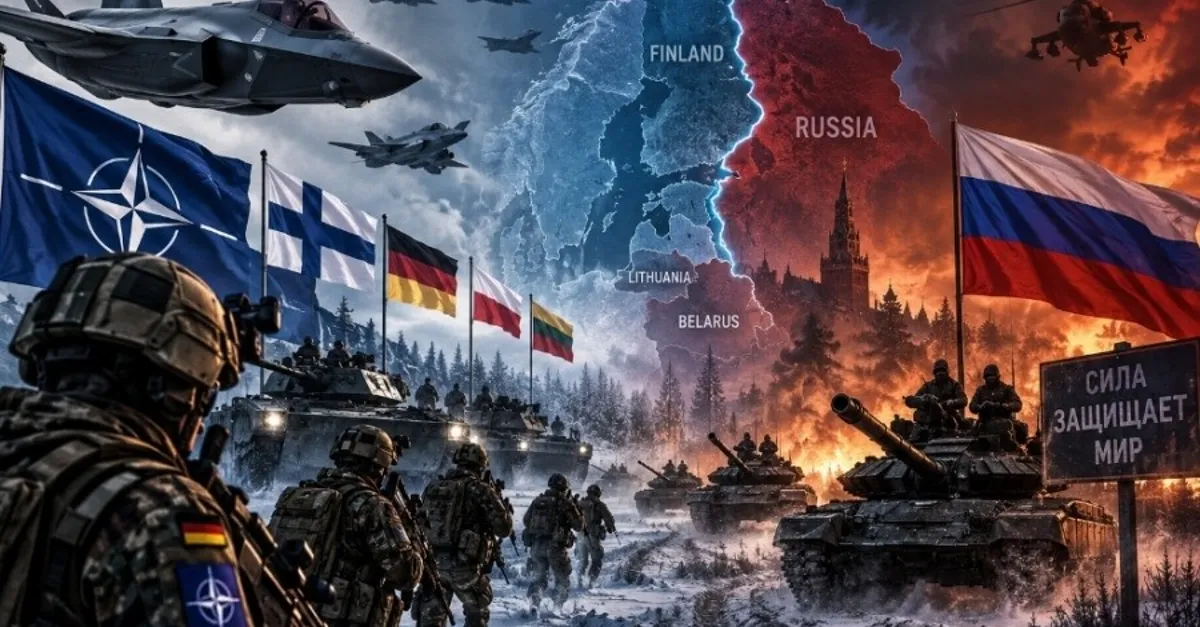
NATO has introduced a new military strategy aimed at defeating Russian forces in the event of an invasion. The strategy focuses on disrupting supply lines, disabling command and control centers, and avoiding a full-scale war or imposing a broader strategic defeat on Moscow. This development comes amid Western reports warning of a potential Russian scenario to cripple NATO's movement through a limited geographical operation.
The new strategy, developed in secret over three months, was announced by General Alexus Grinkwich, the Supreme Allied Commander Europe and head of the US European Command. It aims to alleviate concerns among NATO's 32 member countries and their nearly one billion citizens. The plan, dubbed "theory of victory," seeks to deter Russia from testing the alliance's resolve or using coercive policies.
The strategy is built around three key dimensions: deterrence, denial, and disruption. In the initial phase, ground forces will engage directly to halt an enemy advance and deprive them of initiative. Meanwhile, air and naval forces, supported by space and cyber capabilities, will assume control of the operational theater. This will pave the way for comprehensive disruption of an invading force's logistical components, communication networks, and command centers.
NATO's military leadership emphasizes that the primary objective of these efforts is to thwart a field invasion and destroy the attacking force, rather than seeking to strategically defeat the Russian state. They assert that any escalation by Moscow will only strengthen the alliance's cohesion and enhance its capabilities.
This strategic development occurs against a backdrop of heightened regional tensions with Russia, particularly following increased incidents of drone breaches along NATO borders. These events put member states to the test regarding the activation of collective defense under Article 5.
General Grinkwich stressed that preparations for war do not predetermine its occurrence, underscoring that deterrence and maintaining open communication channels remain crucial in preventing conflict and preserving regional stability.
The new strategy is part of NATO's broader efforts to bolster its eastern flank and address the growing concern over Russian aggression. By outlining a clear and robust response to potential threats, NATO aims to ensure the security and stability of its member states.
Key points
- NATO's new strategy focuses on disrupting supply lines and disabling command centers to counter potential Russian invasion.
- The strategy aims to deter Russia from testing the alliance's resolve or using coercive policies.
- The plan emphasizes collective defense and cooperation among member states to address regional security challenges.