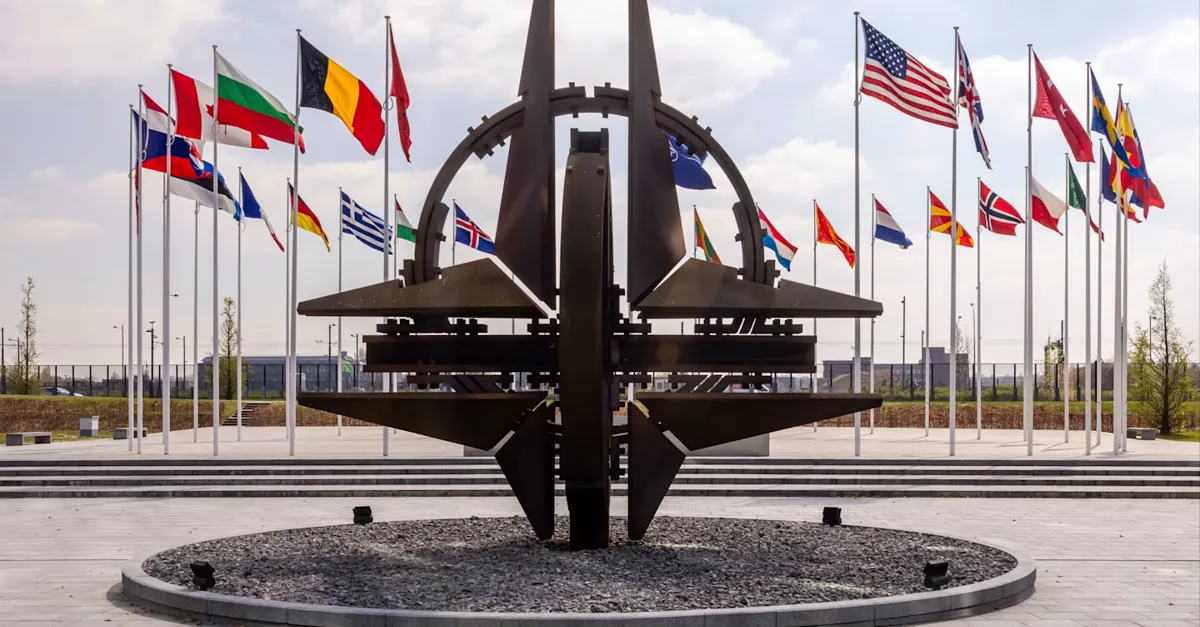
NATO's Supreme Allied Commander Europe, General Alexus Grinkevich, is set to unveil his "theory of victory" at a security conference in Warsaw, amid rising concerns over Russia's threats. The theory aims to maintain NATO's superiority and deter any potential Russian aggression. This move comes as NATO seeks to send a message to Moscow to cease its multi-faceted attacks against countries supporting Ukraine. The conference is expected to address the growing unease over potential escalation.
In recent months, concerns have escalated over possible escalation, particularly after notable incidents such as the discovery of a drone loaded with explosives at a German airport. NATO's traditional secrecy surrounding its defense plans against potential Russian attacks has been maintained. However, General Grinkevich's address is expected to convey a message to Moscow and reassure Eastern European NATO member states. The situation has become increasingly complex due to Russia's continued aggressive actions.
According to Colonel Martin O'Donnell, spokesperson for General Grinkevich, the "theory of victory" is straightforward: maintaining NATO's superiority in line with the alliance's deterrence and defense plans. O'Donnell emphasized that in the current unstable global security environment, it is crucial to create conditions to deter aggression and, if necessary, prevail in the event of an attack. This approach aims to establish a framework for achieving this goal.
NATO has traditionally kept its defense plans against potential Russian attacks confidential. While General Grinkevich is unlikely to disclose new details about NATO's strategy, his speech is expected to convey a message to Moscow. Western officials have reported that Russia's multi-faceted attacks have become bolder as its forces struggle in Ukraine. These attacks may result in significant human losses and pose a challenge to NATO in determining how to respond to incidents in the gray area between peace and war.
NATO Secretary-General Mark Rutte has called on member states to remain calm and continue supporting Ukraine. He warned that Russia should not be underestimated, but acknowledged that the alliance is stronger. The increased Russian activity occurs as US allies prepare for a potential reduction in American military presence in Europe. The US Department of Defense is conducting a review of its troop deployments, with an expected announcement by the end of the year.
The situation has become increasingly complex due to Russia's continued aggressive actions. NATO faces challenges in responding to incidents in the gray area between peace and war. General Grinkevich's "theory of victory" aims to address these concerns and provide a framework for deterring potential Russian aggression. The alliance is taking steps to reassure its member states and demonstrate its commitment to their security.
As NATO prepares its deterrence strategy, it is also focused on supporting Ukraine and maintaining stability in the region. The alliance has emphasized its commitment to defending its member states and deterring potential aggression. With the situation remaining volatile, NATO's response will be closely watched by its member states and potential adversaries.
Key points
- NATO's top military commander, General Alexus Grinkevich, to unveil "theory of victory" to counter potential Russian attacks
- Russia's multi-faceted attacks have become bolder as its forces struggle in Ukraine
- NATO faces challenges in responding to incidents in the gray area between peace and war