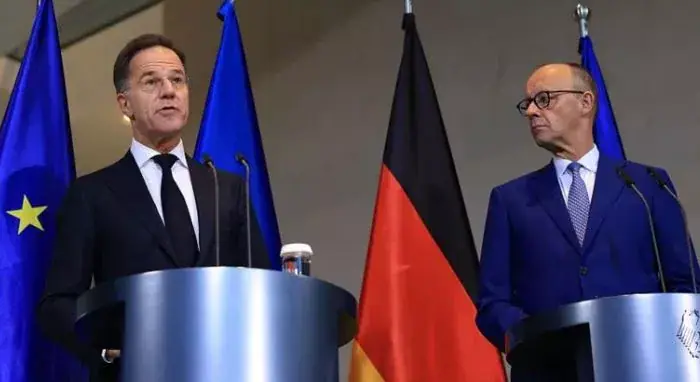
NATO chief Mark Rutte has stated that the alliance will defend against any threats in space following reports that Russia is preparing to launch a nuclear-armed satellite. According to German media outlets, intelligence reports about a possible launch in the next 60 days were shared among NATO countries this month. Rutte emphasized that NATO will ensure the defence of every inch of its territory, including the space element.
The reports, citing anonymous German military and intelligence sources, claim that the Russian satellite, dubbed "Sputnik-S," is equipped with a nuclear warhead and could be used to disrupt or destroy other satellites, including important communication and observation satellites. The Russian embassy in Berlin has rejected what it calls "unfounded allegations" and said the reports are part of a "propaganda campaign."
Kremlin spokesman Dmitry Peskov said he hadn't seen the latest reports but dismissed reports citing "unknown sources" as "hardly worth taking seriously." Rutte told a press conference in Berlin that NATO has a variety of response options and will always make assessments of its deterrence and defence, making updates where necessary.
German Chancellor Friedrich Merz, standing alongside Rutte, did not confirm or deny the reports of Russia's plans but said they "reveal the level of escalation Russia is evidently prepared to pursue." A German government spokesman earlier said it was taking the reports "very seriously" but warned against causing "excessive nervousness regarding hypothetical dangers."
Josef Aschbacher, the head of the European Space Agency, described having nuclear weapons in space as "the ultimate nightmare scenario." Russia is a signatory to the 1967 Outer Space Treaty, which bans weapons of mass destruction from orbit. Other countries, including the US and China, have deployed or plan to deploy other weapons in space, exploring capabilities outside of the treaty.
The US claimed in 2024 that Russia was developing a "space-based" anti-satellite weapon armed with a nuclear warhead, but Russia denied the accusation. President Vladimir Putin said at the time that Russia has always been against the deployment of nuclear weapons in space. In September, the US Secretary of the Air Force, Troy Meink, said the US had "on-orbit, space-control weapons" circling the planet.
The Kremlin's Peskov told Russian media that space "must be free of any weapon." NATO's response to the reports highlights the growing concerns about the militarization of space and the potential consequences of such actions. The situation remains uncertain, with various countries having different positions on the deployment of weapons in space.
Key points
- NATO chief Mark Rutte vows to defend against threats in space after reports of Russian nuclear satellite launch.
- Russia denies allegations of planning to launch nuclear-armed satellite, calling them "unfounded" and part of a "propaganda campaign."
- The US and other countries have deployed or plan to deploy weapons in space, exploring capabilities outside of the 1967 Outer Space Treaty.