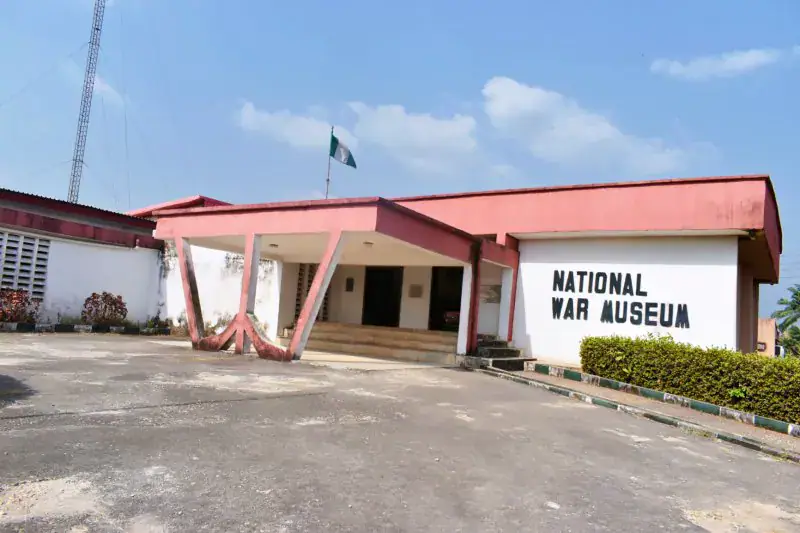
The National War Museum in Umuahia, Abia State, was officially launched on January 15, 1985. This date held potent symbolism, marking both the 21st anniversary of Nigeria’s first military coup and the 15th anniversary of the end of the Nigerian Civil War. The museum stands on ground central to the Biafran war effort, offering a tangible link to a painful yet vital chapter of the nation’s history.
The museum became a national heritage site dedicated to preserving Nigeria’s military past, from traditional warfare to modern conflicts. Its primary focus was the 1967-1970 Nigerian Civil War, a conflict that deeply scarred the young nation. The museum’s extensive collections chronicled generations of conflict, ranging from indigenous fighting methods to the development of Nigeria’s armed forces.
The idea for a national war museum first emerged in the 1970s. Lt. General Theophilus Danjuma championed the initiative after a visit to Yugoslavia in 1977. He envisioned a national institution, not just an army exhibition, dedicated to preserving military artefacts. The Supreme Military Council approved the plans in 1977 under Lt. General Olusegun Obasanjo’s administration.
Major-General Babatunde Idiagbon, Chief of Staff Supreme Headquarters, formally launched the complex on January 15, 1985, amidst military commands. This timing underscored the event’s historical weight. The full commissioning occurred later, on September 14, 1989. Lieutenant-General Domkat Bali, then Minister of Defence, presided over this ceremony.
The museum’s motto, “That They Did Not Die in Vain,” captured its memorial purpose. Beyond its galleries, the museum’s open-air displays featured formidable military hardware, including tanks, armoured vehicles, aircraft, and naval equipment. The collection held the highest number of Nigerian Civil War weapons no longer in use.
The museum’s location in Umuahia was deeply significant. After federal forces captured Enugu in October 1967, Umuahia became the administrative and military centre for Biafra. This proximity imbued the exhibits with a palpable sense of historical weight. The site included the bunker that housed the “Voice of Biafra” radio station and the Ojukwu Bunker, associated with the Biafran leadership.
The National War Museum carried a profound educational responsibility to portray Nigeria’s military evolution and the complex nature of its conflicts. The museum continuously faced challenges in maintaining its historical collections, requiring sustained maintenance to ensure the physical evidence retains its value. Nigeria’s dedication to preserving this crucial historical resource reflected its commitment to remembrance.
Key points
- The National War Museum in Umuahia was launched on January 15, 1985, marking the 15th anniversary of the end of the Nigerian Civil War.
- The museum's collections include a wide range of military hardware and artefacts from the Nigerian Civil War.
- The museum's location in Umuahia holds significant historical importance, being the former administrative and military centre for Biafra.