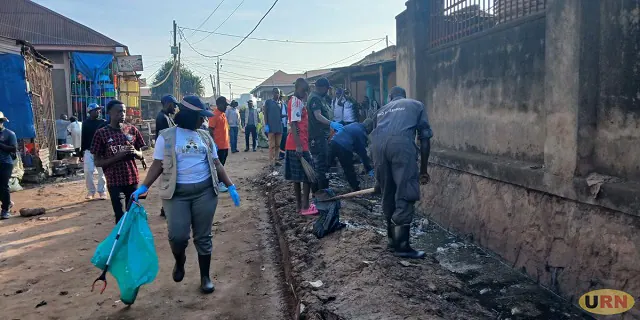
Kampala, Uganda's capital city, witnessed a low turnout on Saturday during the National Cleaning Day, a monthly exercise aimed at promoting collective responsibility for sanitation and environmental management. The exercise, conducted in different parts of the city, was led by Kampala Capital City Authority (KCCA) teams. Despite efforts to mobilize residents, many stayed indoors, and it was only after KCCA enforcement teams intervened that a few residents began to participate.
The KCCA chose Kabaawo Zone in Mutundwe Parish, Lubaga Division, as its epicenter for the exercise in Kampala. However, the initial turnout was poor, prompting KCCA teams to go door-to-door to encourage residents to participate. Benon Kigenyi, KCCA's Deputy Executive Director, led the exercise in Kabaawo and urged residents to take greater responsibility for maintaining hygiene in their communities. He emphasized the need for residents to participate in monthly cleaning exercises and to separate waste at the household level.
The exercise revealed several challenges in the area, including clogged drainage channels and poor sanitation in some neighborhoods. Fatuma Nyombi, the Mutundwe Parish Woman Councillor, identified poor drainage as a major challenge and called on KCCA to improve drainage infrastructure. She also expressed concern about poor hygiene around some homes, emphasizing the need for residents to take greater responsibility for keeping their surroundings clean.
Richard Ssendikaddiwa, the LC1 Chairperson of Kabaawo Zone, attributed the low turnout partly to the nature of businesses in the area, with many residents operating at night and sleeping late. He also highlighted the difficulties in garbage collection due to poor physical planning, which makes it hard for waste collection trucks to access some parts of the community. Additionally, Ssendikaddiwa raised concerns about inadequate cesspool services and the lack of a public toilet for low-income residents.
The low participation was not limited to Kabaawo, as a similar trend was observed in several other areas of Kampala, including Lugala, Masanafu, Munaku, Kawempe, and along the Northern Bypass. Despite the government's efforts to make the monthly exercise part of a wider campaign to promote collective responsibility, the turnout was significantly lower compared to the inaugural National Cleaning Day.
The continued presence of garbage and blocked drainage channels highlights the sanitation challenges facing Kampala. KCCA continued with its Bring-to-Truck campaign, where residents are expected to bring collected waste to designated points for collection. However, the persistence of these challenges underscores the need for sustained efforts to address the city's sanitation issues.
The National Cleaning Day is held on the last Saturday of every month as part of government efforts to improve sanitation, prevent disease, and promote collective responsibility for keeping communities clean. For Kampala, the exercise comes against a backdrop of persistent challenges involving waste disposal, blocked drainage channels, and gaps in sanitation services. The government seeks to encourage residents to take greater responsibility for waste management and maintain hygiene in their communities.
Key points
- Low public participation was recorded in Kampala's National Cleaning Day.
- Poor drainage and sanitation were identified as major challenges in some areas.
- The government continues to promote collective responsibility for sanitation and environmental management.