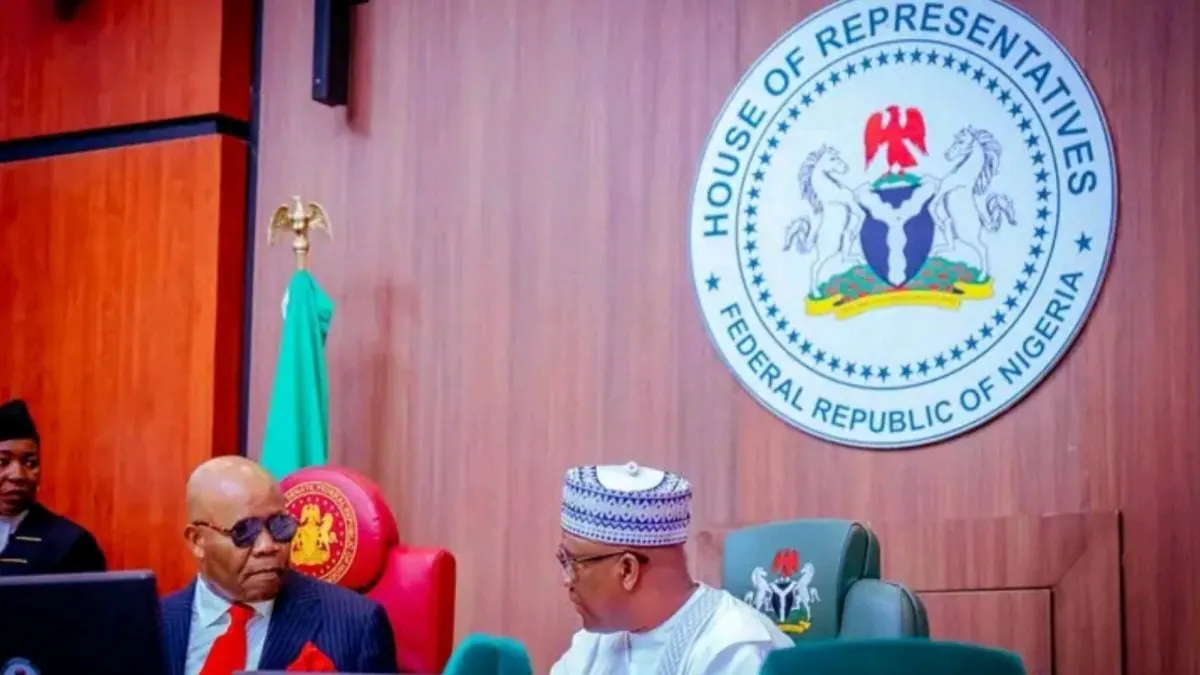
The National Assembly has been called upon to invoke constitutional provisions to mandate Vice-President Kashim Shettima to perform the functions of President as Acting President, following President Bola Tinubu's extended absence from Nigeria. President Tinubu departed Nigeria on August 30 for a working vacation, initially expected to last three weeks. However, the Presidency announced on Monday that he had extended his stay abroad by a few days and was expected to return at the weekend.
African Action Congress presidential candidate, Omoyele Sowore, and the African Democratic Congress (ADC) have made separate calls for the National Assembly to take action. Sowore argued that the expiration of the initial 21-day period triggered the procedure prescribed under Section 145(2) of the Constitution, which allows the National Assembly to mandate the Vice-President to perform the functions of President as Acting President if the President fails to transmit a written declaration to the Senate President and Speaker of the House of Representatives.
According to Section 145(1) of the Constitution, whenever the President proceeds on vacation or is unable to discharge the functions of his office, he shall transmit a written declaration to the President of the Senate and Speaker of the House of Representatives. Sowore challenged Senate President Godswill Akpabio and Speaker Tajudeen Abbas to disclose whether they received the required declaration from Tinubu, arguing that if no such declaration was transmitted, the National Assembly should commence the constitutional process for Shettima to assume the functions of Acting President.
The ADC also questioned the constitutional basis for Tinubu's continued absence, particularly as Shettima is currently outside Nigeria, representing Tinubu at the 81st United Nations General Assembly in New York. The party argued that the arrangement raised fundamental questions over who currently exercises presidential powers in Nigeria, emphasizing that representation is not governance and attendance at official functions is not presidential authority.
The ADC rejected the Presidency's description of Tinubu's absence as a "working vacation", arguing that no such category exists in Section 145 of the Constitution. The party demanded that the Presidency and National Assembly answer the question: "Who presently exercises the constitutional powers of the President of the Federal Republic of Nigeria, and under what provision of the Constitution?" The party emphasized that the issue is not whether Tinubu can communicate with officials or issue directives from abroad, but whether the constitutional procedure governing presidential absence has been complied with.
Secretary to the Government of the Federation, George Akume, would continue representing Tinubu at some official functions while both the President and Vice-President are abroad. However, the ADC argued that Akume, as a presidential appointee, does not fall within the constitutional line of succession. The opposition party insisted that the National Assembly must act to ensure that Nigeria is governed according to its Constitution.
The calls for Shettima to be appointed as Acting President have raised questions about the constitutional status of Tinubu's continued stay abroad. The National Assembly's response to the situation will be crucial in determining who exercises presidential powers in Nigeria during Tinubu's absence. The situation highlights the need for clarity on the constitutional procedures governing presidential absence and the exercise of presidential powers.
Key points
- The National Assembly has been urged to invoke constitutional provisions to mandate Vice-President Kashim Shettima to perform the functions of President as Acting President.
- President Tinubu's extended absence from Nigeria has raised questions about the constitutional status of his continued stay abroad.
- The opposition parties have emphasized the need for the National Assembly to act to ensure that Nigeria is governed according to its Constitution.