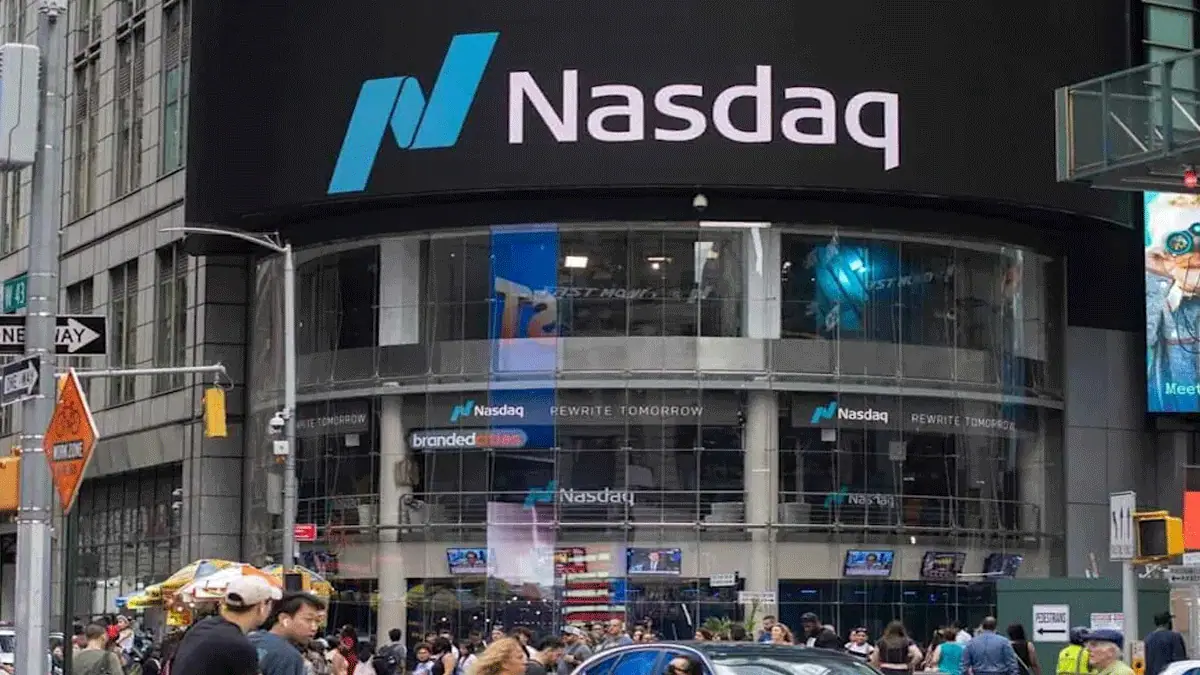
The Nasdaq 100 index experienced a significant decline of over 5.8% in October, according to Reuters, putting more than $2 trillion in market capitalization at risk. This correction is attributed to growing concerns about the ability of tech giants to quickly monetize their substantial investments in artificial intelligence (AI). The AI sector is entering a new financial phase, with massive investments being made in infrastructure, but with uncertain returns.
Meta, Alphabet, and Amazon have increased their investment forecasts to develop their computing capabilities and data centers. However, these immediate expenses do not guarantee equivalent revenues in the short term. The correction of the Nasdaq 100 reflects this change in investor perception. Investors do not necessarily dispute the economic potential of AI, but they are questioning the timeline for recovering invested capital.
The issue extends beyond stock market fluctuations. To finance their infrastructure, tech companies are mobilizing capital markets, increasing their exposure to borrowing costs. When returns are delayed, debt can weigh on cash flows and the ability to finance new projects. This is particularly evident at Meta, where S&P Global revised its credit rating outlook from stable to negative on October 30, citing uncertainties surrounding future expenses and financial flows.
According to J.P. Morgan Global Research, global AI investments could reach $900 billion in 2026 and $5,500 billion cumulatively by 2030. These projections illustrate the scale of resources required but do not guarantee profitability. For investors, the central question is becoming less about the growth of computing capacities and more about the revenues they will actually generate.
The October correction reveals a new trade-off: financing AI expansion remains possible, but convincing markets of its profitability is becoming essential. The stakes are high, with significant investments being made in AI infrastructure, but with uncertain returns. Investors are demanding more clarity on the revenue potential of these investments.
The current situation highlights the challenges facing tech companies in balancing their investments in AI with the need to generate returns. While AI has the potential to drive significant economic growth, the timeline for returns is uncertain. Investors are closely watching the financial performance of tech giants, seeking reassurance that their investments will yield returns.
As the AI sector continues to evolve, investors will be monitoring the financial performance of tech companies closely. The ability of these companies to generate returns on their AI investments will be crucial in determining the long-term sustainability of the sector. With over $2 trillion in market capitalization at risk, the stakes are high, and investors are demanding more transparency and clarity on the revenue potential of AI investments.
Key points
- The Nasdaq 100 index fell by over 5.8% in October, threatening $2 trillion in market capitalization.
- Global AI investments could reach $900 billion in 2026 and $5,500 billion cumulatively by 2030, according to J.P. Morgan Global Research.
- Investors are questioning the timeline for recovering invested capital in AI, driving the correction in the Nasdaq 100 index.