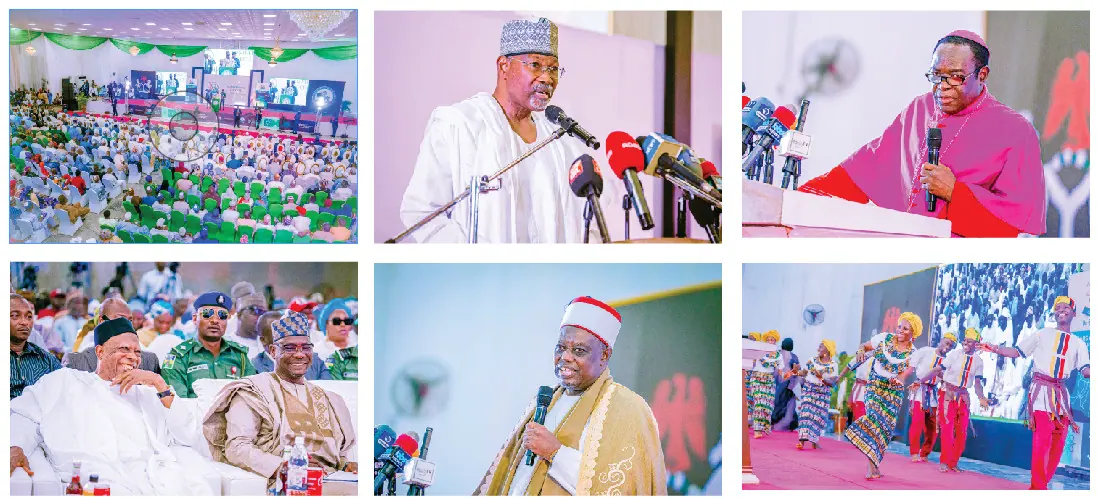
Nasarawa State marked its 30th anniversary with a public lecture by Prof. Attahiru Jega and Bishop Matthew Hassan Kukah, highlighting the state's transformation from a rural state to a thriving economy. The event brought together notable personalities who have contributed to the state's growth, except for the late Aliyu Akwe Doma. The speakers used data and empirical evidence to demonstrate how the state has evolved over the years.
According to Prof. Attahiru Jega, the state had only one tarred road, no water board, and no secretariat when it was created on October 1, 1996. However, thirty years later, the state has made significant progress, with 1,500 kilometres of tarred roads, and an internally generated revenue (IGR) that has grown from 3.7 percent in 1997 to at least 11 percent today.
Jega attributed the state's growth to a deliberate shift in focus by Governor Abdullahi Sule's administration, which decided to pivot from a civil service state to a mining and industrial state in 2019. This move has led to the facilitation of two lithium processing plants, Avatar New Energy Materials and New Diamond Energy, with a combined capacity of 9,000 metric tons per annum.
The state's investment agency, NASIDA, has played a crucial role in promoting the state's economic development through the Nasarawa Economic Development Strategy. Governor Sule's administration has also invested heavily in road infrastructure, with 639 kilometres of road networks built in the last seven years, cutting across the three senatorial zones, with bridges, culverts, and drainage systems.
Education is another sector where the state has made significant progress, according to Jega. The number of public primary schools has increased from 1,402 to over 2,100, while secondary schools have grown from 100-150 to 490, with 418 functional and 30 under construction. The number of tertiary institutions has also increased from 2 with 2,500 students to 18 with over 60,000 students.
At Nasarawa State University, Keffi, the result of the state's investment in education is already visible in teaching quality and research. Female enrolment, a key human capital indicator, has jumped from 68,000-78,000 girls in 1996 to 333,000-343,000 in 2026, an increase of over 371 percent. Governor Sule's legacy in education is an emotional core of his administration's achievements.
The state's 30th anniversary celebration is a testament to the transformative strides made by Governor Sule's administration. The event showcased the state's growth and development, with speakers highlighting the state's potential for further growth and development.
Key points
- The state's internally generated revenue (IGR) has grown from 3.7 percent in 1997 to at least 11 percent today.
- The state has 1,500 kilometres of tarred roads, with 639 kilometres built in the last seven years by the Sule administration.
- Female enrolment in schools has increased by over 371 percent, from 68,000-78,000 girls in 1996 to 333,000-343,000 in 2026.